
Flights across the United States were briefly halted on Friday, Nov. 13, when the Federal Aviation Administration issued a nationwide ground stop. Within days, attention has settled on a piece of network equipment at a radio facility in El Dorado, Arkansas. FAA officials have indicated that the router there is one of two likely reasons for the shutdown, with a radar site in Texas the other ([1]).
A routine swap at a remote site
The FAA’s early review points to two locations where excessive data flooded the agency’s systems. One is a radar site in Amarillo, Texas. The other is the radio communications site in El Dorado. L3 Harris, the FAA’s current network service provider, had been doing work at the El Dorado site, including deployment of a new router.
The agency describes the replacement as ordinary maintenance. According to the FAA, this disruption was a result of a routine replacement at a remote facility, which has regularly been done for decades, without any impacts to the systems at these times. The timing has drawn questions, since the agency also notes that maintenance at major air traffic control facilities is typically conducted at night, when there’s less traffic.
Transportation Secretary Sean Duffy said the Texas radar system had been replaced about three weeks before the outage, and that it began to overload the network as well. The FAA has been working to modernize a system that still relies heavily on copper wire, and the FAA has sought to upgrade its copper-wire-based system with fiber optic cables.
How one device can strain a network
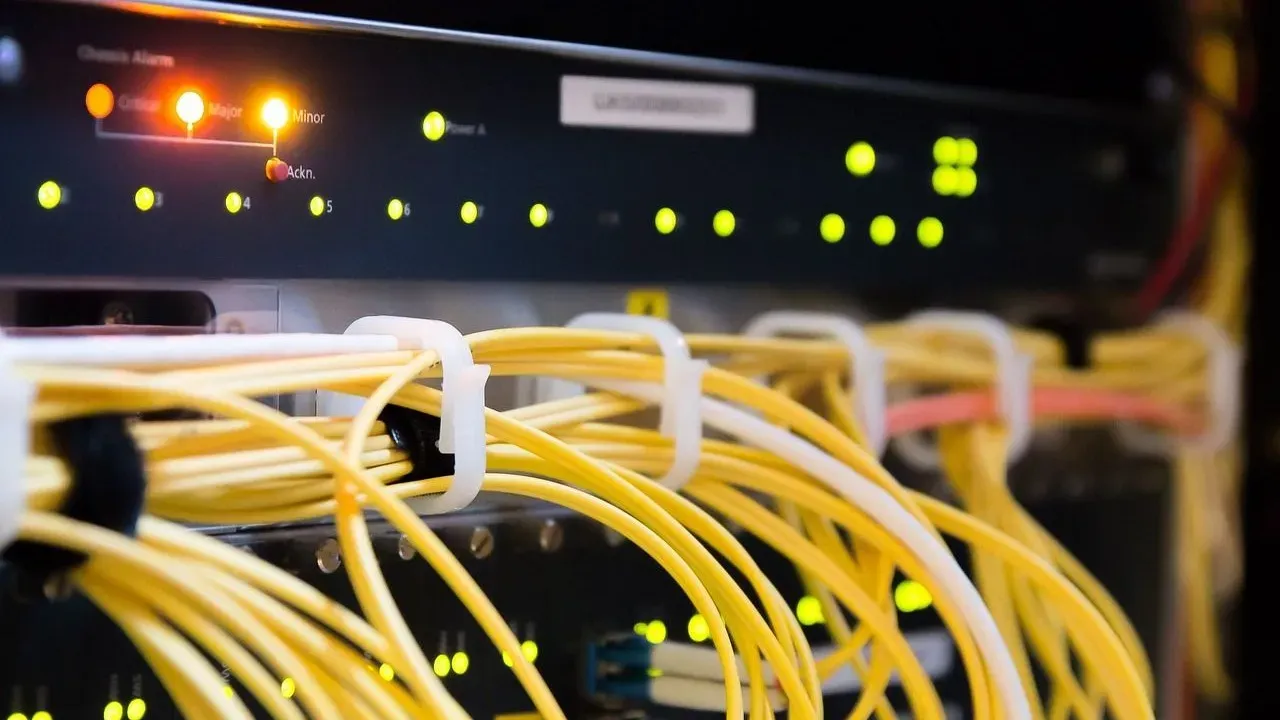
According to The New York Times, the new routers in Arkansas and Texas sent signals to the communications network hundreds of times per second, a load the older system could not absorb. Agency officials traced the problem to a broadcasting feature on the router.
The effects spread quickly. The data surge disrupted communications at 17 of the FAA’s 22 Air Route Traffic Control Centers, which led officials to call the nationwide halt. Even so, some lines of communication held. Throughout the disruption, certain radio frequencies and radar feeds remained operational, allowing air traffic controllers to maintain communication with and track aircraft.
- The FAA says the Arkansas router and the Texas radar site are the two likely sources of the data flood, and the cause is not yet confirmed.
- L3Harris was deploying a new router at the El Dorado site when the disruption began.
- Communications centers were affected in 17 of 22 control regions, while some radar and radio feeds stayed online.
Testing continues in Florida
Duffy said the router from Arkansas is now at the L3Harris laboratory in Florida. Contractor L3Harris had secured the two routers from remote FAA facilities in Texas and Arkansas and was conducting “deep diagnostics testing” at its headquarters in Florida, with engineers from the FAA, Juniper and Cisco assisting. The FBI and federal law enforcement are also helping determine the exact cause.
The equipment’s maker has taken a different view of the failure. The maker of the routers said they did not fail. L3Harris has said it takes the nationwide ground stop and its impact on travelers, airlines and air traffic operations seriously. Duffy has also said there are no signs of a foreign cyberattack.
Travelers, funding, and what comes next
The disruption lasted several hours, but its effects were still visible days later. FlightAware reported that more than 10,000 flights within, into or out of the United States were delayed Sunday, and more than 2,300 were canceled. The event also ranks among the most serious of its kind, since the incident marked the third nationwide ground stop, following a 90-minute outage in 2023 and on Sept. 11, 2001.
Duffy has used the episode to press for money to modernize the system. He is seeking $50 billion for an air traffic control overhaul. Whether Congress approves that request, and how quickly the FAA can replace its aging network, will shape how well the country avoids a repeat. For now, the central question is whether one small router was the spark or only part of a larger failure.
AI Disclaimer: This article was created with the assistance of AI tools and reviewed by a human editor.