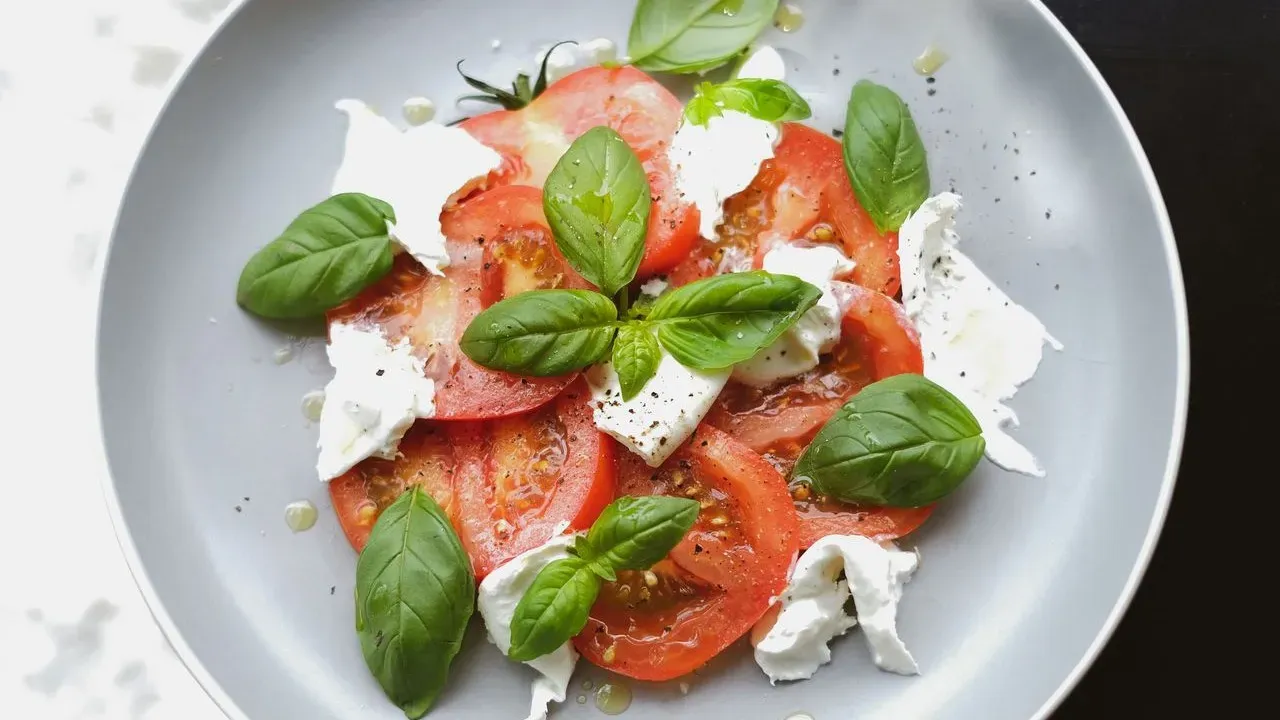

Summer gardens often deliver more tomatoes than a household can use at once. When the heat makes cooking feel impossible, a quick assembly of ripe fruit and seared cheese turns that surplus into a complete meal. The combination of sweet nectarines, juicy tomatoes, and warm halloumi creates contrast in every bite without requiring an oven or long preparation.
The Cheese That Holds Its Shape
Halloumi comes from Cyprus and is brined so it stays firm under heat. Unlike most cheeses, it develops a golden crust in the pan while the center softens without melting away. That texture gives the salad enough substance to serve as a light dinner rather than a side dish.
The salty edge of the cheese balances the natural sugars in peak-season fruit. A few minutes of attention at the stove produces cubes that stay distinct yet warm enough to release their flavor into the surrounding ingredients.
Assembling the Fresh Components
Start with halved cherry tomatoes and wedges of ripe nectarines. Thin slices of jalapeño add a gentle heat that cuts through the sweetness, while a few rings of red onion bring sharpness. Torn basil leaves contribute fragrance that ties everything together.
A simple dressing of olive oil and fresh lime juice coats the produce lightly. The goal is gloss rather than heavy saturation, so the individual flavors remain clear. Flaky salt and black pepper finish the base before the warm cheese is added.
Getting the Sear Right
Success depends on removing surface moisture from the halloumi first. Excess water turns to steam and blocks browning, so thorough patting with a towel matters. A hot skillet and a single layer of cubes allow the exterior to color deeply in about two minutes per side.
Once seared, the cheese should move straight into the bowl. Waiting too long lets it firm up again and lose the soft center that makes the dish distinctive. The entire process from pan to table takes only minutes.
Turning the Salad Into a Meal
Served on its own with warm pita, the recipe feeds four as a light evening dish on the patio. Peppery arugula underneath adds bitterness that plays against the fruit. Grilled chicken or fish alongside stretches it further when more protein is desired.
Many cooks return to this combination throughout the season because it adapts easily. Stone fruit can shift to peaches or plums, and a handful of corn kernels or avocado cubes can vary the texture without changing the core method.
The salad tastes best right after the halloumi is seared, while the cheese remains warm and slightly yielding in the center.
Gardeners who face daily tomato harvests often find this approach keeps the produce tasting fresh rather than repetitive. The dish highlights what is already growing well and requires almost no extra equipment beyond a skillet.
AI Disclaimer: This article was created with the assistance of AI tools and reviewed by a human editor.