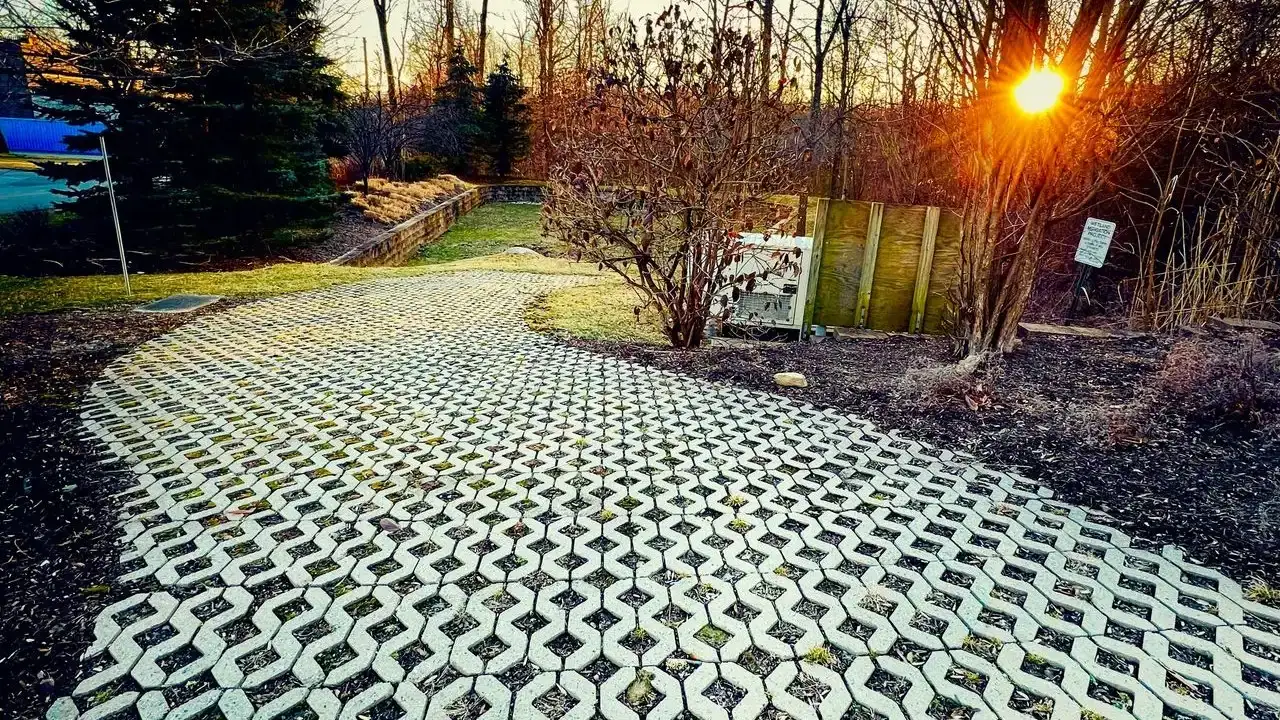

Garden makeovers usually begin with plants, but the paths, patios, and walls underfoot shape how a yard handles rain, waste, and upkeep for years. Fine Gardening [1] has turned its attention to these non-plant features, highlighting reclaimed bricks and permeable pavers as practical options for homeowners. The materials are often ones a homeowner would buy anyway, which makes the environmental case easier to act on. ([5])
Letting Rain Soak In Instead of Running Off
For decades, many sidewalks and patios were built from materials that water could not pass through, so rainfall ran across the surface toward drains. It’s been the norm for many years to build sidewalks, driveways, and patios from impenetrable substances, such as concrete slabs or flagstone, brick, or pavers set into mortar. ([2]) Permeable designs reverse that pattern. Open-grid pavers allow grass to grow through the pavement, creating a reinforced surface that can help manage stormwater when installed over a suitable base. The base matters. Permeable pavers typically sit over layers of varying-sized stone or aggregates underneath that filter and direct stormwater ([3]).
Not every permeable project requires specialized products. Setting brick or pavers into sand rather than mortar leaves the joints open. You still have the benefit of a firm surface for walking or seating arrangements, but rain can soak into the cracks. That approach suits a formal brick patio as well as a looser path of stepping stones.
Giving Old Brick a Second Life
Reclaimed brick offers a different advantage. Salvaged units keep usable material out of the waste stream, and their weathered surfaces are hard to reproduce. Fine Gardening points out that reclaimed pavers are particularly appealing when their varied colors and textures complement an established landscape. [1] Brick can also serve in smaller roles. You might use reclaimed brick as an edging detail around garden beds or fire pits.
Buyers should check suitability before purchase, though. Not all salvaged brick holds up outdoors. One guide advises choosing ‘hard’ reclaimed bricks for paving (frost-resistant, low water absorption) ([4]). Fine Gardening’s regional advice is similar, noting that in the Midwest, bricks must withstand outdoor exposure and freeze-thaw cycles. [1]
What to Weigh Before Building
Eco-friendly hardscaping involves tradeoffs, and a few practical points deserve attention before a project begins:
- Base preparation determines whether permeable pavers drain properly, so a layered base is essential.
- Reclaimed brick should be tested for frost resistance and water absorption before it goes down.
- Locally sourced materials can limit transportation impact, which is a factor many designers consider.
Cost is another consideration. Fine Gardening suggests that eco-friendly options can be more cost-effective over the long run because of lower maintenance needs and durability. [1] Long-term savings depend on the site, the climate, and the quality of the installation, so homeowners should compare quotes and expected upkeep rather than relying on any single figure.
A Practical Shift Underfoot
The greener garden does not always begin with a new plant bed. Often, it starts with the path to the back door or the patio where summer meals happen. Reclaimed brick reduces demand for new material, and permeable pavers return rainwater to the soil instead of sending it away. Neither change requires a dramatic redesign, and both give the landscape a character that is hard to achieve with new materials alone.
AI Disclaimer: This article was created with the assistance of AI tools and reviewed by a human editor.