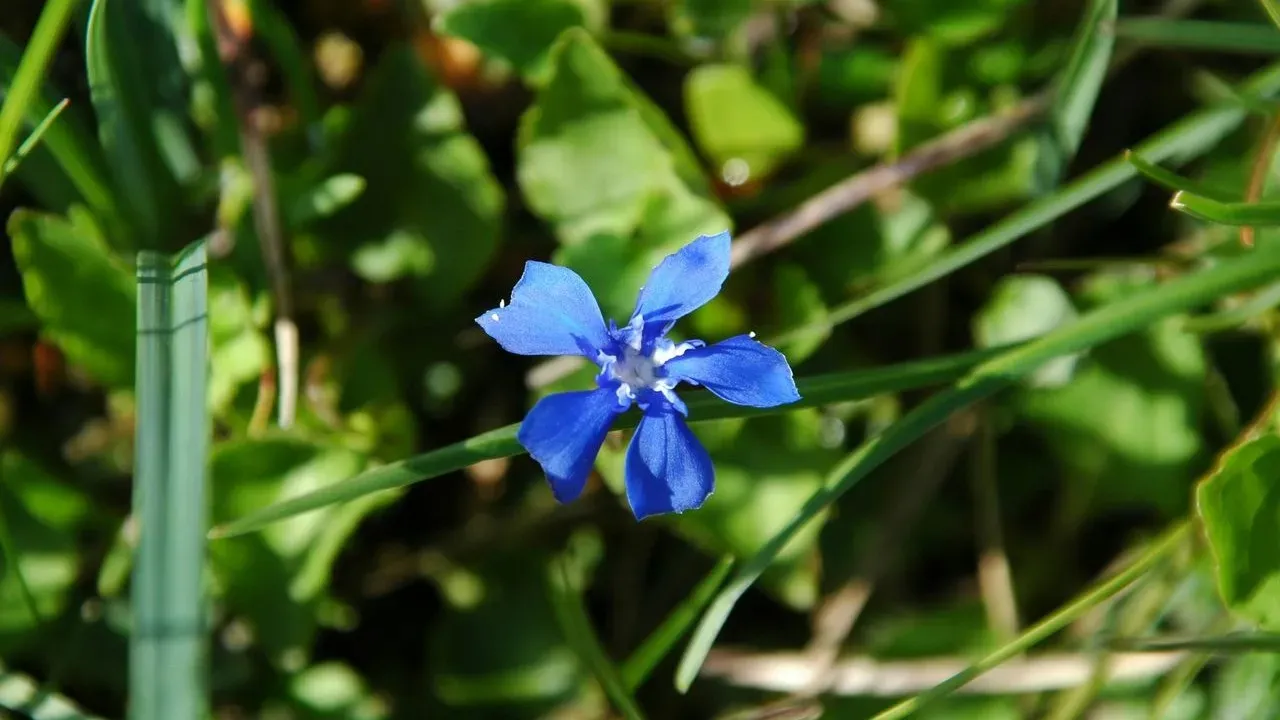

True-blue flowers remain one of the scarcest colors in the natural world, yet gentians offer gardeners a reliable way to bring that striking hue into borders, containers, and rock gardens. These alpine perennials form tough, mat-like clumps that return year after year with minimal fuss. They flower in spring or fall and perform best where summers stay mild. ([1])
The Allure of a Color Almost Never Seen
Most flowers lean toward reds, yellows, or purples because true blue requires specific pigments that few plants produce. Gentians stand out precisely because they achieve that vivid, saturated blue without artificial breeding tricks. The result is a flower that catches the eye from a distance and pairs dramatically with greens, silvers, and whites in any planting scheme.
Gardeners often describe the color as electric or jewel-like, qualities that make even small plantings feel substantial. Because the hue is so uncommon, a single clump of gentians can serve as a focal point rather than blending into the background.
Where These Perennials Shine
Rock gardens provide the sharp drainage and cool root zones gentians prefer, allowing the low mats to spill over stones without crowding taller neighbors. Containers work equally well on patios or balconies, where the plants can be moved if summer heat intensifies. In borders they create a cool contrast against warmer-toned companions.
Their compact habit also suits narrow spaces or the front edge of beds, where their flowers remain visible rather than hidden behind larger foliage. Many gardeners combine them with other alpines or dwarf conifers to echo a mountain-meadow effect.
Climate and Care Basics
Gentians tolerate cold winters but need protection from intense afternoon sun in hotter regions. They thrive when daytime temperatures remain moderate and nights cool, conditions common in many northern or coastal gardens. In warmer zones, afternoon shade or eastern exposure helps prevent stress.
Once established, the plants require little beyond consistent moisture during active growth and good air circulation to discourage fungal issues. Their perennial nature means one successful planting can deliver color for many seasons with only routine weeding and occasional division.
Practical Advantages for Home Landscapes
Beyond color, gentians offer durability in challenging spots where other perennials struggle. Their mat-forming roots help stabilize slopes and reduce erosion in rockeries. The foliage stays attractive even after bloom, providing year-round texture in four-season gardens.
Because they are relatively deer-resistant and low-maintenance, gentians fit well into wildlife-friendly designs that still prioritize visual impact. Their spring or fall flowering window also extends seasonal interest when many other plants have finished or not yet started.
Key points to remember:
- True-blue color is naturally rare and highly prized.
- Hardy, mat-forming perennials suited to rock gardens and containers.
- Best in mild summers with protection from intense heat.
- Low-maintenance once established, with spring or fall blooms.
Adding gentians gives any garden an uncommon accent that rewards observation throughout the growing season. Their combination of toughness and striking color makes them a worthwhile choice for gardeners seeking something distinctive yet dependable.
AI Disclaimer: This article was created with the assistance of AI tools and reviewed by a human editor.