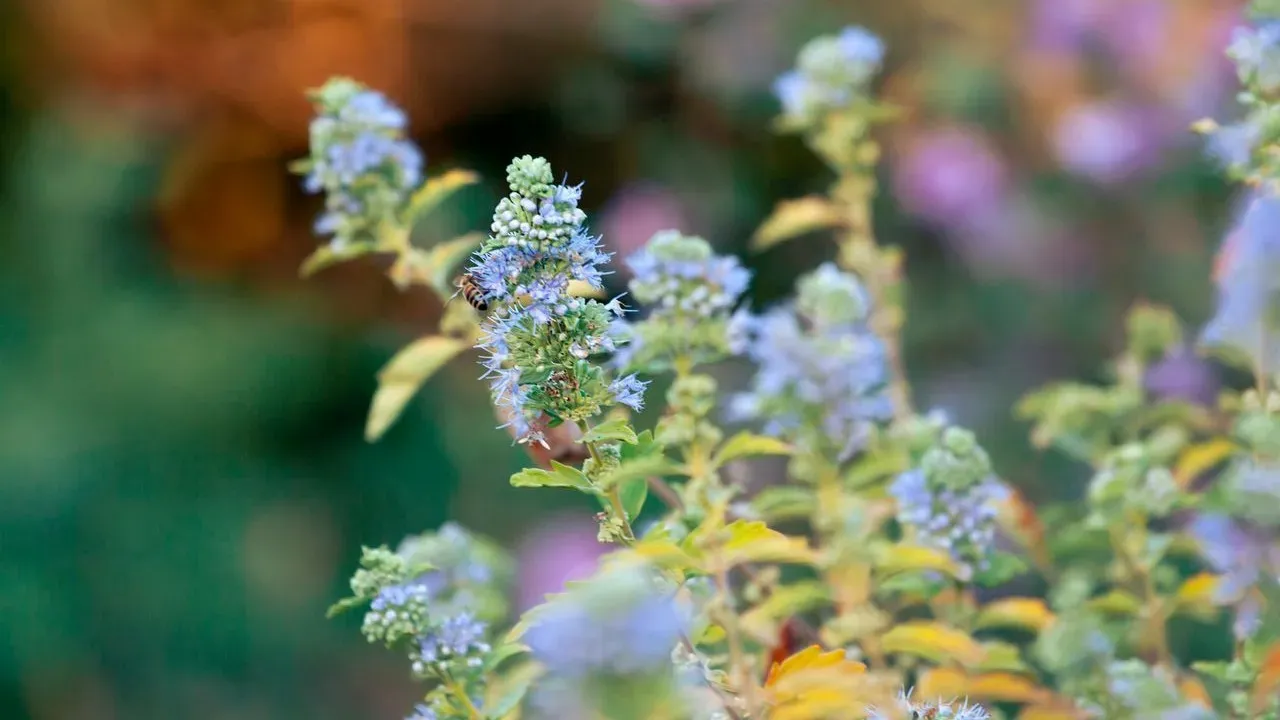

Gardeners often search for reliable color when summer settles in and many plants fade. Caryopteris stands out with clusters of true blue flowers that arrive just as the season peaks. Its leaves release a pleasant scent when brushed or warmed by the sun, adding another layer of appeal. The shrub earned notice decades ago as a trial plant valued for these sensory qualities.
Unexpected Color at Peak Season
Most summer shrubs lean toward pinks, purples, or whites. Caryopteris delivers a clear blue that feels rare in the landscape. The flowers form in dense clusters along the stems, creating a cool contrast against green foliage and the warm tones of the season. This timing fills a gap when many perennials have finished their first flush.
The blue hue holds steady through the hottest weeks. Gardeners who plant it once often return for more because the color reads so vividly from a distance. It works well in mixed borders or as a low hedge where the blooms can be appreciated up close or from across the yard.
Scent That Enhances Every Visit
Run a hand along the leaves and a clean, herbal aroma rises immediately. The fragrance lingers on skin and clothing, turning routine garden tasks into a more sensory experience. Many who encounter the plant for the first time comment on how the scent pairs naturally with the blue flowers.
Unlike some strongly perfumed shrubs, the aroma here stays subtle and pleasant rather than overpowering. It becomes especially noticeable on warm afternoons when the sun draws the oils to the surface. This combination of sight and smell gives the plant lasting presence beyond its bloom period.
Simple Care for Reliable Results
Caryopteris adapts well to average garden conditions once established. It prefers full sun and well-drained soil, thriving where summer heat builds. Pruning in late winter or early spring keeps the shrub compact and encourages fresh growth that supports the next round of flowers.
Water needs remain modest after the first year. The plant tolerates occasional dry spells without complaint, making it suitable for beds that receive less frequent attention. Fertilizer is rarely required beyond a light application in spring if growth appears slow.
Placing It for Maximum Impact
Position Caryopteris where the blue flowers can be viewed against darker evergreens or silver foliage for stronger contrast. It also pairs nicely with late-blooming perennials that share similar sun and soil preferences. The shrub’s rounded form softens straight lines in formal beds while adding structure to informal plantings.
Because the foliage stays attractive even after flowers fade, the plant continues to contribute texture into fall. Gardeners who value multi-season interest often keep it in prominent spots rather than tucking it away. Its modest size fits smaller yards without overwhelming the space.
The aromatic foliage and wonderful blue flowers create a combination few other shrubs match during the height of summer.
Rediscovering Caryopteris reminds gardeners that strong performers sometimes hide in plain sight. Its reliable bloom, distinctive scent, and straightforward needs make it a practical choice for anyone seeking more from the season. Those who add it now can enjoy the payoff for years ahead.
AI Disclaimer: This article was created with the assistance of AI tools and reviewed by a human editor.