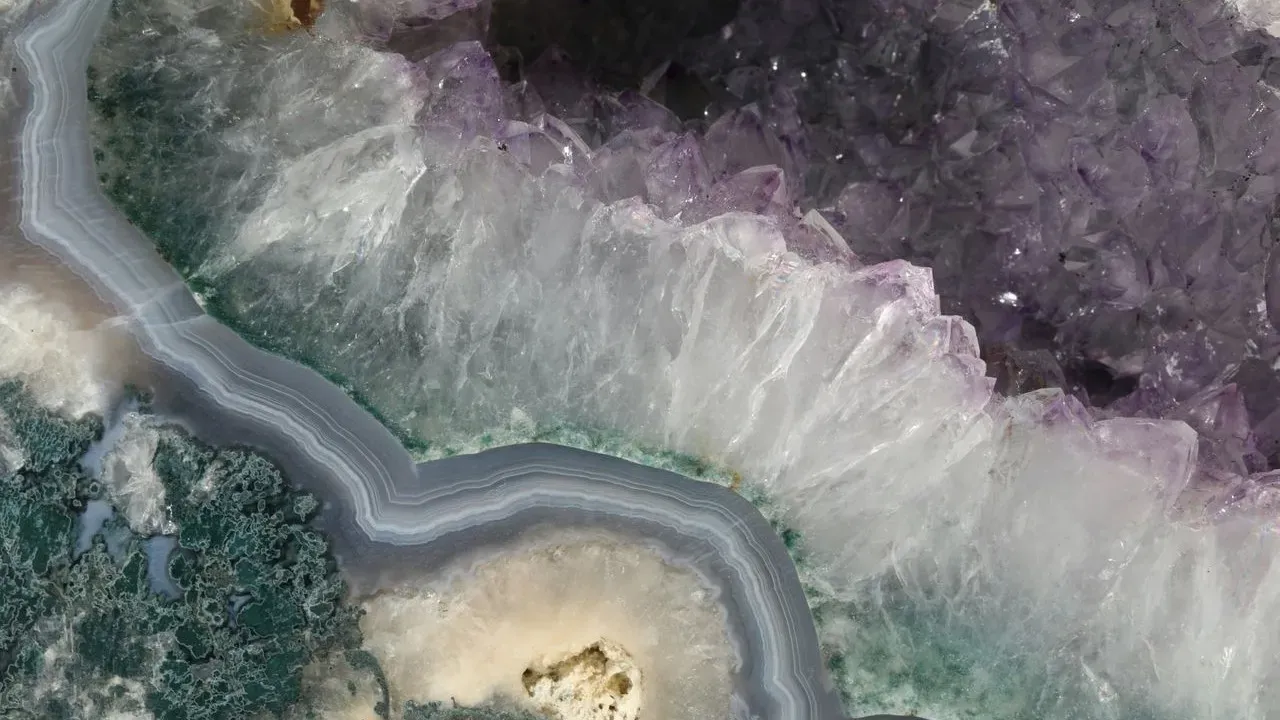

More couples are stepping away from the conventional diamond solitaire and toward gemstones that carry visible traces of the natural world. Moss agate, with its translucent quartz body and branching green inclusions, has emerged as a leading choice for those who want an engagement ring that feels rooted in the outdoors rather than mined for uniformity. The shift reflects a broader desire for jewelry that mirrors personal values around individuality and the environment.
A Stone That Mirrors the Forest Floor
Moss agate forms when mineral inclusions, often manganese or iron oxides, settle into branching patterns inside chalcedony during its growth. The result resembles tiny ferns, moss clumps, or watercolor strokes suspended in milky white, pale green, or gray quartz. No two stones share the same arrangement, giving each ring a distinct character that cannot be replicated by machine or mold. This organic quality appeals directly to people planning garden ceremonies or woodland celebrations. The stone’s earthy palette and plant-like markings complement textured gold bands, leaf motifs, and botanical engravings without needing additional embellishment. Many see the choice as an extension of their wedding theme rather than a departure from it.
Practical Strength for Daily Life
Moss agate measures between 6.5 and 7 on the Mohs scale, placing it in the same range as amethyst or citrine. It withstands ordinary wear when set protectively, though it requires more attention than harder gems. Bezel settings that encase the edges and lower-profile designs reduce the chance of chips or scratches during routine activities. Couples who select the stone often report that thoughtful care keeps it looking fresh for years. Gentle cleaning with warm water and mild soap, followed by drying with a soft cloth, preserves the clarity of the inclusions. Removing the ring before gardening, heavy cleaning, or workouts further protects the surface.
Symbolism That Goes Beyond Sparkle
Beyond appearance, moss agate carries longstanding associations with growth, balance, and connection to the living world. For partners who view their relationship as an evolving, organic process, the stone offers a tangible reminder of those qualities. Its natural formation story becomes part of the ring’s meaning in a way a flawless diamond rarely does. Designers have responded by creating settings that highlight rather than compete with the stone’s internal patterns. Open-backed or semi-open mounts allow light to travel through the gem, revealing depth and movement. Small diamond accents can provide contrast when desired, yet the moss agate remains the clear focal point.
Coordinating the Full Bridal Set
One practical advantage of choosing moss agate lies in how easily it inspires matching or complementary pieces. A wedding band can echo the same organic textures or carry a smaller slice of the same material for continuity. Simpler bands paired with a more detailed engagement ring keep the central stone prominent while maintaining visual balance. The approach allows couples to build a cohesive collection without forcing every piece to match exactly. Warmer metals such as yellow or rose gold tend to enhance the stone’s natural tones, while cooler options create a sharper modern contrast.
What Changes When Nature Leads the Design
The move toward moss agate signals a wider recalibration in how people mark commitments. Instead of prioritizing rarity measured in carats or clarity grades, many now value uniqueness that cannot be duplicated and a visible link to the landscapes they cherish. The stone’s accessibility also frees budget for higher-quality settings or larger sizes when desired. As more jewelers stock moss agate options, the once-niche choice is becoming a familiar request. For couples who want their rings to tell a story grounded in the natural world, the decision offers both lasting wearability and a daily connection to the outdoors they love.
AI Disclaimer: This article was created with the assistance of AI tools and reviewed by a human editor.