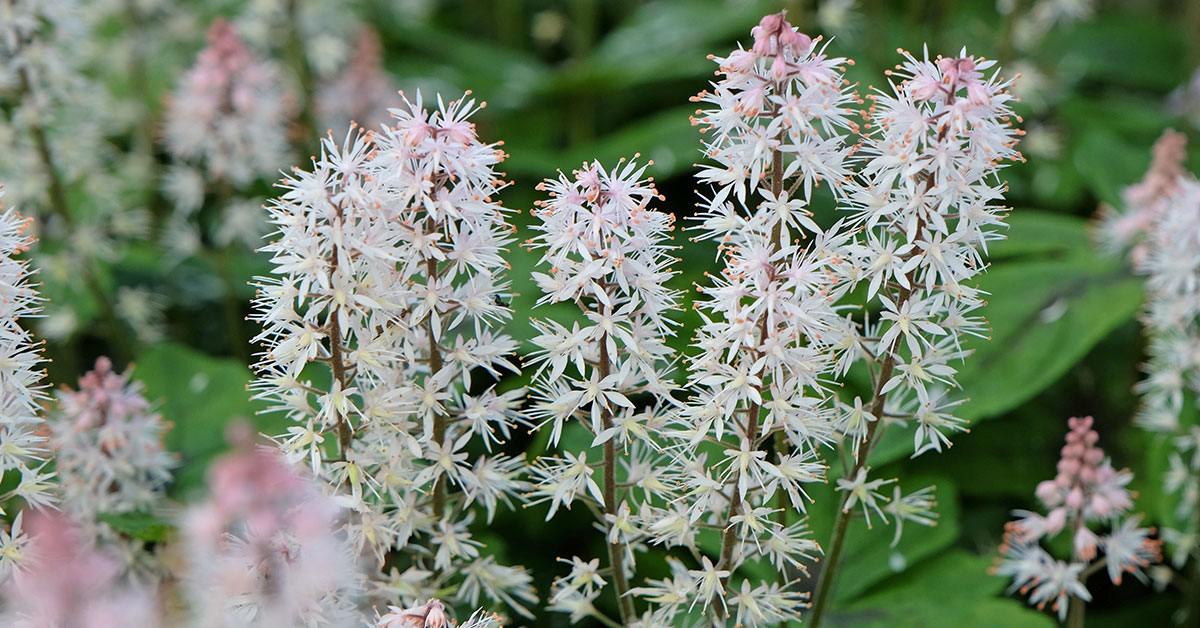

The foam flower, or Tiarella spp., is a hardy and enchanting addition to any shade garden, known for its appealing foliage and delicate, frothy flowers. In this article, we’ll delve into the characteristics of foam flowers, their native habitat, and guide you through the process of cultivating and propagating these lovely plants.
What are Foam Flowers?
Tiarella, commonly known as a foam flower, is a genus of perennial plants in the family Saxifragaceae. These plants are native to North America and Asia and are popular choices for shade gardens due to their attractive foliage and delicate flowers.
Foamflowers are herbaceous perennials that typically form clumps of low-growing foliage. The leaves are usually heart-shaped or deeply lobed, with distinctive veining. The foliage often retains its color throughout the growing season, adding visual interest to the garden even when the plants are not in bloom.
These versatile perennials can be used in various garden settings. They make beautiful ground covers, adding a carpet of foliage and delicate flowers. Foamflowers are also suitable for rock gardens, borders, or along shaded pathways. They can be combined with other shade-loving plants, such as hostas, ferns, and heucheras, to create visually appealing and low-maintenance plant combinations.
With their attractive foliage, dainty blooms, and adaptability to shade, Tiarella plants are valued for their contribution to shade gardens and woodland landscapes. They are relatively easy to grow and require minimal maintenance, making them an excellent choice for gardeners seeking charming and reliable perennials.
What Do Foam Flowers Look Like?
Foam flowers are compact plants, typically growing 6 to 12 inches high and spreading 12 to 18 inches wide. The foliage of these plants is deeply lobed, similar to a maple leaf, and often displays marked veins. Depending on the variety, the leaves can be green or have a reddish-bronze hue, especially in cooler weather.
In spring, foam flowers produce long, slender stalks that rise above the foliage. Each stalk carries numerous tiny, star-shaped flowers that are white or pale pink, creating a frothy effect that gives the plant its common name.
Foam Flower Native Habitat and Invasiveness
Foam flowers are native to the woodlands of North America, particularly the eastern United States and Canada. They are naturally found in moist, shady forest environments, thriving in the understory.
As for their invasiveness, foam flowers are not typically considered an invasive species. Instead, they are often recommended as a non-invasive alternative to some groundcover plants that have the potential to become invasive. They spread gradually, forming clumps rather than taking over an area aggressively.
How to Grow Foam Flowers
To successfully grow Tiarella, or foamflowers, follow these guidelines:
- Site Selection: Choose a location that provides partial to full shade. Tiarella plants prefer protection from direct sunlight, especially during the hot afternoon hours. They thrive in woodland gardens, shaded borders, or areas with dappled sunlight.
- Soil Preparation: Foamflowers prefer moist, well-draining soil that is rich in organic matter. Amend the soil with compost or well-rotted organic matter before planting to improve its fertility and drainage.
- Planting: Dig a hole slightly larger than the root ball of the Tiarella plant. Place the plant in the hole, ensuring that the crown (where the stems meet the roots) is level with or slightly above the soil surface. Backfill the hole with soil, gently firming it around the roots. Water thoroughly after planting to settle the soil and provide initial moisture.
- Watering: Foamflowers require regular watering to maintain moist soil conditions. Water the plants deeply and consistently, especially during dry periods or when newly planted. Avoid overwatering, as excessively wet conditions can lead to root rot. Mulching around the plants with organic matter can help retain soil moisture and regulate temperature.
- Fertilization: Tiarella plants generally do not require heavy fertilization. However, if the soil is poor or lacking in nutrients, you can apply a balanced, slow-release fertilizer in early spring. Follow the package instructions for the appropriate dosage and application method.
- Maintenance: Remove spent flowers and trim back any damaged or yellowing foliage to encourage continuous blooming and maintain the plant’s overall appearance. In late autumn or early spring, you can also cut back the entire plant to rejuvenate its growth.
- Division: Over time, Tiarella plants can form dense clumps. To maintain plant vigor and control their spread, divide the clumps every three to four years in early spring. Gently lift the plant, separate the clumps into smaller sections, and replant them in prepared soil. Ensure each division has sufficient roots and foliage.
- Pest and Disease Management: Foamflowers are generally resistant to pests and diseases. However, keep an eye out for slugs or snails, which can sometimes feed on the foliage. Handpicking or using organic slug control methods can help manage infestations.
By following these guidelines, you can cultivate healthy and vibrant Tiarella plants in your garden. Remember to adapt the care routine to the specific conditions of your region and consult local gardening resources for additional advice tailored to your area.
How to Propagate Foam Flowers
Foam flowers can be propagated by division or from seed.
Division: This is the easiest method. In spring or early fall, dig up a clump and gently separate your foam flower into smaller pieces, each with roots attached. Replant these divisions immediately.
From seed: Foam flowers can also be grown from seed, but they can take some time to mature. Sow seeds in a cold frame or unheated greenhouse in the fall. Seedlings can be transplanted to their final location in the spring.
In conclusion, foam flowers are a charming addition to any shade garden, offering attractive foliage and delightful blooms. Their non-invasive nature and easy care requirements make them a joy to grow. With a little care and attention, you can enjoy these beautiful plants in your own garden for many years to come.