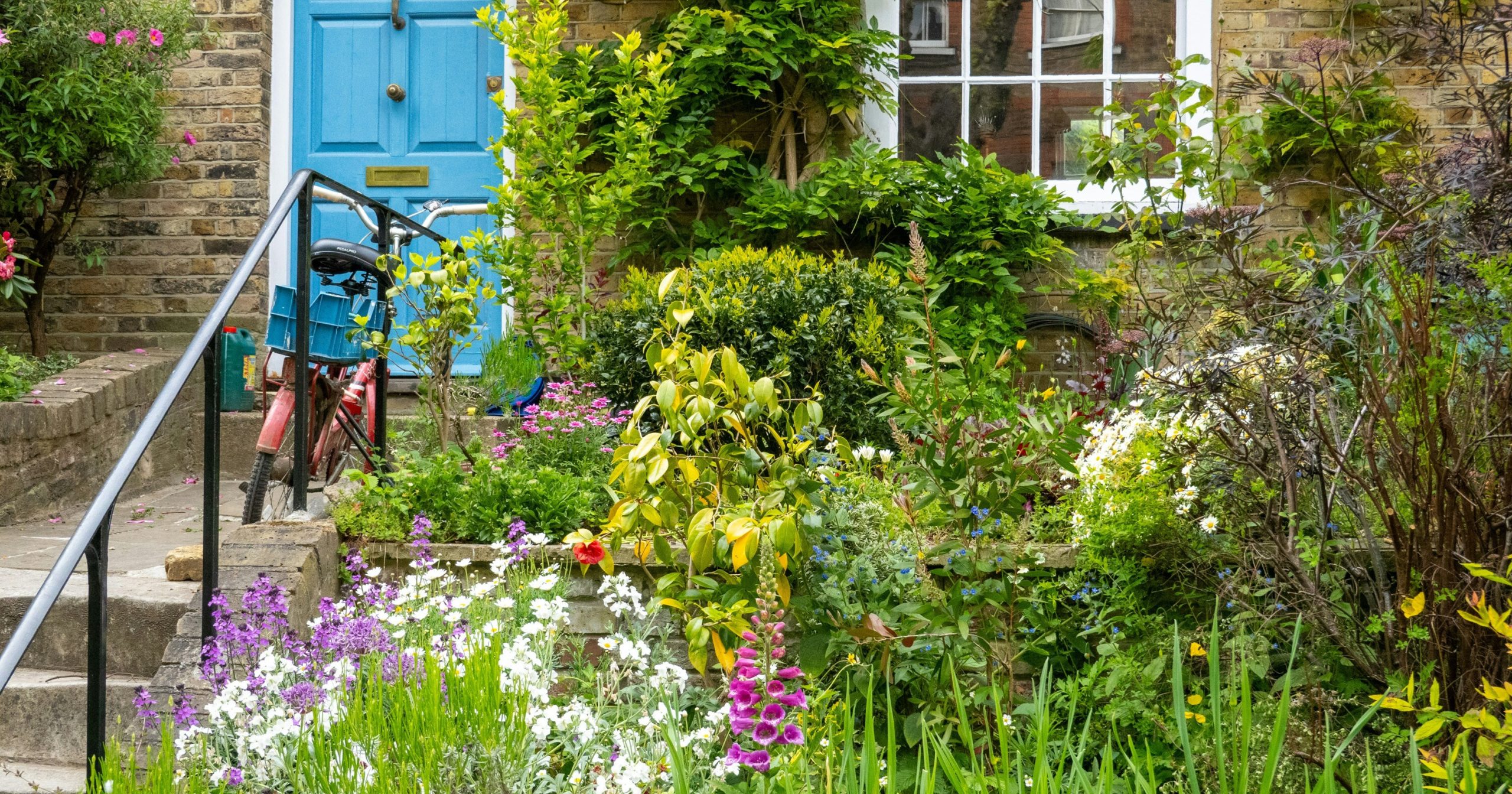

September can be a bit of a tricky month in the garden. Summer’s heat is fading, and the days are starting to shorten, but that doesn’t mean your garden has to go into hibernation just yet! If you’re anything like me, you’ll want to squeeze out every last bit of color and life from your flower beds before the first frost. Luckily, there are plenty of beautiful flowers that thrive in September, keeping your garden vibrant and full of life when many other plants are winding down. It’s such a joy to see those late bloomers still going strong, attracting pollinators and adding a splash of color to your outdoor space.
These September stars not only bring beauty to your garden but also play important roles in supporting local wildlife. Many of these flowers attract beneficial insects, provide late-season nectar for bees and butterflies, and even offer seeds for birds preparing for winter. Whether you’re looking for perennials that come back year after year or annuals that can be easily reseeded, there’s a variety that will fit your garden’s needs. So let’s dive into some of the best flowers to keep your garden blooming beautifully through September and beyond!
Sedum: The Succulent Superstar
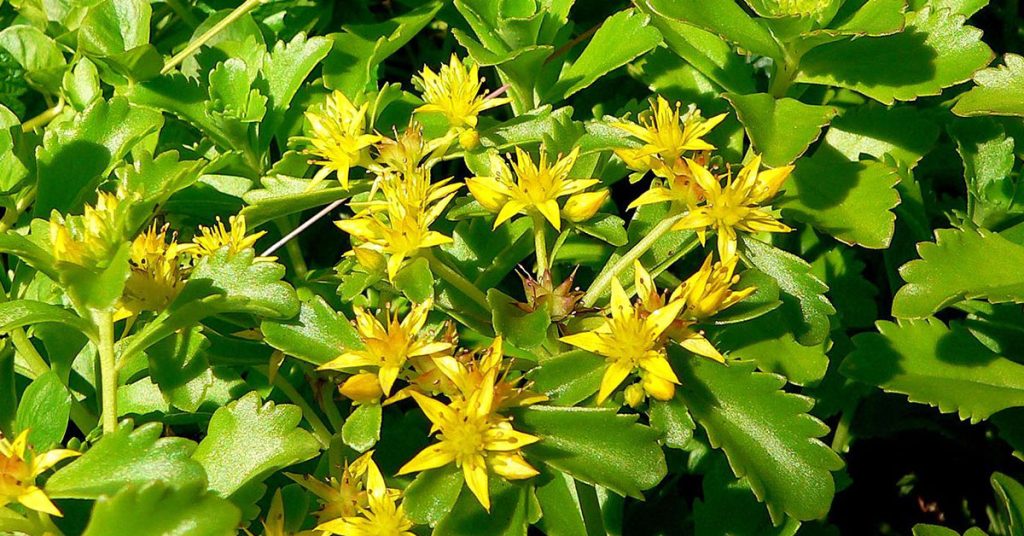
Sedum, also known as stonecrop, is one of those plants that just keeps giving. Native to regions across the Northern Hemisphere, including Europe, Asia, and North America, sedum is a hardy perennial that thrives in September’s cooler temperatures. This succulent’s thick, fleshy leaves store water, making it incredibly drought-tolerant and perfect for those spots in the garden that don’t get a lot of attention. Sedum comes in many varieties, from low-growing ground covers to taller types that make stunning late-season focal points. I particularly love the ‘Autumn Joy’ variety, which bursts into bloom with clusters of pink flowers that gradually deepen to a rich coppery red.
Sedum’s nectar-rich flowers are a magnet for bees, butterflies, and other beneficial insects. It’s such a pleasure to see pollinators flocking to sedum when other blooms are starting to fade. And, because it’s a perennial, sedum will reliably return each year, gradually spreading and filling in your garden with minimal fuss. Even better, sedum is not considered invasive, so you can plant it without worry. Its ability to thrive in poor soils and its resistance to pests make it a must-have for any gardener looking to extend their garden’s bloom into the fall.
Japanese Anemone: The Elegant Late Bloomer
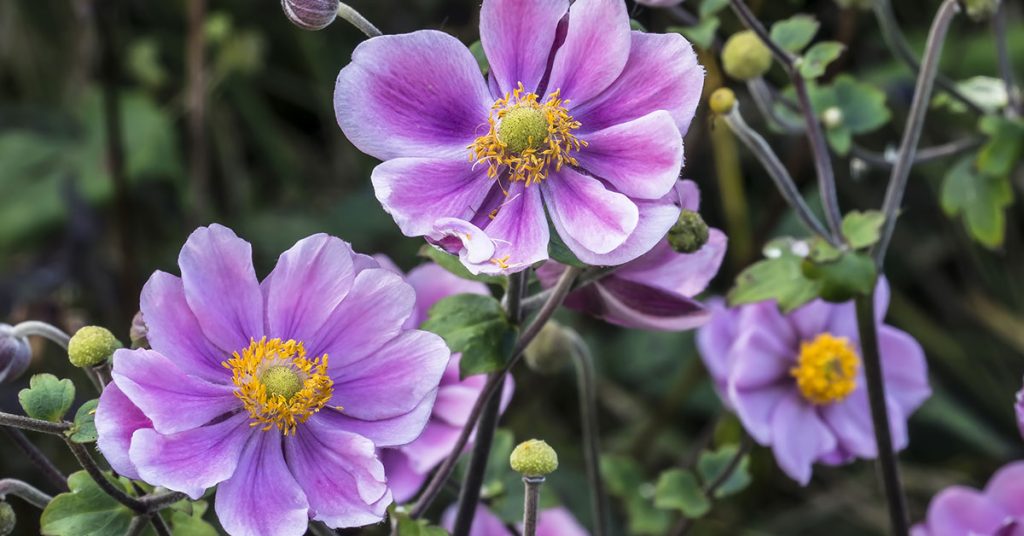
Japanese anemones are a gorgeous addition to the September garden, offering elegant, saucer-shaped blooms in shades of white, pink, and mauve. These perennials are native to China and Japan, where they’ve been cultivated for centuries, and they bring a touch of grace to any flower bed or border. Japanese anemones start blooming in late summer and continue well into the fall, providing a lovely display when many other flowers have finished. I adore how their delicate, nodding blooms catch the light, adding a soft, airy quality to the garden.
While Japanese anemones are generally well-behaved, they can spread if left unchecked, so it’s a good idea to give them a spot where they have a bit of room to roam. They prefer partial shade and well-drained soil, making them perfect for brightening up those tricky spots that get dappled sunlight. One of my favorite things about Japanese anemones is how they attract late-season pollinators like bees and hoverflies. Plus, their seeds can provide food for birds as they prepare for winter. With a little care, these elegant flowers will reward you year after year with their timeless beauty.
Asters: The Fall Favorite

Asters are an absolute must for extending your garden’s bloom into September. These cheerful, daisy-like flowers come in a variety of colors, including purples, pinks, blues, and whites, adding vibrant bursts of color to your late-season garden. Native to North America and Europe, asters are beloved for their ability to thrive in cooler weather, making them a staple in fall gardens. I love how their star-shaped blooms (the name “aster” actually means “star” in Greek!) brighten up my garden beds, especially when paired with other fall favorites like sedum or ornamental grasses.
Asters are a fantastic choice if you’re looking to support pollinators late in the season. Their nectar-rich flowers are a crucial food source for bees, butterflies, and even migrating monarchs, providing much-needed sustenance as these insects prepare for winter. Asters are generally not invasive, although some native varieties can spread a bit in ideal conditions, so keep an eye on them if space is a concern. With their long blooming period and ability to attract beneficial insects, asters are a beautiful and beneficial addition to any fall garden.
Rudbeckia: The Reliable Black-Eyed Susan

Rudbeckia, commonly known as Black-Eyed Susan, is a garden classic that’s hard to beat for late-season color and resilience. Native to North America, these perennials (and sometimes annuals) thrive in a wide range of conditions, from full sun to light shade, and they’re not fussy about soil. With their bright yellow or orange petals and dark, central cones, Rudbeckia blooms from midsummer right into the early fall, keeping the garden lively and vibrant. There’s something so cheerful about their sunny faces turning toward the light, even as the days begin to shorten.
Rudbeckia isn’t just pretty—it’s also a powerhouse for pollinators. Bees, butterflies, and other beneficial insects flock to its blooms, and birds enjoy its seeds once the flowers have faded. While some species of Rudbeckia can spread, they’re generally not considered invasive and can be managed easily by dividing clumps every few years. I’ve always found Rudbeckia to be one of the most reliable performers in the garden, coming back strong year after year and providing a pop of color that pairs beautifully with just about anything else you’re growing.
Russian Sage: The Aromatic Accent
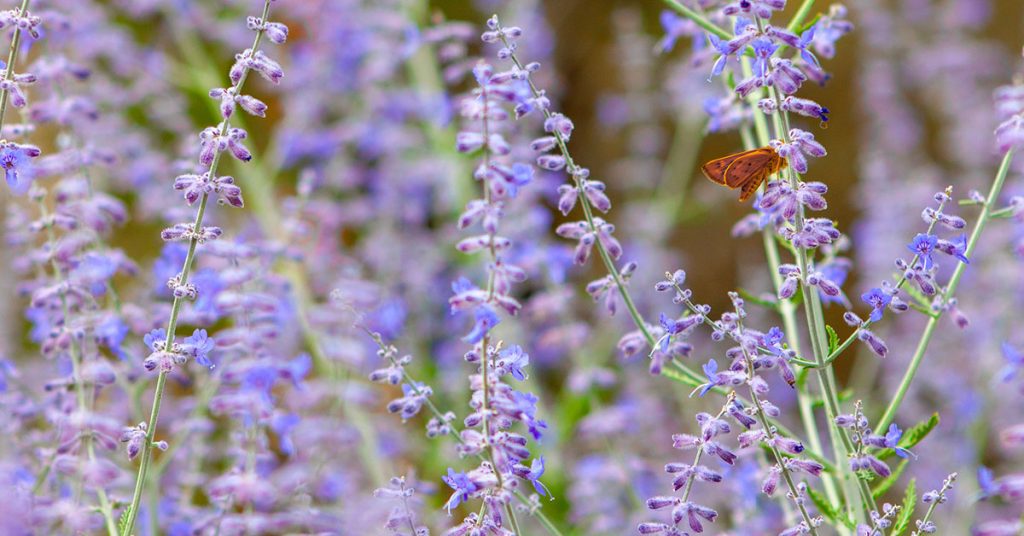
Russian sage is another fantastic option for extending your garden’s bloom into September. With its tall, airy spires of lavender-blue flowers and silvery-gray foliage, Russian sage adds a touch of elegance and movement to any garden. Native to Central Asia, this hardy perennial thrives in hot, dry conditions and is perfect for those sunny spots that can be challenging for other plants. I love how its delicate, aromatic leaves release a pleasant scent when brushed against—Russian sage is as much a sensory experience as it is a visual delight.
Pollinators adore Russian sage, and you’ll often find bees, butterflies, and even hummingbirds visiting its flowers well into the fall. It’s a great choice for supporting local wildlife as other food sources dwindle. While Russian sage is not considered invasive, it does have a tendency to spread, so give it some space to grow. Its drought tolerance, resistance to pests, and ability to thrive in poor soils make it a resilient addition to any garden, providing a splash of late-season color and fragrance that’s hard to beat.
Helenium: The Cheerful Sneezeweed
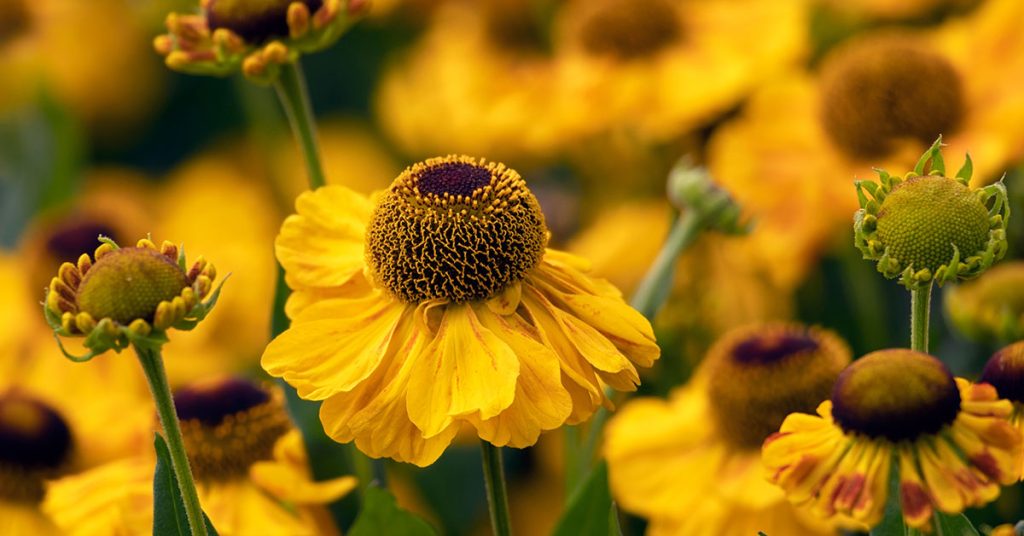
Helenium, also known as sneezeweed, is a vibrant addition to the September garden, bringing a cheerful display of warm reds, oranges, and yellows. Despite its somewhat unfortunate common name (no, it won’t actually make you sneeze!), Helenium is a delightful plant that brightens up the garden as summer fades. Native to North America, this perennial is a favorite for its long blooming season and ability to attract pollinators. Helenium loves full sun and moist, well-drained soil, and its tall, sturdy stems make it a great choice for adding height and drama to your garden beds.
One of the things I appreciate most about Helenium is its attractiveness to bees and butterflies, making it a valuable addition to pollinator-friendly gardens. Plus, birds enjoy its seeds as they prepare for the colder months. Helenium is not invasive, and it generally stays where it’s planted, though it may need dividing every few years to keep it vigorous. Its bright, daisy-like flowers are a joy to see swaying in the breeze, and they pair wonderfully with other fall bloomers like asters and sedum. Helenium is one of those plants that just feels like autumn, with its warm hues and sturdy, reliable presence in the garden.
Extending your bloom into September is all about choosing the right plants that can thrive in the cooler temperatures and shorter days of fall. From the succulent sedum to the vibrant Helenium, these flowers will keep your garden looking beautiful and buzzing with life well into the season.