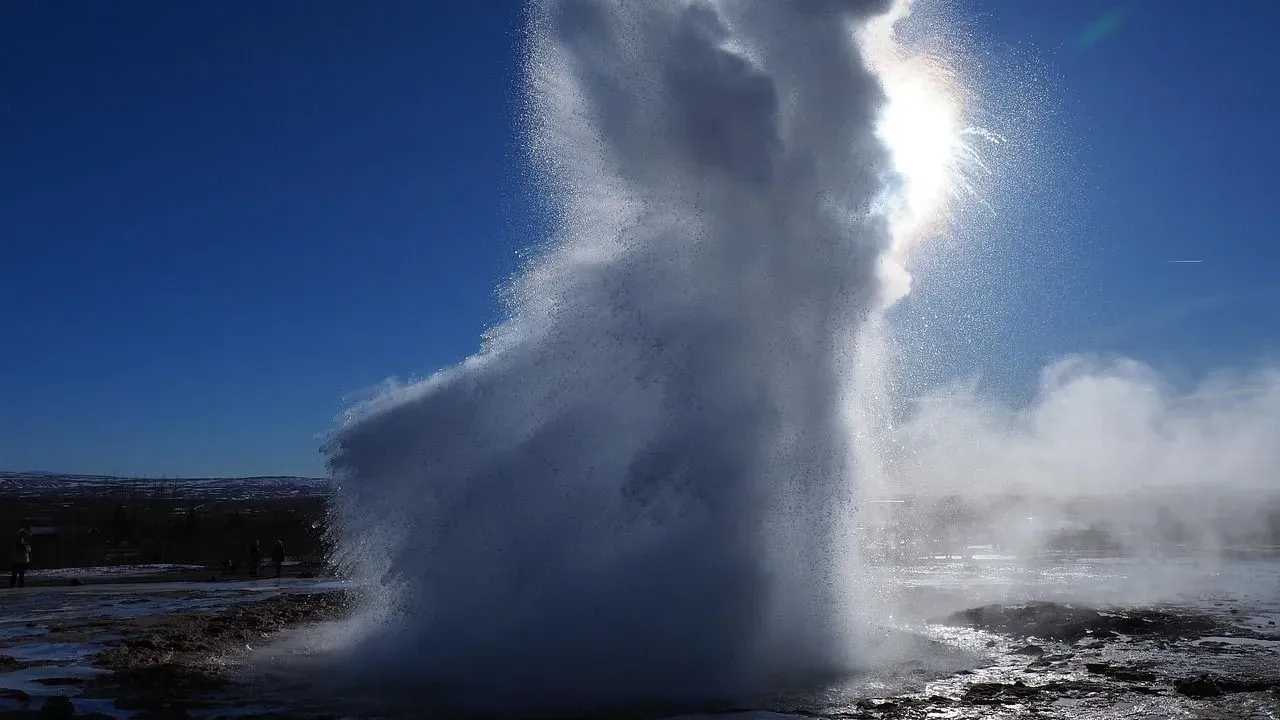

NASA’s Cassini spacecraft recorded unexpected patterns in the ice grains erupting from Saturn’s moon Enceladus more than a decade ago. A new explanation suggests the moon itself performs a kind of natural filtering as material leaves its subsurface ocean. The process could reshape how future missions hunt for organic compounds and other signs of potential habitability. ([1])
Cassini’s lingering puzzle
During its extended mission at Saturn, Cassini flew directly through the plumes rising from Enceladus’ south polar region. Instruments detected ice grains whose chemical makeup differed from what simple models of the hidden ocean predicted. Some compounds appeared more concentrated or altered than expected, leaving scientists with an incomplete picture of how material travels from the ocean to space.
The observations remained difficult to reconcile with straightforward venting scenarios. Researchers continued to examine the data long after the spacecraft’s mission ended in 2017, looking for a mechanism that could account for the observed variations without requiring additional unknown processes inside the moon.
Droplets that freeze and break apart
The proposed explanation centers on the journey of tiny droplets once they leave the ocean. As these droplets rise through cracks in the ice shell and enter the vacuum of space, they begin to freeze from the outside in. The freezing is not uniform; salts and other dissolved substances can be pushed ahead of the advancing ice front.
When the droplets eventually shatter, the fragments carry different chemical loads depending on how far the separation advanced. Grains that formed from the outer layers may contain one set of compounds, while inner remnants hold another. Over many such events, the plumes reaching space could become naturally sorted by composition.
This gradual fractionation happens on timescales short enough to affect the grains Cassini sampled yet slow enough to allow meaningful chemical separation. The result is a population of ice particles whose diversity reflects both the original ocean chemistry and the physical journey outward.
Why the idea matters for future exploration
If the sorting process operates as described, spacecraft no longer need to sample the ocean directly to gain useful information. Plume grains collected at a distance could already carry concentrated traces of organic molecules or other markers that would otherwise remain dilute in the bulk ocean.
Mission planners could therefore design instruments optimized for specific grain sizes or collection altitudes where the most informative particles are likely to be found. The same natural separation that once complicated interpretation of Cassini data might instead become a tool for more efficient sampling.
Engineers would still need to account for the fractionation when interpreting results, but the added step could reduce the amount of material required for detection and improve the chances of identifying low-abundance compounds.
Remaining questions and next steps
The model remains a hypothesis that fits existing observations rather than a confirmed mechanism. Laboratory experiments simulating the freeze-and-shatter sequence under Enceladus-like conditions would help test whether the predicted chemical separation actually occurs at the expected rates.
Future flybys or an orbiter equipped with higher-resolution mass spectrometers could map grain composition across different plume altitudes and eruption phases. Such measurements would show whether the diversity Cassini recorded repeats in a pattern consistent with progressive freezing.
Enceladus continues to stand out among icy moons because its plumes provide repeated access to material from a long-lived subsurface ocean. Understanding how that material is modified on its way out may prove as important as the ocean’s original chemistry when assessing its potential to support life’s building blocks.
AI Disclaimer: This article was created with the assistance of AI tools and reviewed by a human editor.