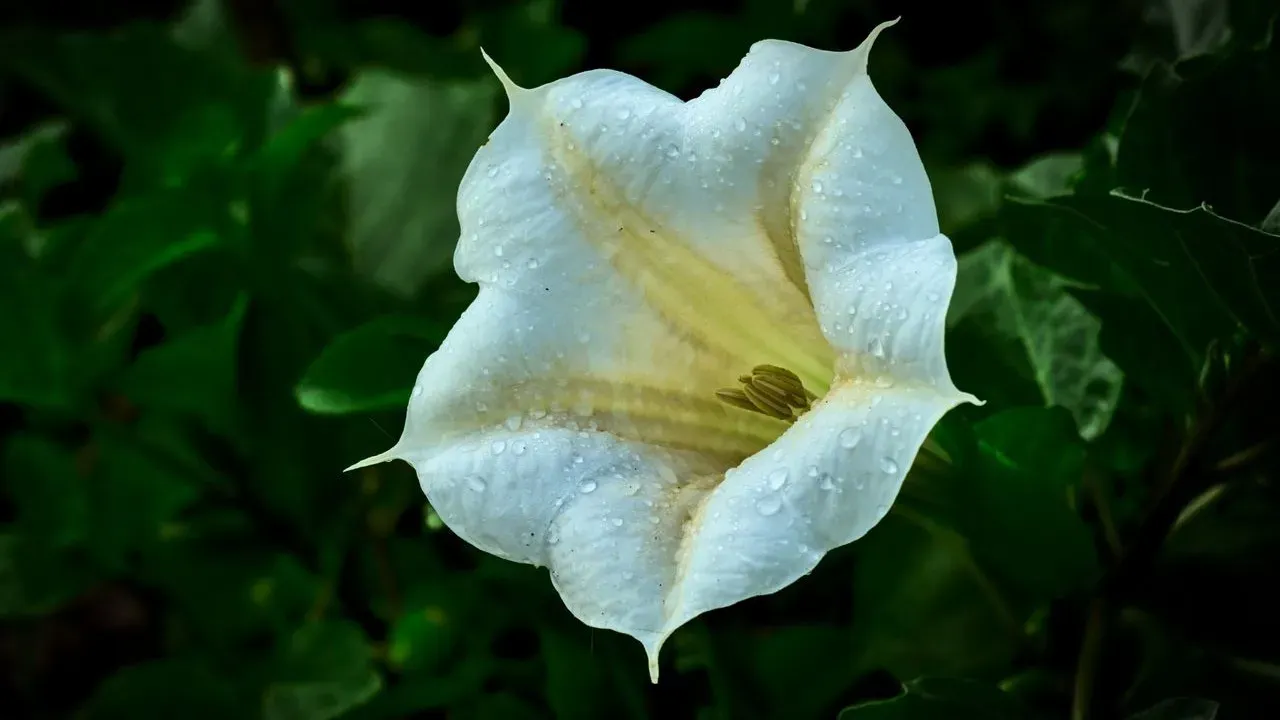

Gardeners seeking evening fragrance often turn to plants that come alive after sunset. Datura stands out for its rapid growth and lush foliage that quickly fills beds or containers. Its large trumpet-shaped flowers open at dusk and release an intense sweet scent that draws attention in moon gardens. Yet every part of the plant remains highly toxic, requiring careful placement away from children and pets. ([1])
A Striking Addition to Evening Landscapes
The plant earns its place in ornamental settings through reliable performance and visual drama. Fast-growing stems produce abundant leaves that create a full, handsome appearance in a single season. When the sun drops, the flowers unfurl to reveal their full size and shape, transforming ordinary beds into something more captivating. This timing makes datura a natural fit for spaces designed around nighttime enjoyment.
Planters benefit equally from the plant’s vigor. A single specimen can anchor a patio arrangement or soften the edge of a larger grouping. The combination of bold foliage and night-opening blooms gives designers flexibility across different garden styles without demanding constant attention during daylight hours.
Fragrance That Defines Moon Gardens
The sweet perfume released at dusk adds a sensory layer that daylight plants rarely match. Gardeners who enjoy outdoor spaces after dark often note how the scent carries on warm evening air. This quality aligns perfectly with moon garden concepts that emphasize white or pale flowers and reflective foliage under low light. Datura contributes both the visual pop and the olfactory reward in one package.
Because the flowers open on a predictable schedule, the plant supports intentional garden planning. Evening visitors or quiet moments on a terrace gain an extra dimension when the fragrance appears on cue. The effect remains consistent across beds and containers, allowing the same plant to serve multiple roles in a single landscape.
Essential Safety Considerations
Toxicity affects every part of the plant, from roots to flowers. This fact shapes placement decisions from the start of any project. Homeowners with young children or curious pets must weigh the visual and aromatic benefits against the need for secure boundaries. Raised planters or fenced areas often provide the necessary separation while still allowing the plant to thrive.
Clear labeling and education within the household help prevent accidental contact. Many experienced gardeners treat datura as a specimen that rewards observation from a respectful distance rather than close handling. The same caution applies during routine maintenance such as pruning or transplanting.
Practical Placement Strategies
Successful integration begins with matching the plant’s needs to available space. Full sun and well-drained soil support the fast growth that makes datura useful for quick impact. Once established, the plant maintains its presence through the season with minimal intervention beyond occasional watering.
Container culture offers additional control for those concerned about spread or access. Large pots keep the plant contained while still delivering the evening display. Grouping several specimens can amplify both the visual effect and the fragrance without increasing overall garden footprint.
Ultimately, datura rewards thoughtful siting with reliable evening interest. The contrast between its ornamental appeal and its toxicity simply underscores the need for informed choices before planting. Gardeners who respect those limits often find the plant adds a distinctive, memorable element to their outdoor spaces.
AI Disclaimer: This article was created with the assistance of AI tools and reviewed by a human editor.