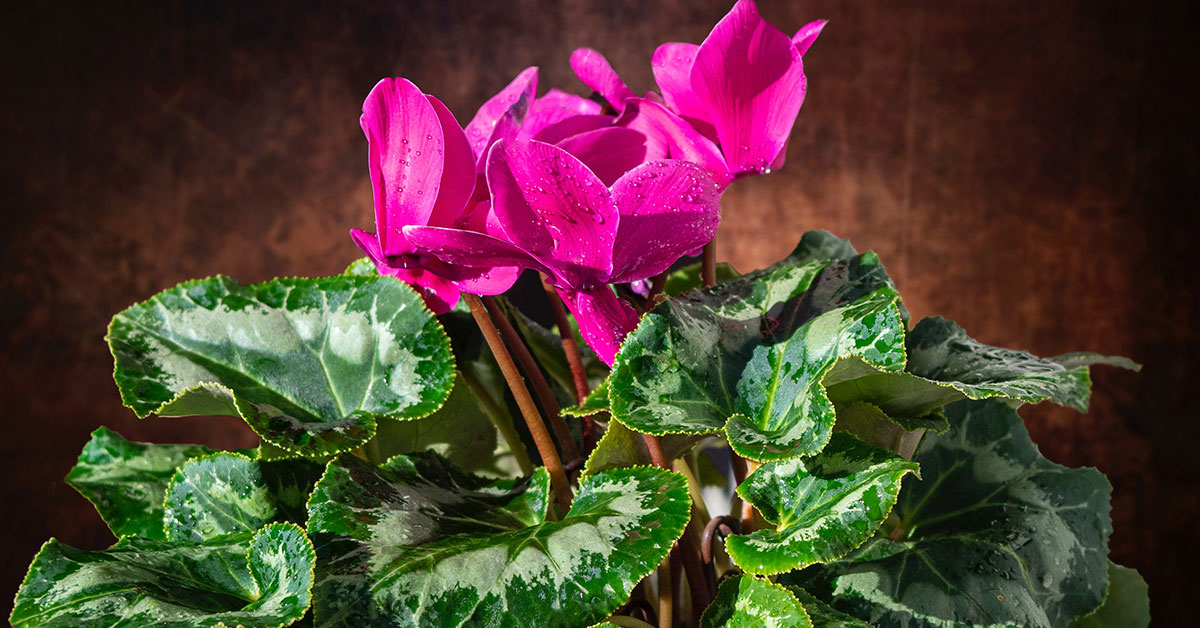

Cyclamen, with its delicate, upswept blooms and heart-shaped leaves, is a charming addition to both indoor and outdoor gardens. This detailed guide introduces cyclamen, its features, native regions, and a step-by-step process on how to grow them both indoors and outdoors, as well as methods to propagate them.
What is Cyclamen?
A cyclamen is a type of flowering plant that belongs to the Primulaceae family. It is native to the Mediterranean region, parts of Europe, and certain areas of the Middle East. Cyclamens are popular ornamental plants, valued for their attractive flowers and distinctive foliage.
The plant typically has heart-shaped leaves that arise from an underground tuber. The leaves can be green or variegated, often with attractive patterns. The flowers of cyclamens are small and delicate, with five petals that curl backward. The blooms come in a variety of colors, including shades of white, pink, red, and purple. They usually appear in late winter or early spring.
They are commonly grown as indoor plants or in outdoor gardens with temperate climates. They prefer cool temperatures, and their dormant period usually occurs during the summer months. When caring for cyclamens, it is important to provide well-drained soil, adequate watering, and indirect light. They can be propagated through seeds or by dividing the tubers.
While they are beautiful and popular as decorative plants, it’s worth noting that certain species of cyclamen, particularly Cyclamen persicum, can be toxic to pets if ingested. Therefore, it’s important to be cautious if you have animals around these plants.
What Does Cyclamen Look Like?
Cyclamen plants are characterized by their stunning, swept-back flowers that range from shades of pink, purple, red, and white. These flowers rise above the foliage and tend to bloom from fall to spring, depending on the species. The foliage itself is a sight to behold, with heart-shaped leaves patterned with silver and green variegations. The plant’s height generally reaches around 6-9 inches.
Bloom period
Cyclamen species have different blooming periods, but most typically bloom from fall to early spring. For example, the popular indoor Cyclamen persicum, also known as the florist’s cyclamen, usually blooms from winter to spring.
Outdoor species such as Cyclamen hederifolium and Cyclamen coum are hardy cyclamen that flower in the fall and winter, respectively. Cyclamen purpurascens blooms in the summer.
Regardless of the species, cyclamen are appreciated for their beautiful, swept-back flowers that come in shades of white, pink, red, and lavender, and their heart-shaped, often patterned leaves. Always check the blooming period for the specific variety of cyclamen you have to provide appropriate care.
Where is Cyclamen Native and Is it Invasive?
Cyclamen is native to parts of Europe and the Mediterranean region, including areas in the Middle East and North Africa. The plants often grow naturally in mountainous regions, forest floors, and scrubland areas. Despite their widespread growth in native regions, cyclamen are not considered invasive plants. In non-native regions, they’re often grown as houseplants or garden plants in suitable climates without being harmful to native plant ecosystems.
How to Grow Cyclamen Indoors
Developing the knack for growing cyclamen indoors opens the door to year-round floral beauty in your home, regardless of outdoor weather conditions. Cyclamen, with its vibrant, butterfly-like flowers and heart-shaped leaves, brings a touch of whimsy and color to any interior space.
Beyond aesthetics, having cyclamen indoors can also provide health benefits, as indoor plants are known to improve air quality, reduce stress, and enhance mood. Additionally, cultivating these flowers indoors allows you to gain a more intimate understanding of plant care, particularly as cyclamen has specific watering and temperature needs.
Knowing how to grow cyclamen indoors not only enriches your personal space but also fosters a rewarding, hands-on relationship with nature, right in the comfort of your home. Follow these steps for successful growth:
- Light and Temperature: These flowers prefers bright, indirect light. Avoid direct sunlight, which can scorch the leaves. Cooler temperatures are ideal, with daytime temperatures of 60-65°F and slightly cooler at night.
- Watering: Water when the top of the soil feels dry, watering under the leaves directly onto the soil to avoid wetting the crown of the plant, which can lead to rot.
- Feeding: Feed your plants every few weeks during their active growing period using a balanced, water-soluble fertilizer diluted to half strength.
- Dormancy: Cyclamen plants have a period of dormancy. When leaves start to yellow in spring, gradually reduce watering until the leaves die back. Stop watering completely for six to eight weeks to mimic the dry Mediterranean summer.
How to Grow Cyclamen Outdoors
Knowing how to grow cyclamen outdoors is essential for anyone looking to add a splash of color to their garden during seasons when many other plants are dormant. Many cyclamen species bloom in fall, winter, or early spring, presenting delicate, swept-back flowers that add interest and vibrancy to your garden.
Additionally, cyclamen’s unique leaf patterns offer visual appeal even when the plant is not in bloom. Growing cyclamen outdoors also contributes to local ecosystems by providing an early or late-season food source for pollinators.
By understanding the care and needs of outdoor cyclamen, gardeners can cultivate a dynamic, year-round garden that’s not only a joy to behold but also beneficial to local biodiversity.
The following steps provide a general guideline:
- Choose the Right Cyclamen: First, it’s crucial to choose a variety that can tolerate outdoor conditions. Hardy varieties like Cyclamen hederifolium and Cyclamen coum are good options. They’re well-suited to USDA Hardiness Zones 5-9.
- Location: These flowers prefer partially shaded areas. Too much sunlight can scorch the leaves, while too little can limit flower production. They’re often planted under deciduous trees where they get sunlight in the winter and shade in the summer.
- Soil: They prefer well-draining soil to prevent waterlogging, which can lead to rot. They also like slightly alkaline soil, so you may need to adjust your soil’s pH accordingly. Adding compost or well-rotted manure can help improve the soil structure.
- Planting: Plant tubers just beneath the soil surface, with the pointed end facing upwards. Space them about 6-10 inches apart. Water thoroughly after planting.
- Watering and Care: Keep the soil slightly moist but not waterlogged. During the dormant period in the summer, water sparingly.
- Maintenance: Remove spent flowers to encourage more blooming. After the cyclamen finishes blooming, let the foliage die back naturally.
Remember that every garden and climate is unique, so it may take some trial and error to find the best conditions for your plant. Monitor your plants closely and adjust care as needed.
Propagation
Cyclamens can be propagated through several methods, including seed propagation and division of tubers. Here are the steps for each method:
- Seed Propagation:
- Collect ripe seeds from the cyclamen plant. The seeds are usually contained in a seedpod that forms after the flowers have bloomed and faded.
- Prepare a well-draining potting mix. A mixture of equal parts peat moss, perlite, and sand works well.
- Moisten the potting mix slightly, ensuring it is damp but not overly wet.
- Sow the cyclamen seeds on the surface of the potting mix, gently pressing them in. Do not bury the seeds.
- Cover the pot with a plastic bag or place it in a propagator to create a humid environment.
- Place the pot in a warm location with indirect light.
- Keep the potting mix consistently moist by misting or watering lightly when needed.
- The seeds will germinate in a few weeks to a couple of months. Once the seedlings have developed a few leaves, they can be transplanted into individual pots.
- Division of Tubers:
- Wait until the cyclamen plant enters its dormant period, which typically occurs during the summer months.
- Carefully remove the plant from its pot or dig up the tubers from the garden.
- Gently separate the tubers, ensuring each division has at least one growing point or bud.
- Plant the divisions in individual pots or back in the garden, if desired.
- Use a well-draining potting mix and plant the tubers with the growing points just below the soil surface.
- Water the newly planted tubers lightly and place them in a cool, shaded area.
- Gradually increase watering as new growth emerges.
Whether you choose to propagate cyclamens from seeds or tubers, it’s important to note that cyclamens can take some time to establish and may not flower for the first year or two. Patience and proper care are key when propagating cyclamens.
Growing cyclamen, whether indoors or out, requires attention to their specific needs but can yield a wonderful display of flowers during the cooler months of the year. With their distinctive blooms and patterned foliage, they are sure to be a focal point in any setting.