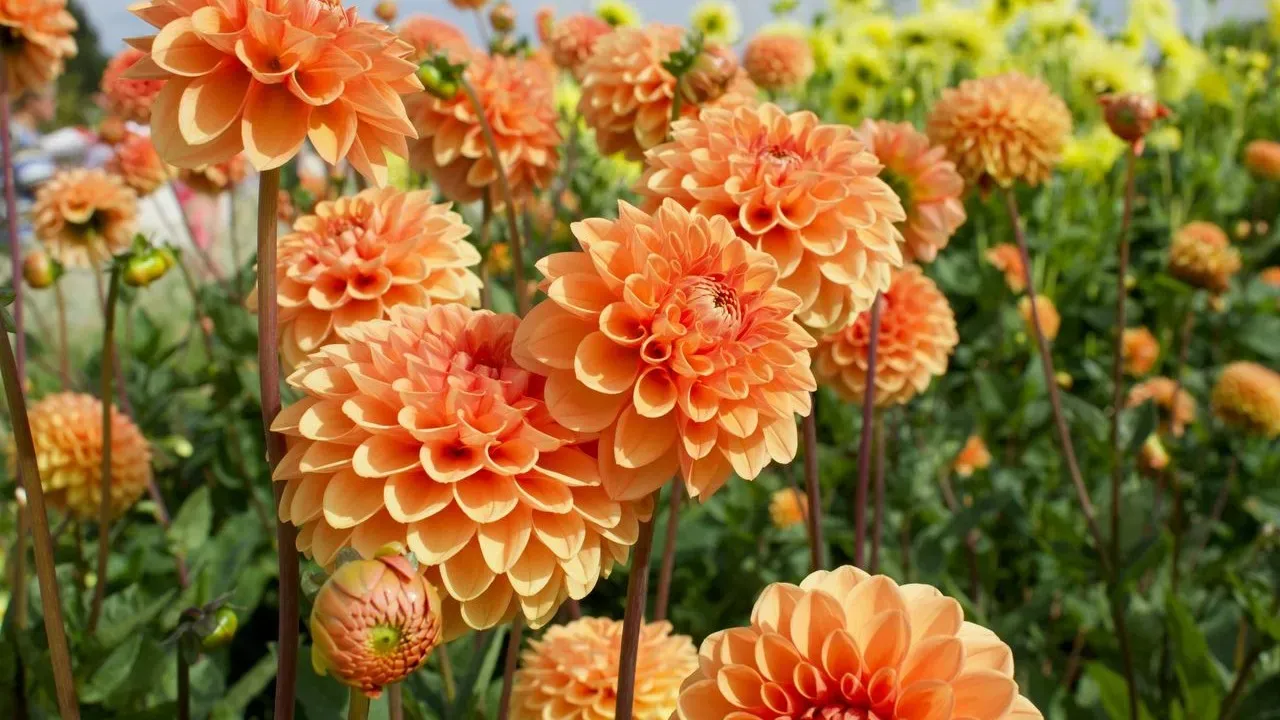

In a New Jersey backyard, a modest vegetable garden once occupied the available space with rows of practical crops. Over time, dahlias moved in and reshaped the entire layout. Cory, the gardener who tends the plot, watched the change unfold as the new flowers claimed more ground each season.
Starting with Practical Intent
The project began with a clear focus on edibles. Cory planted standard vegetable beds to supply the household with fresh produce. The setup followed familiar patterns for home gardeners seeking reliable yields from limited space.
Fruit trees were added early as well, providing longer-term structure and future harvests. These choices reflected a straightforward approach to backyard use, where every plant served a direct purpose. The initial design left little room for ornamentals.
Dahlias Enter the Picture
Dahlias arrived gradually, often as gifts or impulse purchases from local nurseries. Their bold blooms and varied forms quickly stood out against the more utilitarian vegetables. Cory found the plants rewarding to grow, with tubers that could be saved and divided each year.
Soon the flowers occupied larger sections of the beds. Their height and color drew attention away from the original crops. The shift happened without a single dramatic decision, but through steady additions that altered the garden’s balance.
Edibles remained part of the mix, though they now shared space with the expanding dahlia collection. This coexistence created a layered planting style that still produced food while prioritizing visual impact.
A Backyard Built for Sharing
The garden now holds a mix of dahlias, remaining vegetables, fruit trees, and additional flowers. Cory grows many of the blooms specifically to cut and distribute to neighbors and friends. The practice turns the backyard into a source of seasonal gifts rather than a private harvest only.
Fruit from the trees supplements the cut-flower offerings. Vegetables continue to appear on the table, though in smaller quantities than before the dahlias arrived. The overall effect is a productive space that also serves a social role in the community.
Lessons from the Transformation
Gardeners often begin with clear goals only to see those plans evolve. Cory’s experience shows how one plant type can influence the entire character of a yard. The dahlias did not replace everything, but they redefined priorities and daily routines.
Maintenance now includes staking taller varieties and managing tuber storage over winter. These tasks fit into the existing schedule alongside vegetable care and tree pruning. The result is a garden that remains manageable while delivering more color and variety than the original design allowed.
Many home gardeners recognize similar patterns in their own spaces. A single successful plant can prompt adjustments that lead to richer, more personal landscapes over several seasons.
AI Disclaimer: This article was created with the assistance of AI tools and reviewed by a human editor.