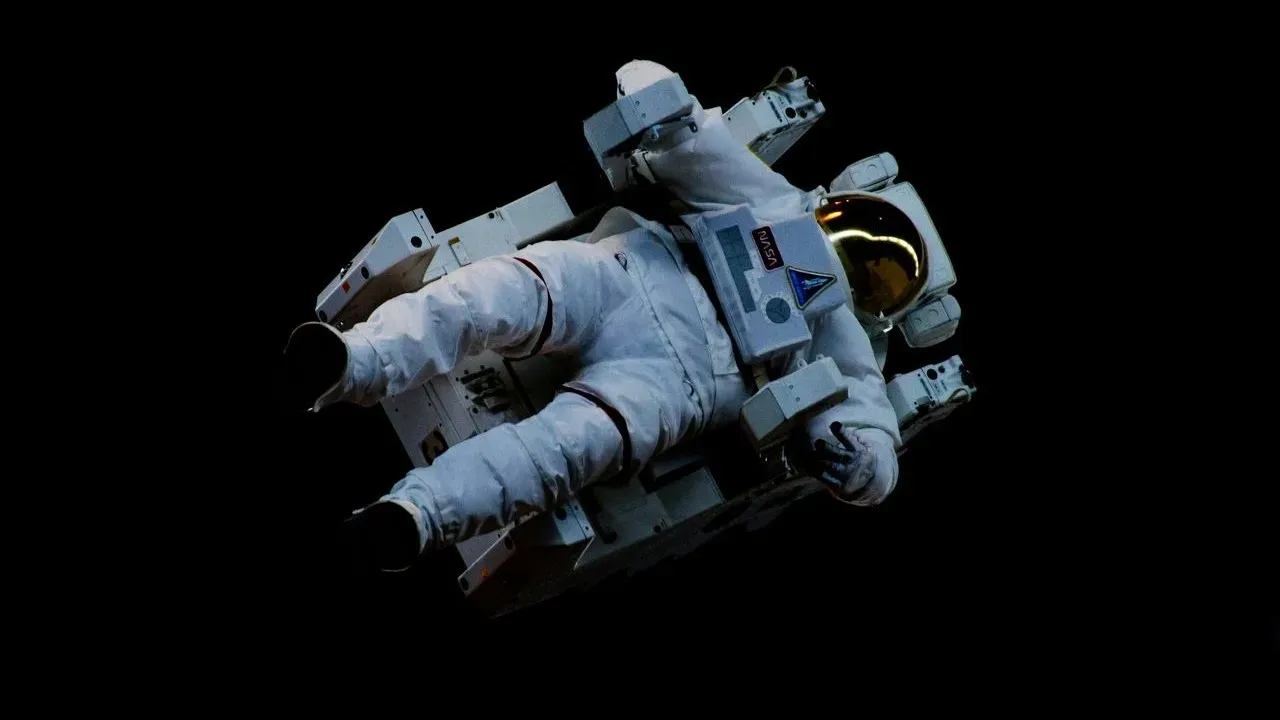

The Soyuz capsule touched down in a remote stretch of Kazakhstan on Sunday, bringing NASA astronaut Chris Williams and two Russian cosmonauts back to Earth after more than eight months in orbit. The landing marked the end of a mission that carried the crew through 241 days aboard the International Space Station and more than 3,800 orbits of the planet. For Williams, who grew up in the Potomac area of Maryland, the return completed a personal milestone that began with his selection as an astronaut in 2021.
A Precise Descent to the Steppe
Recovery teams reached the capsule shortly after it settled on the ground near Zhezkazgan. Williams emerged with assistance from support personnel, a standard step after long-duration flights when muscles have adapted to weightlessness. The spacecraft had traveled well over 100 million miles during its time in space, a distance that underscores the scale of even routine station rotations.
The crew included Roscosmos cosmonauts Sergey Kud-Sverchkov and Sergei Mikaev. Their joint return highlighted the continued cooperation between NASA and its Russian partners on station operations despite broader geopolitical tensions. Weather and landing coordinates had been monitored closely in the hours before touchdown to ensure a safe arrival.
From Local Schools to the Station
Williams was born in New York City yet considers Potomac his hometown. He graduated from Montgomery Blair High School in Silver Spring and later earned a physics degree from Stanford University followed by a doctorate from the Massachusetts Institute of Technology. Those academic steps prepared him for research roles that focused on improving imaging techniques and radiation therapies for cancer patients.
Before joining NASA, Williams also served as a volunteer firefighter and emergency medical technician. He holds an Eagle Scout rank and maintains a private pilot’s license. These experiences reflect a pattern of service and technical skill that aligned with the demands of astronaut training.
Experiments and Spacewalks During the Mission
While aboard the station, Williams contributed to studies on cancer treatments, semiconductor manufacturing processes, and improvements to spacecraft water systems. The work aimed to advance both medical applications and the reliability of life-support equipment for future long-duration flights. Two spacewalks allowed him to perform maintenance on the station’s robotic arm and solar power arrays.
Each task required precise coordination with ground teams and fellow crew members. The experiments continued a long tradition of station research that yields benefits for Earth-based industries and health care. Williams’ background in medical imaging gave added context to the cancer-related investigations conducted during the flight.
Adjusting to Gravity Once More
Reentry after 241 days brings a period of physical readjustment as the body relearns to function under normal gravity. Crew members typically undergo medical evaluations and rehabilitation before resuming full activities on the ground. Williams’ return places him among the growing group of astronauts who have completed extended station stays.
The mission’s success adds to the record of international collaboration that keeps the station operating. Future rotations will continue to rotate crews through similar long-duration assignments as plans advance for deeper space exploration. For now, the focus remains on recovery and the quiet transition back to life on Earth.
AI Disclaimer: This article was created with the assistance of AI tools and reviewed by a human editor.