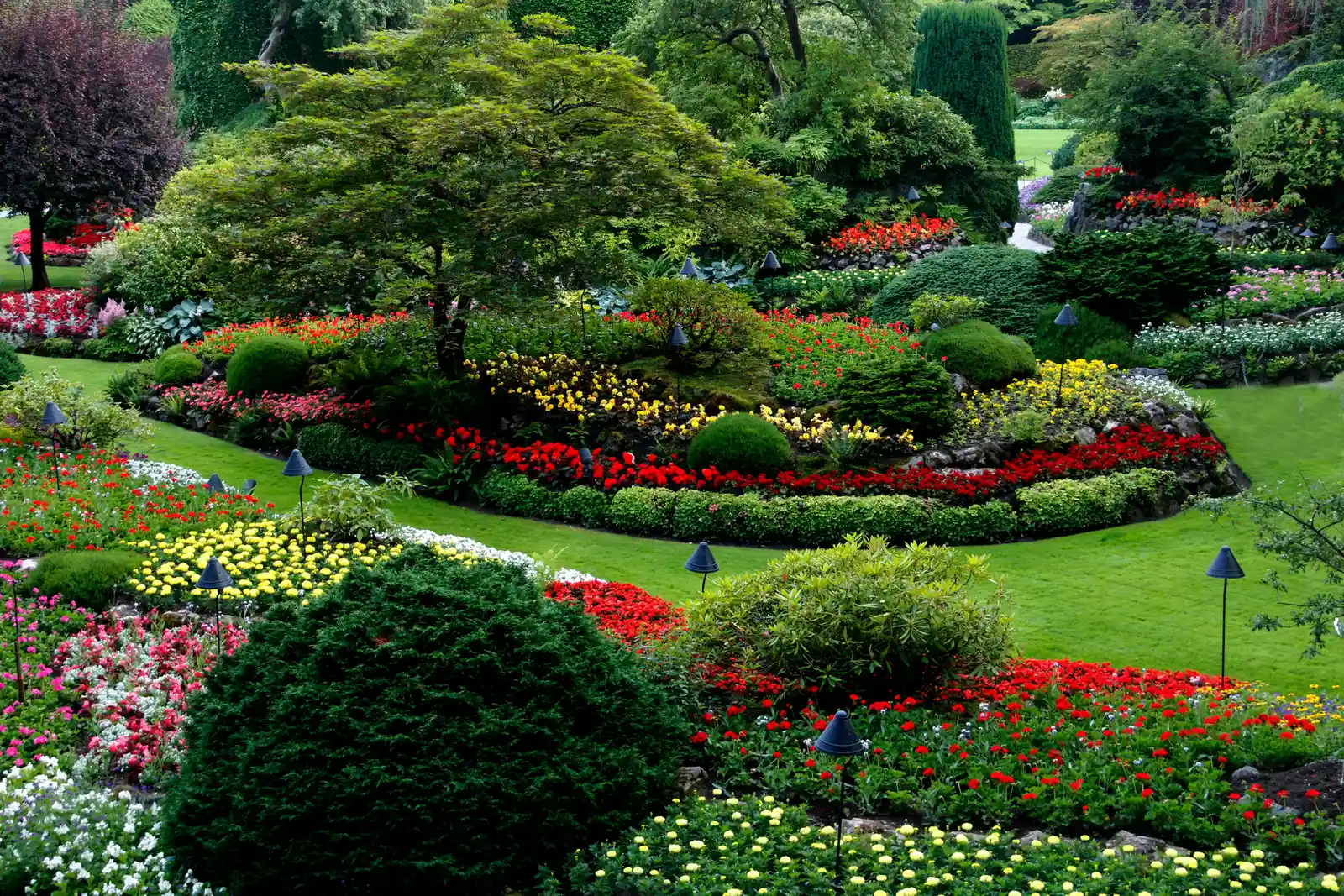

Gardeners often struggle to make separate beds and borders feel like part of one intentional whole. A restrained approach to color combined with thoughtful textural contrasts offers a reliable way to link plantings to each other and to the larger setting. The result is a landscape that reads as calm and deliberate rather than assembled piece by piece.
Start with a restrained color story
Choosing a limited palette immediately reduces visual noise. Rather than mixing every hue available at the nursery, designers typically select two or three colors that already appear in the surrounding architecture, hardscape, or native vegetation. This simple restriction creates instant harmony because the eye encounters familiar tones repeated across the site.
Within that narrow range, variation still matters. Different saturations and values of the same color family keep the composition lively without breaking the overall unity. Foliage that echoes the chosen flower colors further strengthens the connection, turning leaves into supporting players instead of competing elements.
Let texture carry the design forward
Once color is under control, texture becomes the primary tool for movement and interest. Fine, airy foliage contrasts with bold, broad leaves to create rhythm across a border. The same principle applies at larger scales: a sweep of fine-textured grasses can soften the edge of a stone wall, while coarser shrubs anchor the composition near the house.
Texture also bridges seasons. Plants that retain interesting form or bark after flowers fade maintain the design through winter. By repeating similar textural qualities in different parts of the garden, the eye travels smoothly from one area to the next, reinforcing a sense of continuity even when bloom times differ.
Use repetition to knit everything together
Repetition is the quiet force that turns individual choices into a cohesive whole. Repeating a signature plant or textural motif in several locations signals that the garden was planned rather than accumulated. The repetition need not be literal; echoes of the same leaf shape or flower form in different colors achieve the same unifying effect.
Successful repetition respects scale. A large drift of one grass species can define an entire meadow area, while smaller repeats of the same grass in containers near the house pull the distant planting into the foreground. This measured echoing prevents the design from feeling scattered.
Connect the garden to its larger setting
The most persuasive designs borrow cues from beyond the property line. Colors drawn from a nearby woodland edge or a historic building façade make the garden feel rooted in place. Textures that mirror local stone or native grasses extend that sense of belonging.
When these three elements work in concert, the garden stops competing with its surroundings and instead completes them. The result is a landscape that feels both personal and inevitable, as though it could not have been arranged any other way.
AI Disclaimer: This article was created with the assistance of AI tools and reviewed by a human editor.