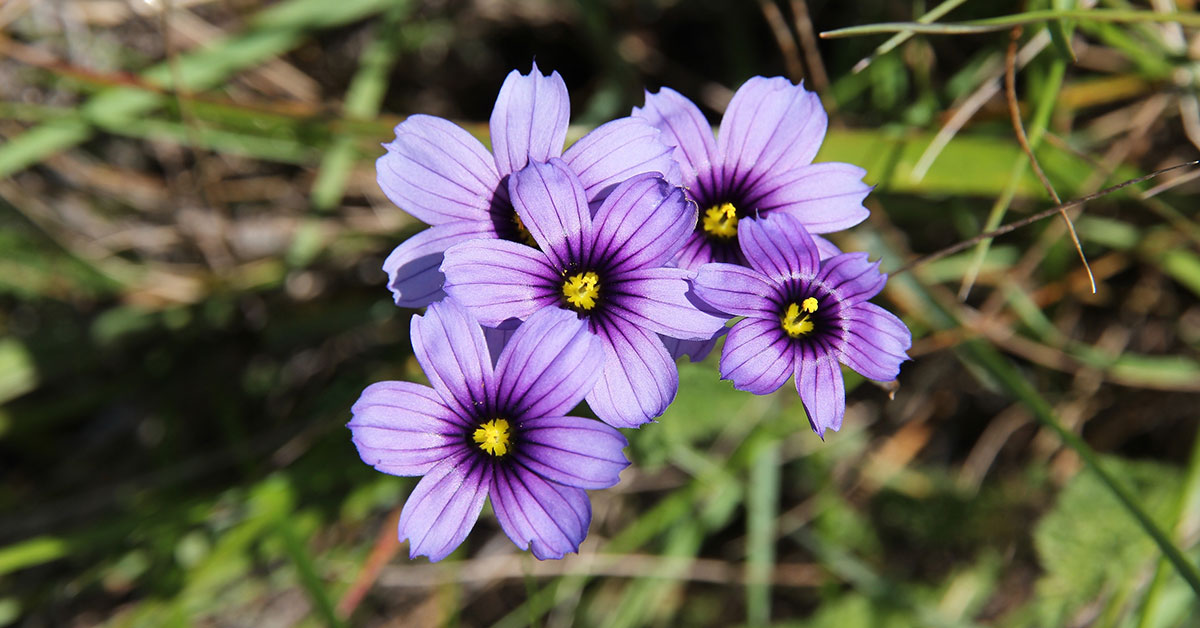

Blue-eyed Grass (Sisyrinchium bellum) is a charming perennial that is native to the western United States. Despite its name, it is not a type of grass but a member of the iris family.
The plant is known for its delicate blue flowers that resemble forget-me-nots and its grass-like foliage.
Blue-eyed Grass is a popular choice for gardeners who want to add a touch of wildflower charm to their landscape.
What is Blue-eyed Grass?
Blue-eyed Grass is a beautiful and delicate plant that is native to North America. Despite its name, it is not actually a grass, but rather a member of the iris family. It is a perennial plant that typically grows to be around 6 to 18 inches tall and has narrow, grass-like leaves that grow in clumps.
The flowers of Blue-eyed Grass are what make it truly special. They are small and star-shaped, with six petals that are a beautiful blue-purple color. The center of the flower is yellow and surrounded by a white ring, which gives the flower its distinctive blue-eyed appearance.
The bloom time of Blue-eyed Grass is relatively short, typically occurring in late spring or early summer. Despite this, the plant is a favorite among gardeners and nature enthusiasts alike for its unique beauty and charm.
Where is Blue-eyed Grass native?
Blue-eyed Grass is a perennial wildflower that is native to North America. It can be found in several US states, including California, Oregon, Washington, Idaho, Montana, Wyoming, Colorado, New Mexico, Arizona, Utah, Nevada, and Texas. In addition to its native range in the western United States, it has also been introduced in other parts of the country and in some parts of Canada.
Blue-eyed Grass is commonly found in grasslands, meadows, and open woods, where it grows in clumps or tufts. It prefers well-drained soil and full sun to partial shade. The plant has narrow, grass-like leaves that grow up to 12 inches in length and small, star-shaped flowers that bloom in the spring and summer. The flowers are typically blue or violet, although they can also be white or yellow.
Although Blue-eyed Grass is a relatively small and unassuming plant, it is highly valued by gardeners and landscape designers for its delicate beauty and ability to attract pollinators. It is also an important food source for bees, butterflies, and other insects. If you’re interested in incorporating Blue-eyed Grass into your garden or landscape, be sure to choose a site with well-drained soil and plenty of sunlight. With proper care and maintenance, this lovely wildflower can thrive in a variety of settings and add a touch of natural beauty to any outdoor space.
How to Start from Seed
If you’re interested in growing beautiful Blue-eyed Grass in your garden, starting from seed is a great way to do it. Here’s how:
- Collect seeds: Blue-eyed Grass seeds can be collected from the plant in late summer or early fall. Look for dry seed pods on the plant and gently remove them. Be sure to store the seeds in a cool, dry place until you are ready to plant them.
- Prepare soil: This plant prefers well-draining soil with a slightly acidic pH. You can amend your soil with compost or other organic matter to help improve drainage and nutrient levels.
- Sow seeds: Sow the seeds directly into the soil in late fall or early spring. Scatter the seeds over the prepared soil and lightly press them into the soil. Cover with a light layer of soil or mulch.
- Water: Water the seeds regularly to keep the soil moist. Avoid overwatering, as this can cause the seeds to rot.
- Germination: The seeds typically germinate within two to three weeks. Once they start to sprout, thin the seedlings to about six inches apart.
- Transplant: When the seedlings are about six inches tall, you can transplant them to their permanent location in your garden. Choose a spot with full sun to partial shade and well-draining soil. Be sure to water the transplanted seedlings regularly until they are established.
How to Grow
If you are planning to grow this plant in your garden or landscape, here are some tips to help you get started:
- Soil Requirements: Blue-eyed Grass prefers well-draining soil that is slightly acidic to neutral. It can tolerate a wide range of soil types, but it does not like heavy clay soils that retain too much water. If your soil is heavy, you can amend it with compost or sand to improve drainage.
- Light Requirements: This plant thrives in full sun to partial shade. It can tolerate some shade, but it will produce fewer flowers.
- Water Requirements: It needs regular watering, especially during the hot summer months. It prefers moist soil but can tolerate some drought once established. Avoid overwatering, as it can cause the plant to rot.
- Planting: Blue-eyed Grass can be planted in spring or fall. You can sow seeds directly in the ground or transplant seedlings. Make sure to space the plants about 6-12 inches apart to allow room for growth.
- Care: It requires minimal care. Deadhead the spent flowers to encourage more blooms and remove any yellow or brown leaves. Fertilize the plant once a year with a balanced fertilizer.
- Propagation: This flower can be propagated by dividing mature clumps in the spring or fall. Make sure to replant the divisions at the same depth as the original plant.
Blue-eyed Grass is an excellent choice for gardeners who want to add a splash of blue to their landscape. It is easy to grow and requires minimal care, making it a low-maintenance plant. With the right soil, light, water, and care, you can enjoy the stunning blue flowers of this plant for many years to come.
Interesting Facts about Blue-eyed Grass
Blue-eyed Grass is a small, delicate wildflower with blue to purple star-shaped flowers. Here are some interesting facts about this beautiful plant:
- Not a grass: Despite its name, Blue-eyed Grass is not a grass at all. It is a member of the iris family, and its scientific name is Sisyrinchium bellum.
- Native to North America: Blue-eyed Grass is native to North America, and it can be found from British Columbia to California and as far east as Texas.
- Symbol of remembrance: In some Native American cultures, Blue-eyed Grass is considered a symbol of remembrance. It is said that the plant’s delicate flowers remind us to remember the beauty and fragility of life.
- Short-lived flowers: The flowers of Blue-eyed Grass only last for one day, but new flowers will continue to bloom for several weeks.
- Attracts pollinators: Like many wildflowers, Blue-eyed Grass is an important food source for pollinators such as bees and butterflies.
- Can be grown in gardens: Blue-eyed Grass can also be grown in gardens and is a popular choice for rock gardens or as a border plant. It prefers well-drained soil and full sun.
- Medicinal properties: Blue-eyed Grass has been used in traditional medicine to treat a variety of ailments, including eye problems, respiratory issues, and digestive disorders.
Blue-eyed Grass may be small, but it is a fascinating and beautiful plant with a rich history and many uses.