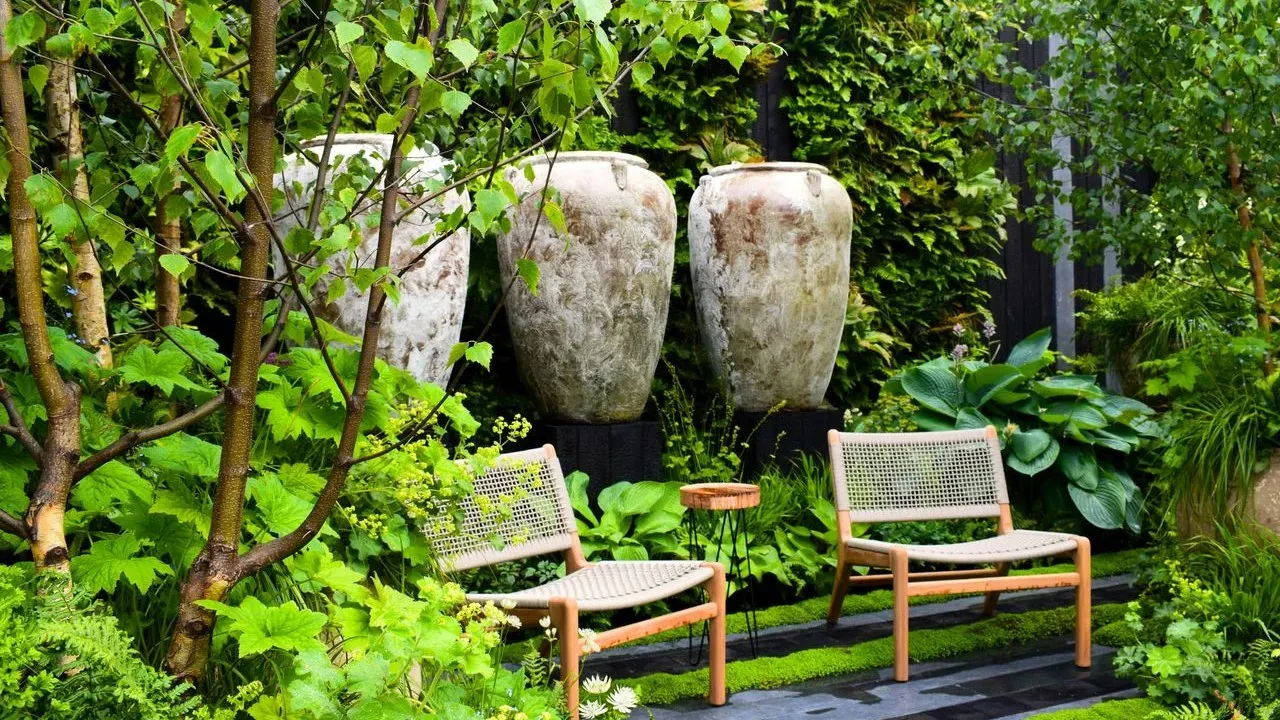

Atlanta – Berri’s backyard garden has developed over 35 years into a considered shade space shaped by consistent attention to structure and personal elements. The long timeline allowed initial limitations of heavy shade to become assets rather than obstacles. What began as an ordinary residential plot now stands as evidence of gradual, deliberate change rather than quick fixes.
Early Conditions Set the Direction
The site presented persistent shade from mature trees and neighboring structures when work began. Those conditions dictated plant choices and layout decisions from the start. Over the first decade, the focus remained on establishing a framework that could support later additions without requiring major redesigns. The result was a stable base that accommodated incremental improvements rather than repeated overhauls.
Structure Provides Lasting Form
Hardscape elements introduced at different stages created definition where foliage alone would have left the space diffuse. Paths, seating areas, and vertical accents were added as the garden’s needs became clearer with time. This measured approach prevented the common problem of mismatched features that often appear when projects move too quickly. The structures now anchor the plantings and give the garden a coherent shape that has held up through seasonal shifts and gradual tree growth.
Personal Details Accumulate Meaning
Objects and arrangements collected or created across the decades added layers of individual character. These elements were introduced only when they fit the existing framework, avoiding clutter. The process turned the garden into a record of sustained involvement rather than a single design statement. Visitors encounter a space that feels both intentional and lived-in because the details emerged alongside the plants and structures.
Current State Reflects Sustained Effort
Today the garden demonstrates how shade, structure, and personal choices can combine into a unified whole when given adequate time. The 35-year span allowed adjustments that responded to actual growth patterns instead of projected ones. Maintenance remains straightforward because the underlying decisions accounted for long-term development from the outset. The outcome offers a clear example of what extended commitment can produce in a residential setting where immediate results are often expected.
AI Disclaimer: This article was created with the assistance of AI tools and reviewed by a human editor.