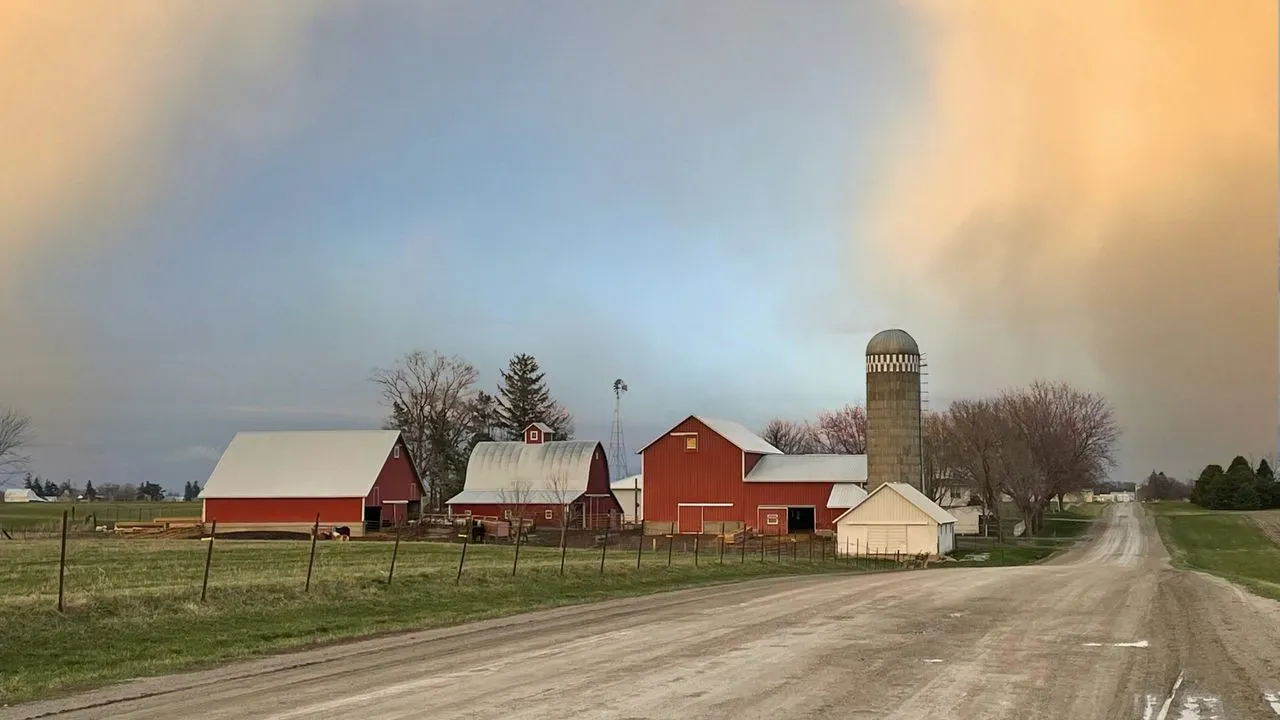

The U.S. Army is preparing to detonate the nation’s stockpile of lead azide in Iowa on Wednesday morning, ([1])a plan that has drawn scrutiny from residents, environmental groups and state officials. The material is a volatile explosive compound, and the decision to destroy it on site rather than move it has become the center of a growing debate. The plant sits near the Illinois border, and the community closest to it, Middletown, is home to only a few hundred people. Army projections of where lead dust could travel have made the local stakes difficult to ignore.
A Delay Shaped by Deteriorating Material
The stockpile came to light in an unexpected way. Army officials said the degraded, crystallized material was found during a safety review at the Iowa Army Ammunition Plant in March. Officials have said the substance has been held for more than two decades in earthen-covered containers, submerged in a mix of ethanol and water intended to keep it stable.
That timeline has been anything but simple. Two controlled detonations were first scheduled for a Friday, then pushed back to Monday, and later moved again to Wednesday. Acting Army Secretary Adam Telle explained the second delay as a way to wait until the latest possible moment before a forecast drop in temperature, which officials feared could further destabilize the material. Officials have framed the timing as a matter of safety rather than convenience.
What Lead Azide Is and How Much Is Involved
Lead azide is a compound that has long had a place in the munitions industry. Its sensitivity is the reason it is normally kept submerged, and the Army describes the degraded batch as highly sensitive and extremely unstable. Lead azide has been used in ammunition since World War I, and experts note that even small quantities can detonate fully when struck by a flame or hit with static electricity.
The size of the planned blast is also a point of confusion in coverage. Depending on the report, officials describe the amount as roughly 10,000 pounds, about five tons, or 9,500 pounds. Those figures are broadly consistent, but the variations show how quickly details have shifted as the timeline has changed. The Army has said the detonation is the most practical way to dispose of the material safely, after reviewing other options.
Where the Army Says Lead Dust Could Travel
Ahead of the blast, the Army released updated projections on Tuesday showing where airborne lead dust could drift after the detonation. The modeled plume generally moves southwest, reaching into southeastern Iowa and northeast Missouri as the day progresses. Federal officials have recommended evacuation within a five-mile cone extending southwest of the plant, a detail that has shaped how nearby households are preparing.
Forecasts remain fluid, however. Wind direction and speed can shift on the day of the event, so the Army has committed to updating its plume projections repeatedly, starting six hours before the detonation and continuing hourly until the work is finished. Under the terms of the Environmental Protection Agency permit, those updates are required, and officials have stressed that a modeled plume does not prove harmful exposure at every location inside it. Sampling will be needed to determine where lead actually settles on farmland, playgrounds and other surfaces.
Local preparations reflect that uncertainty. Some residents have been sealing windows and doors to keep out any lead dust. The Iowa Department of Agriculture and Land Stewardship has issued guidance to farmers and livestock producers near Middletown to reduce potential lead exposure.
What matters now
- The Army’s plume projections are forecasts, and they will be revised repeatedly before and after the blast.
- A final estimate of the affected area is expected only after the detonation is complete.
- Sampling of soil and surfaces will determine where lead has actually settled.
Legal Challenges and Community Reaction
The plan has faced significant pushback. Environmental groups filed a lawsuit challenging the emergency permit the EPA granted to the Army, which helped prompt the earlier postponement. The Iowa Environmental Council and the Sierra Club’s Iowa chapter later filed an emergency motion seeking to halt the detonation. A federal court has since approved the plan, with judges noting that the Army weighed alternatives such as chemical neutralization and thermal treatment before concluding that detonation was the safest route.
Local leaders have voiced both concern and a desire for closure. Middletown Mayor Rodney Johnson said the detonation needs to happen “so we can move on with our lives.” That sentiment captures the tension in Middletown, where many residents want the uncertainty to end while still questioning whether enough information has been shared with them. Critics have pointed to the gap between the technical forecasts and the everyday details residents want, such as how long the risk lasts and who will test the ground afterward.
Whatever happens on Wednesday, the episode is likely to be remembered as a test of how the federal government explains a rare and hazardous disposal effort to the people who live closest to it. The coming hours will show whether the forecasts hold and whether the sampling that follows answers the questions that have dominated the past several weeks.
AI Disclaimer: This article was created with the assistance of AI tools and reviewed by a human editor.