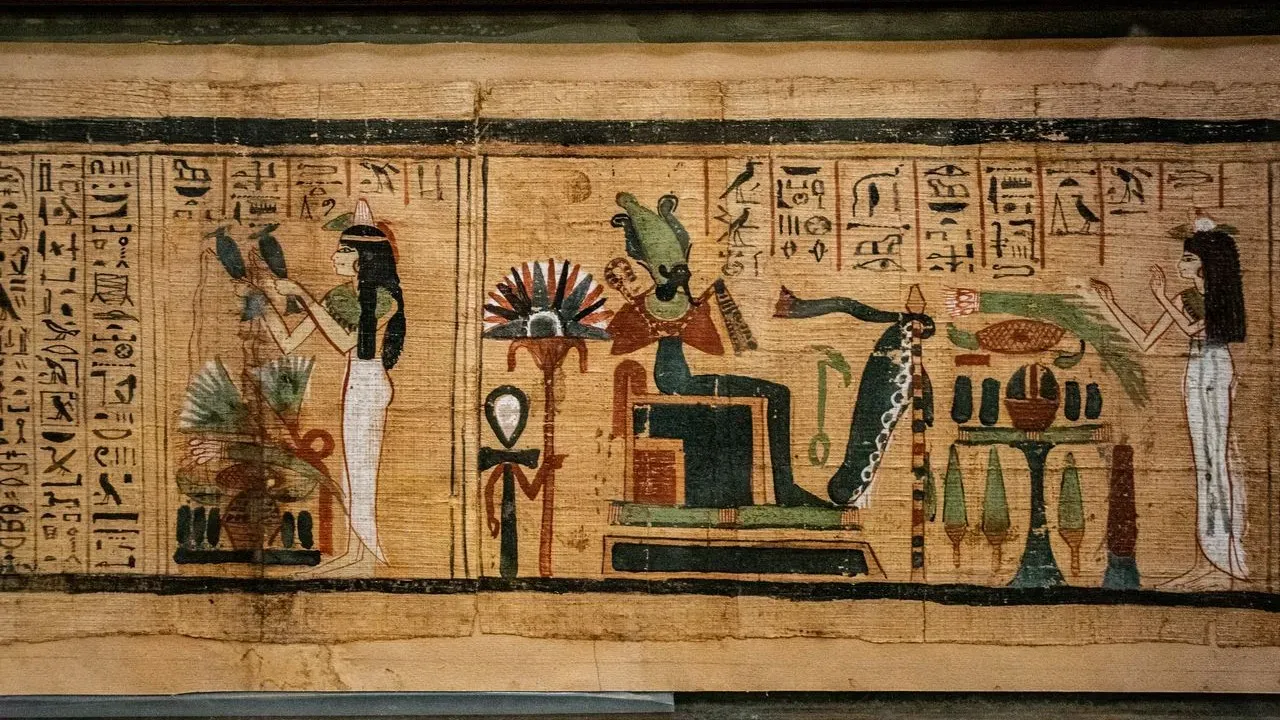

Luxor, Egypt – Archaeologists excavating the mortuary temple of Thutmose III in ancient Thebes, the site of modern Luxor, turned up material that most digs would have passed over: scraps of papyrus tossed onto a refuse heap. Those scraps carry traces of curses aimed at Apophis, the serpent of chaos in Egyptian myth, and they are prompting scholars to rethink how widely such magic was used ([1]).
A Refuse Heap With a Long Story
The team recovered about 40 charred fragments from a rubbish deposit that ([2])describes as lying beside the temple. The mound measured roughly 75 meters long and 10 to 20 meters wide, according to one account of the dig ([3]). Each piece is smaller than half a postage stamp, yet together they are the earliest physical proof that the ritual was actually carried out.
The age of the fragments is the detail that surprised researchers most. They date to roughly 3,400 years ago, during the New Kingdom, which pushes the documented history of the ritual back by about a thousand years ([4]). Until now, the best known version was the Bremner-Rhind Papyrus, copied around 305 BC, which is why the fourth century BC often appears in coverage. The fragments themselves are far older than that copy, so the curses did not originate in the fourth century.
How the Ritual Worked
The Apophis rite was designed to neutralize a creature that, in Egyptian belief, tried every night to halt the sun god Ra on his journey through the underworld ([5]). Practitioners followed a sequence of steps that the fragments help confirm:
- The serpent was drawn in red ink on papyrus, with its name written beside it, or shaped as a wax figure.
- The image was stepped on, stabbed with a knife and spat upon.
- The papyrus was then burned while spells were recited.
The fragments also reveal that the drawings were produced in quantity. Researchers concluded they were mass produced copies, which suggests demand was steady enough to make batches in advance ([4]). Because the ritual required fire, very few pieces were expected to survive in readable condition, which makes the Thebes find all the more unusual.
Beyond the Temple Walls
Hagen argues that the temple setting tells only part of the story. In his view, the rite was a regular part of temple life, yet references to it in other contexts show that it was also used outside religious institutions. He describes it as a common feature of Egyptian culture more broadly ([6]). He has also said that “these tiny fragments give us a new indication of how widespread curse rituals were in ancient Egypt” ([4]).
Scribes appear to have been central to that wider practice. Hagen notes that people approached them for magic, both to protect themselves and to harm others ([6]). Literate people who were not priests also worked as magicians and healers ([2]).
What the find shows
The fragments were mass produced, which points to a ritual used repeatedly rather than occasionally. Scribes provided magical help to clients, according to the study’s authors. Whether ordinary Egyptians performed the Apophis curse themselves is still unresolved.
What Remains Unsettled
The evidence has limits. Whether ordinary Egyptians used the Apophis curse, or whether it stayed largely in the hands of priests, remains uncertain ([7]). The same heap also contained papyrus from the temple’s administrative archive, which documents the daily economy and supply needs of the offering cult ([8]).
Hagen has described the curse fragments as a small piece of a larger puzzle. Learning about everyday life in antiquity, he suggests, depends on looking at places like rubbish deposits ([8]). The Thebes papyri show a practice that was routine enough to be produced in batches, then burned and discarded. The surprise lies less in a single dramatic curse than in how ordinary the ritual appears to have been.
AI Disclaimer: This article was created with the assistance of AI tools and reviewed by a human editor.