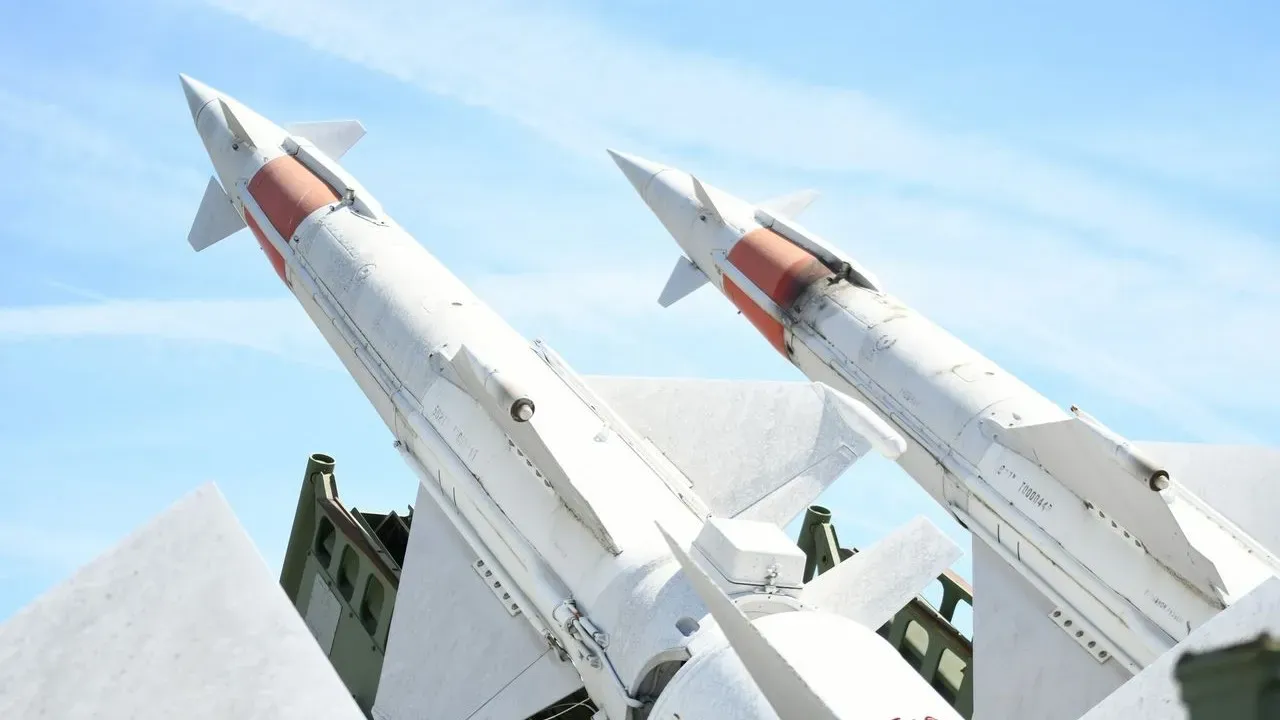

The Army says its first long-range hypersonic weapon battery is now operational and “ready to go,” the general in charge of munitions told a defense publication ([1]). The announcement closes a long wait. The weapon, known as Dark Eagle, was originally supposed to reach soldiers years ago, and its path to service has been marked by setbacks.
A missile built for speed and unpredictable flight
Dark Eagle belongs to a category known as boost-glide weapons. It is a ground-launched boost-glide hypersonic weapon intended to deliver a maneuverable glide vehicle to targets at intermediate ranges in minutes rather than hours. The design is what separates it from more familiar missiles. The system pairs a two-stage solid rocket booster with a Common Hypersonic Glide Body (C-HGB). Once the booster reaches altitude and speed, it releases the glide body, which then maneuvers at hypersonic speeds toward its target.
Speed alone does not define the threat it poses. Hypersonic weapons can exceed five times the speed of sound, and their ability to change course in flight makes them harder for missile defenses to track and intercept. The Army’s own description stresses that the glide body can be steered along an unpredictable path, which complicates interception efforts. The Pentagon has also said Dark Eagle will carry only conventional, non-nuclear warheads.
What one battery actually includes
A fielded battery is more than a single launcher. A single Dark Eagle battery consists of four transporter erector launchers (TELs) mounted on trailers, each carrying two hypersonic missiles, for a total of eight ready rounds, supported by a battery operations center and associated vehicles. The first unit has been assigned to a base in the Pacific Northwest. Bravo Battery, 1st Battalion, 17th Field Artillery Regiment, 3rd Multi-Domain Task Force, based at JBLM, has been designated to operate Dark Eagle.
Officials have described the unit’s reach in specific terms. The Army reports a publicly stated range of 2,775 kilometers and a minimum speed of Mach 5 for Dark Eagle, with each battery built around four mobile launchers. The missile also shares its glide body with a Navy program, a link that gives the effort a broader footprint. The Army’s Dark Eagle shares its Common Hypersonic Glide Body with the Navy’s Conventional Prompt Strike program, so this fielding extends a joint hypersonic effort rather than a standalone Army project.
Key facts at a glance
- The Army’s publicly stated range is 2,775 kilometers, with a minimum speed of Mach 5.
- Each battery holds eight ready rounds across four launchers.
- The Pentagon says Dark Eagle carries only conventional, non-nuclear warheads.
- The broader program has cost more than $12 billion since 2018, according to reporting on its expenses.
A timeline shaped by delays
The fielding date has moved more than once. The Army first planned to field the battery in 2023, but testing problems, including a mechanical engineering issue with the launcher, prevented that. Testing also hit snags in the meantime. On 7 September 2023, a test launch of the LRHW system was canceled due to an unspecified failure of pre-flight checks. Later results were stronger, and on 12, 2024, the Defense Department announced a successful end-to-end flight test of a conventional hypersonic missile from Cape Canaveral Space Force Station in Florida.
Production has also raised questions. Reporting from October 2026 pointed to delays in the Army’s hypersonic program and continuing production-quality problems. Those issues help explain why the Army’s announcement is being read as a turning point rather than a routine update.
What the readiness claim does not yet prove
The Army’s statement reflects its own assessment, and it has not been independently verified. The timing of the declaration has also been debated. The Program Acquisition Executive for Fires confirmed during an interview conducted on November 19 that the first Dark Eagle battery was fully fielded and ready for operational deployment. A separate report noted that earlier delivery of supporting equipment did not establish that the complete system was operational.
Several steps remain. One report noted that no live missile launches were conducted during the exercise. Remaining steps include final missile delivery and validation of operational capability under live conditions. Further testing is also expected. Additional operational testing is expected after initial deployment. The Army’s broader plan calls for more units, and the Pentagon’s objective is to complete the rapid fielding phase by fiscal year 2028, and the Army is preparing its second and third Dark Eagle batteries.
For now, the Army has moved Dark Eagle from the test range into an operational unit, and that alone marks a significant step. Whether the battery performs as advertised will become clearer once live-fire results and additional deployments arrive.
AI Disclaimer: This article was created with the assistance of AI tools and reviewed by a human editor.