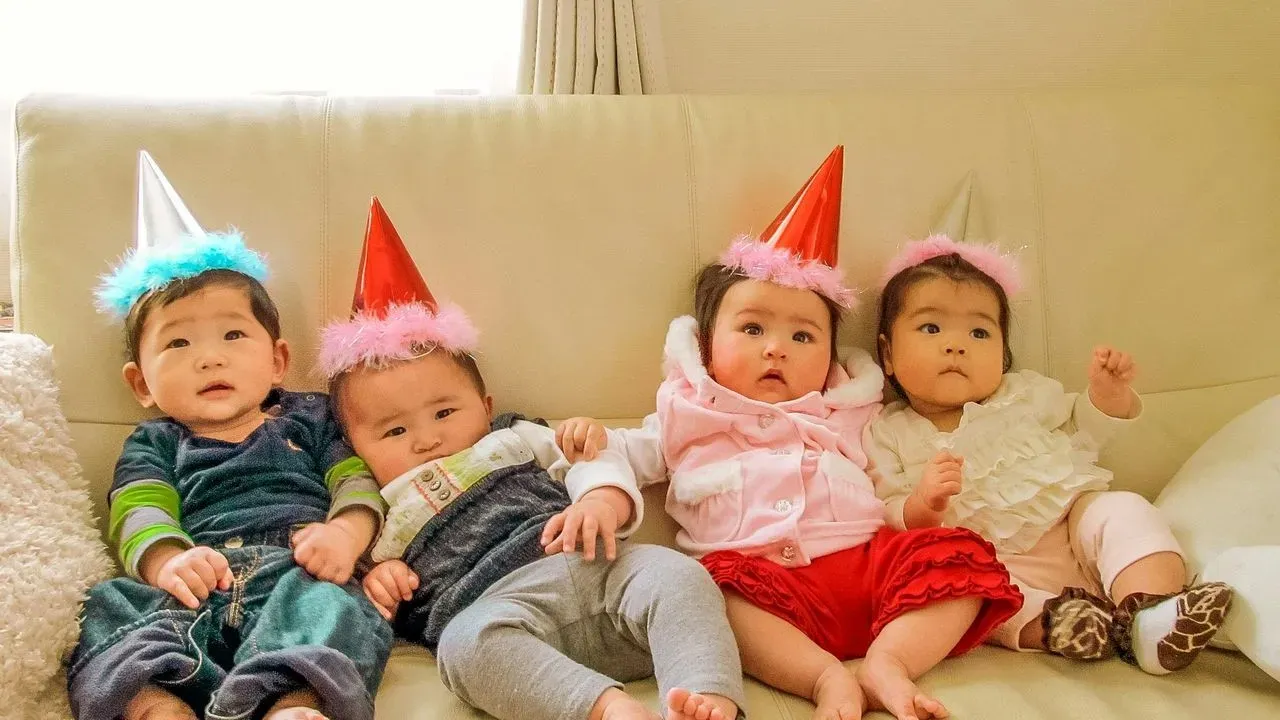

Brisbane resident Jenitar Sau Na’amoana, already raising four children with her husband Jortham, found her family transformed overnight by the arrival of four more. The 34-year-old gave birth to identical quadruplet girls on July 14 at the Royal Brisbane and Women’s Hospital. The pregnancy had not been planned, yet the outcome stands out even among multiple births for its extreme rarity.
The Science Behind Such an Uncommon Event
Identical quadruplets result when a single fertilized egg splits into four separate embryos, a process known as monozygotic division. Medical experts note that this specific outcome occurs far less often than fraternal multiples, which arise from separate eggs. Estimates place the natural occurrence of identical quadruplets at roughly one in 15 million pregnancies, though some analyses suggest the figure could range higher depending on how cases are tracked worldwide.
Because the embryos share the same genetic material, the four girls will share striking physical similarities throughout life. Doctors involved in the case have described the event as potentially the first recorded instance of its kind in Australia, underscoring how infrequently these pregnancies reach viability. The precise mechanisms that trigger such extensive splitting remain only partially understood, leaving room for further study in reproductive medicine.
Delivery at 28 Weeks and Early Milestones
The quadruplets, named Emily, Harriet, Alexa, and Catherine, arrived via cesarean section six days before the most recent reports. All four were reported healthy at birth despite the early delivery, a common requirement in high-order multiple pregnancies to protect both mother and infants. Neonatal teams at the hospital prepared extensively for the coordinated care these newborns would need in their first weeks.
Premature arrival at 28 weeks typically involves specialized monitoring for respiratory support and feeding assistance. The family has begun navigating this phase with medical guidance, focusing on steady progress for each infant. Updates from the hospital indicate the girls are responding well to initial interventions, though full-term development will require continued attention over the coming months.
Adjusting to an Expanded Household
The couple already had children ranging in age from one to ten years old when the new pregnancy was discovered. Daily routines that once centered on four young family members now encompass eight, creating immediate logistical demands around space, supplies, and parental time. Community support has emerged quickly, including a fundraising effort organized by the family to help cover additional expenses.
Parents in similar situations often describe the shift as both joyful and overwhelming. For the Na’amoana family, the unplanned nature of the pregnancy adds another layer of adjustment as they balance existing responsibilities with the needs of four newborns. Local health services in Queensland are expected to provide ongoing assistance tailored to multiple births.
What Remains Ahead
Long-term outcomes for identical quadruplets depend on factors such as individual health trajectories and access to specialized pediatric care. While the initial delivery has concluded successfully, the family faces years of coordinated medical checkups and developmental support. Researchers continue to examine rare multiple births to improve guidance for future cases, yet each instance carries unique variables that resist broad prediction.
The story highlights both the remarkable capacity of human biology and the practical realities that follow such events. Families in comparable circumstances frequently rely on networks of medical professionals, relatives, and community resources to meet the demands ahead.
AI Disclaimer: This article was created with the assistance of AI tools and reviewed by a human editor.