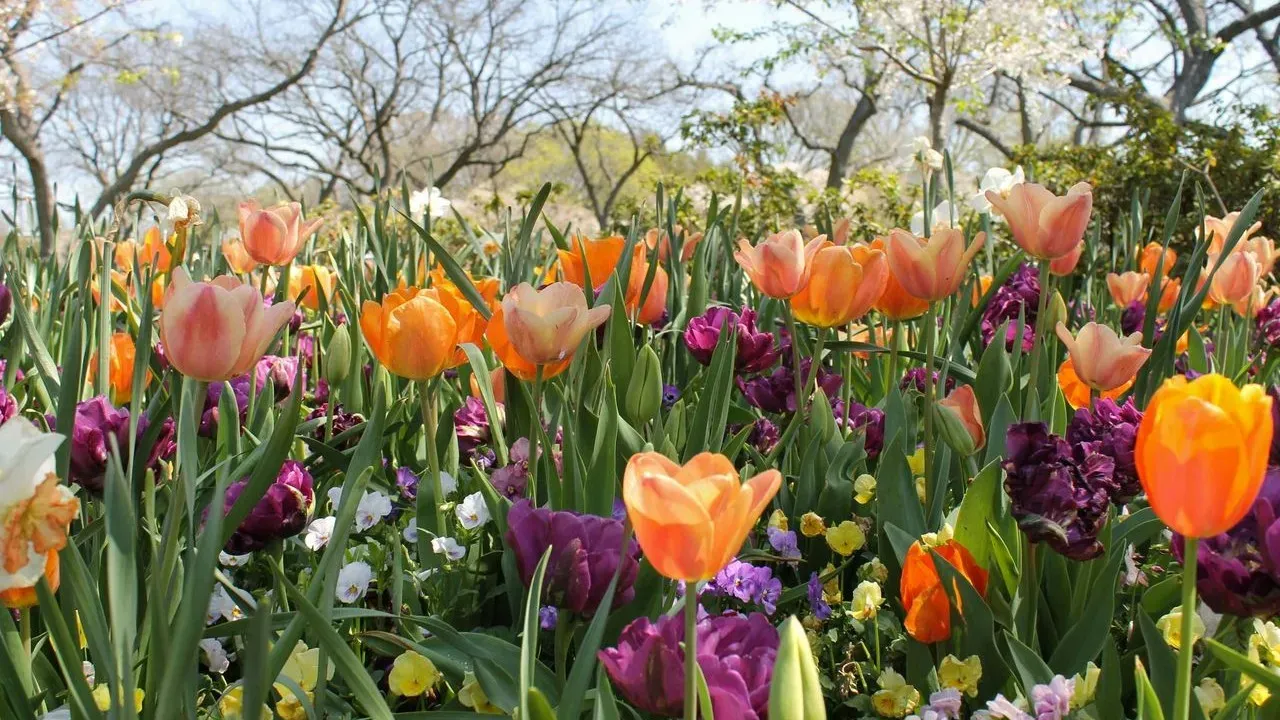

Maryland gardeners often watch their landscapes shift dramatically in late spring, when cooler-season blooms begin to fade and warmer-weather plants take center stage. Teresa’s garden captures this moment with a deliberate mix of color sources that keep the space lively well into the first weeks of summer. The result is not a single dominant shade but a layered display that changes daily as different elements reach their peak.
Multiple Sources of Hue
Color in a garden rarely comes from flowers alone. Foliage, stems, and even seed heads contribute texture and tone that persist when petals drop. In Maryland’s variable climate, where temperatures can swing quickly, relying on several plant parts rather than blooms only helps maintain visual interest through the transition. This approach turns potential gaps into opportunities for contrast. Gardeners in the region frequently note how silver or burgundy leaves can anchor brighter accents nearby. The effect is subtle yet steady, providing continuity when one wave of flowers ends and another begins. Such combinations reward close observation rather than distant glances.
Timing the Seasonal Handover
Late spring in Maryland typically brings the last cool nights before consistent heat arrives. This window allows certain plants to finish their display while others accelerate growth. The garden demonstrates how careful placement can bridge the two periods without leaving bare spots. Success depends on understanding local conditions, including soil warmth and daylight length. What looks sparse one week can fill in quickly once roots respond to rising temperatures. Observers often find that the most satisfying results come from accepting this natural rhythm instead of fighting it with constant replanting.
Practical Lessons for Home Gardeners
Anyone tending a similar space can apply the same principle of diversity. Grouping plants by bloom time and foliage quality creates a self-sustaining sequence. Regular walks through the garden reveal which combinations hold up best under changing light and moisture. The payoff is a landscape that feels alive rather than staged. Color arrives from unexpected directions, whether through a new leaf tint or a late-opening bud. This keeps the experience fresh for both the gardener and any visitors who stop by during the busiest months of the year.
AI Disclaimer: This article was created with the assistance of AI tools and reviewed by a human editor.