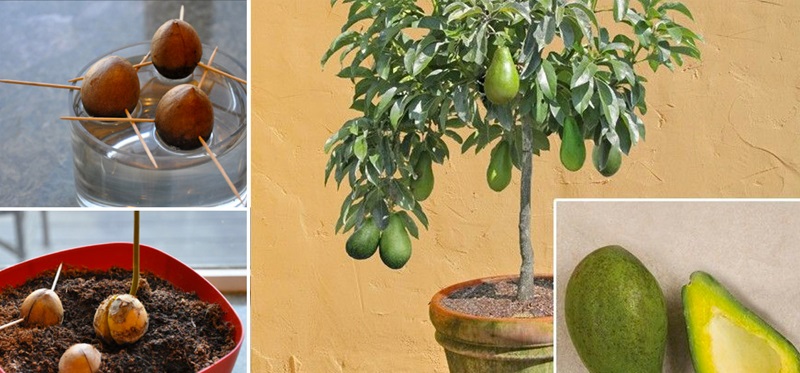

Every avocado pit that crosses a kitchen counter has, at some point, made a gardener think: could I grow this? The toothpick-in-a-glass-of-water setup is practically a rite of passage. And yet most of those little seedlings end up as leggy stems that eventually get thrown out, leaving the gardener vaguely disappointed.
Here’s the thing — growing an avocado in a pot is genuinely doable, even if you live somewhere with cold winters. You just need to go in with the right expectations, make one crucial decision early on, and understand what the plant actually needs. The good news is that an avocado in a pot makes a beautiful houseplant even before — or if — it ever fruits.
The One Decision That Changes Everything: Seed vs. Grafted Tree
If you want fruit, buy a grafted tree. Full stop.
Avocados grown from seed are genetic wildcards. As the RHS notes, plants grown from pits rarely flower or fruit in a home environment — and when they do, it can take ten years or more, with the resulting fruit bearing no resemblance to what you started with. The classic pit-in-water method is a perfectly fun project, and the seedlings can be lovely foliage plants. Just don’t count on guacamole.
A grafted dwarf variety is a completely different situation. Varieties like ‘Wurtz’ (sometimes sold as ‘Little Cado’), ‘Pinkerton’, and ‘Holiday’ stay manageable in containers — ‘Wurtz’ tops out around 8 to 10 feet when pruned — and can fruit in a pot within a few years. They’re available from specialty nurseries and increasingly online. If you actually want to eat avocados from your own tree, this is the path.
For more on growing avocados from seed specifically, our full guide to growing an avocado tree from seed covers the whole toothpick-and-glass process in detail.
Choosing the Right Pot
Start with a container that matches the tree’s current size. A common mistake is planting a small tree in a huge pot — when the soil volume vastly exceeds the root mass, moisture sits in the outer soil and roots rot before the tree can use the water. A young grafted tree coming in a 3-gallon nursery pot does well moved into a 5-gallon container (about 12 inches). Work up gradually from there.
Eventually, a mature dwarf avocado will want a 15-gallon pot — roughly 18 inches across — as its long-term home. Drainage is non-negotiable. Avocados are extremely sensitive to root rot, which is almost always caused by poor drainage. Make sure your pot has multiple holes in the bottom, and use a well-draining potting mix rather than straight garden soil.
The UC Riverside research mix used for growing avocados in containers uses half sand, quarter peat moss, and quarter composted material. A simpler home version: quality potting mix with added perlite (about 25–30% perlite by volume) to keep things light and fast-draining.
Light and Location
Avocados want as much sun as you can give them. Outdoors, that means the sunniest spot available. Indoors, it means a south- or west-facing window — ideally one that gets at least 6 hours of direct light. If that’s not realistic in your home, a full-spectrum grow light run for 10 or more hours a day can fill the gap, though it’s a more involved setup.
The best arrangement for most gardeners in cold climates: move the pot outdoors when nighttime temps stay reliably above 50°F, and bring it back inside before the first frost. Avocados suffer leaf damage around 28–32°F, so even a light frost can hurt them. Spending a summer outdoors where they can get full sun and natural humidity does them real good, and they’ll look dramatically better for it.
Watering: The Most Common Point of Failure
The number one way people kill container avocados is overwatering. The number two way is underwatering. There’s a reasonably narrow sweet spot, and it requires actually checking the soil rather than watering on a schedule.
The rule of thumb: water deeply and thoroughly, then wait until the top inch or two of soil has dried before watering again. In summer outdoors, that might mean every few days. In winter on a heated windowsill with dry air, the soil can dry out faster than you’d expect — heaters pull a lot of humidity from the air, which matters more than most people realize.
Yellow, drooping leaves usually mean overwatering. Brown, crispy leaf tips usually mean the tree is too dry or the humidity is too low. If you see the latter, misting the foliage or setting the pot on a tray of damp pebbles (with water just below the drainage holes) raises local humidity without waterlogging the roots.
Feeding Your Potted Avocado
Container plants lose nutrients faster than in-ground trees because watering constantly leaches the soil. A balanced slow-release fertilizer worked into the top of the soil in early spring is a good starting point. A 10-10-10 or a citrus-specific fertilizer works well — avocados need solid nitrogen and are also heavy feeders of zinc, iron, and magnesium, which citrus formulas typically include.
For a deeper look at avocado-specific fertilizing, our best fertilizer for avocado trees guide walks through what nutrients matter most and when to apply them.
Don’t fertilize in late fall or winter when the tree has slowed its growth — you’ll push soft new growth that can’t harden off before cold air arrives.
Pruning to Keep It Container-Friendly
Left unpruned, even dwarf avocados will outgrow their containers and become impossible to move. Regular pruning — pinching back the growing tips and cutting longer branches back by about a third — keeps the tree compact and encourages bushier, lower branching rather than one tall whippy stem.
Prune in late winter or early spring before active growth kicks in. When you cut a branch, new growth will emerge from the nodes below the cut. Cut just above a leaf node pointing in the direction you want the new branch to grow. It’s a little counterintuitive at first, but you have real control over the shape.
Will a Potted Avocado Actually Fruit?
With a grafted dwarf variety, yes — it can. Two caveats. First, avocados are more productive with a cross-pollinator, and they have an unusual pollination system: Type A varieties (like ‘Hass’ and ‘Pinkerton’) open as female in the morning and male in the afternoon; Type B varieties (like ‘Fuerte’ and ‘Zutano’) do the reverse. Planting one of each improves fruit set significantly, though many dwarf varieties like ‘Wurtz’ are self-fertile enough to produce solo.
Second, fruiting requires warm temperatures, bright light, and a reasonably mature tree. If your avocado spends winters in a dim apartment, it may grow well but won’t flower. Summers outdoors in full sun make a meaningful difference for anyone trying to actually harvest fruit.
Growing Avocado in a Pot: The Bottom Line
The pit-in-a-glass project is charming, and if you’re doing it for the novelty or to have a tropical-looking houseplant, go for it — our avocado from seed guide has you covered. But if you want a tree that has a real shot at producing fruit, buy a grafted dwarf, get the drainage right, give it as much sun as you can manage, and take it outside for summer. The rest is patience.
For anyone exploring other fruits worth growing in containers, our list of fruit-bearing plants worth starting as soon as possible includes some great alternatives that are even more container-friendly than avocados.
FAQ
Can I grow an avocado in a pot indoors? Yes, with the right variety and conditions. Dwarf grafted varieties like ‘Wurtz’ or ‘Pinkerton’ are the best choice for containers. They need bright light — a sunny south or west-facing window, or a grow light — and excellent drainage. Most people move them outdoors in summer for best results.
How long does a potted avocado take to fruit? A grafted dwarf tree can begin fruiting in 3 to 5 years under good conditions. Seed-grown trees can take 10 years or more, and the fruit quality is unpredictable.
What size pot does an avocado need? Start young trees in a container one size up from the nursery pot. Mature dwarf avocados generally do well in a 15-gallon pot (about 18 inches across). Don’t jump to a large pot too soon — oversized containers cause root rot.
Why are my avocado leaves turning yellow? Yellow leaves are usually a sign of overwatering or poor drainage. Check that water isn’t sitting in the bottom of the pot and that the soil can dry out between waterings.
Do I need two avocado trees for fruit? Not strictly, but fruit set improves significantly with a Type A and Type B pollinator pair. Varieties like ‘Wurtz’ are more reliably self-fertile and can produce solo, though yields are typically lower.
Can I bring my potted avocado outside in summer? Absolutely — and it’s highly recommended. Outdoor summer growing gives avocados the sun, warmth, and humidity they love. Just bring them back inside before nighttime temperatures drop below 50°F, and definitely before any frost.