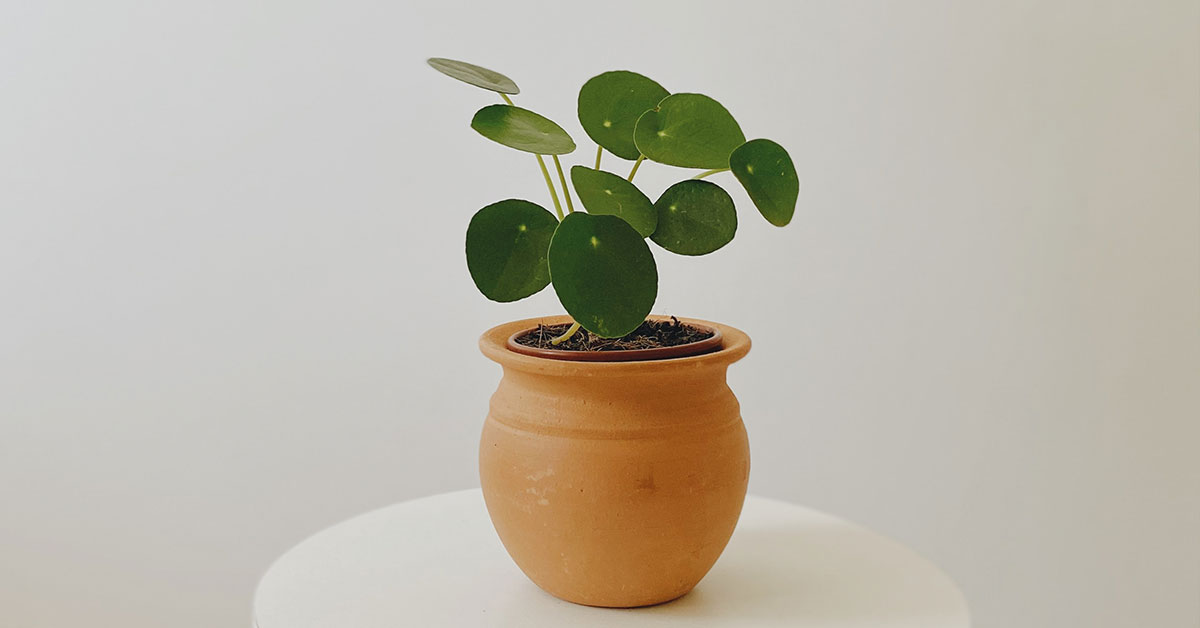

A Chinese Money Plant (also known as a Pilea peperomioides) is an ornamental houseplant with round, dark green leaves that have a pattern of silver dots. It is native to Yunnan, China and is a popular indoor plant. It is easy to care for and propagate, making it a great choice for beginners. When a Chinese Money Plant droops, it is usually a sign of improper care. Why is your Chinese money plant drooping? In this article, we’ll explore common causes and how to fix a drooping Pilea.
Why is my Chinese money plant drooping?
A drooping Chinese money plant is usually caused by one of a handful of problems. Read through this section to explore each of the root causes and attempt to diagnose your plant.
Overwatering
Overwatering a Chinese money plant can cause it to droop due to root rot. Root rot is a condition in which the roots of a plant are damaged, often due to excessive moisture. When soil is continually wet, the roots of the plant are unable to take in the necessary oxygen to function properly and the plant eventually begins to suffer from the lack of oxygen and the buildup of bacterial, fungal, or viral pathogens. This can lead to the death of the plant’s roots and the plant’s eventual death. The plant will droop due to a lack of nutrients and not be able to take in water as it should. Root rot can be avoided by only watering the plant when the soil is dry and not over-watering it.
Underwatering
When a Chinese money plant is too dry, it will start to droop. This is because the plant needs water to keep its cells full and functioning properly. When the cells are not sufficiently hydrated, they cannot hold the moisture they need to keep the plant’s structure and appearance upright. As the plant’s cells begin to dehydrate, the leaves will start to wilt and droop. If the plant is not watered within a few days, the drooping leaves could become permanently damaged. To avoid this, it is important to make sure that your Chinese money plant always has adequate moisture.
Improper fertilizing
Fertilizing a Chinese money plant with too much fertilizer can cause it to droop. This is because the excess fertilizer can cause salt buildup in the soil, which can lead to the plant drying out. This can cause the plant to become dehydrated, which can result in the leaves drooping. Additionally, the plant may not be able to absorb the excess fertilizer and the salts and other minerals contained within can accumulate in the soil, causing it to become toxic for the plant. This can also cause the leaves to droop. The best way to prevent this is to use a balanced fertilizer at recommended intervals and to always check the soil before fertilizing.
Not enough light
Insufficient light is one of the leading causes of a drooping money plant. When a money plant does not receive enough light, it will start to look limp and weak. This can happen if it is placed too far away from a window or if the environment is too dark. The leaves may start to turn yellow or brown, and the plant’s growth will slow down. To keep the money plant healthy, it should be placed in an area that receives plenty of natural light, such as near an open window. Additionally, you should provide your money plant with artificial light if needed. With adequate light and regular watering, your money plant should thrive.
Shock
Shock from moving or repotting can cause a drooping money plant. When a money plant is moved or repotted, it is important to do so carefully and slowly to avoid shocking the plant and causing drooping. When a money plant is shocked, the leaves will wilt and turn yellow and the stems will become limp and soft. To help the plant recover from shock, it is important to provide it with plenty of water and sunlight. Additionally, it is important to avoid moving or repotting the plant too often to reduce the risk of shock. With proper care and attention, a money plant can recover from shock and return to its vibrant and healthy state.
Caring for a drooping Chinese money plant
Once your Chinese money plant has begun to recover, it’s important to continue to care for it properly. Proper Pilea care includes:
- Water – Water your Chinese money plant once a week, making sure to keep the soil evenly moist. Allow the top ¼ inch of soil to dry out in between waterings.
- Light – Place your Chinese money plant in a spot with bright, indirect light.
- Fertilizer – Feed your Chinese money plant once a month with an all-purpose liquid fertilizer.
- Temperature – Chinese money plants prefer temperatures between 65-75°F (18-24°C).
- Pruning – Prune your Chinese money plant to remove dead foliage and encourage new growth.
- Repotting – Repot your Chinese money plant every other year using a light, well-draining soil.