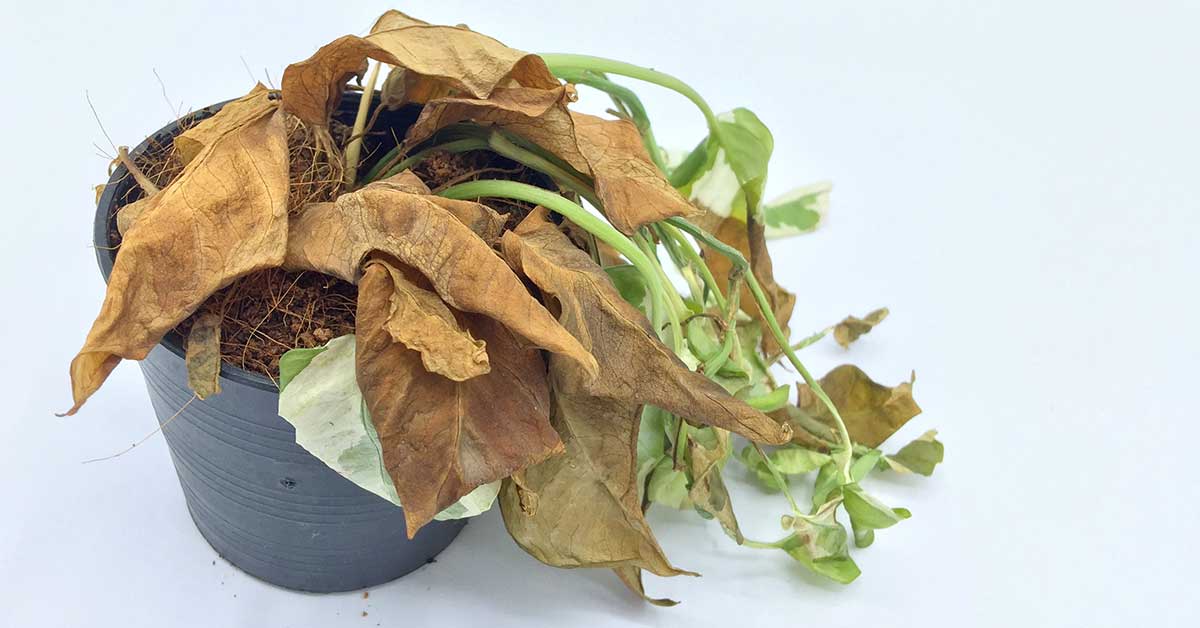

Growing and propagating different varieties of pothos is a very fun and rewarding experience. Watching the vines of a pothos grow and the plant propagate can be an amazing experience. The different varieties mean that there is something for everyone, whether you prefer a bright solid color or a bright variegated one. It can be quite therapeutic to watch the vines of a pothos grow and fill up an entire space. However, when your pothos begins to unexpectedly droop, it can be very troubling and worrisome. It can be disheartening to put so much effort into caring for a plant and then see it start to wilt and droop. Knowing the right care and maintenance for the plant is the best way to avoid such an occurrence. In this article, we’ll go over how to prevent and fix a drooping pothos.
Why your pothos is drooping
There are a few reasons that pothos can be droopy, from dry soil to root rot. We’ll break down each of the most likely reasons that your pothos plant is drooping and how to fix it.
Dry soil
When a pothos is grown in dry soil, it is not able to absorb enough water to keep its leaves hydrated and firm. As a result, the leaves will start to droop, indicating that the plant needs more moisture. The dry soil restricts the plant’s ability to absorb and transport water to its leaves, causing the plant to become dehydrated. In addition, dry soil can also lead to nutrient deficiencies, which can further weaken the pothos and cause it to droop. Along with drooping leaves and stems, you may notice yellowing, wrinkling, or browning leaves.
Low humidity
If you’re watering your pothos plant enough but it’s still drooping, it may be due to low humidity. Low humidity causes pothos to droop because the dry air causes the plant to lose moisture more quickly than it can take up through its roots. This causes the leaves to become wilted and droop. Just as with dry soil, you may also notice yellowing and browning of the leaves. In order to prevent this, it is important to maintain the humidity around the plant at a level that is high enough to keep the plant adequately hydrated.
The best way to increase humidity for your pothos plant is to mist the leaves regularly, either every day or every other day. You can use a spray bottle filled with water to lightly mist the leaves of the plant, taking care to avoid wetting the soil. Additionally, you can group plants together and place them near a humidifier to increase the humidity levels in the surrounding area. You can also place your pothos plant on a tray of pebbles filled with water, making sure that the bottom of the pot is not submerged in the water. This will create a humid microclimate around the plant as the water evaporates.
Root rot
Overwatering and root rot can cause a pothos plant to droop because too much water can cause the roots to suffocate and rot, preventing them from absorbing the nutrients they need to survive and thrive. This can lead to drooping, yellowing, and wilting of the plant’s foliage and, ultimately, death if not corrected. Root rot can be caused by overwatering, poor drainage, and/or a lack of air circulation around the roots. Root rot is a plant disease caused by fungi or bacteria that attack and kill plant roots, resulting in poor plant growth, wilting, and eventually death. It is most common in soil that is overly wet and poorly drained and can affect vegetables, fruits, flowers, trees, and shrubs.
It is important to properly water pothos plants, making sure that the soil is well-drained and that they are not sitting in standing water. It is also important to provide adequate air circulation around the roots to prevent root rot.
Cold damage
When temperatures dip below 50 degrees Fahrenheit, pothos plants are unable to tolerate the cold and their leaves will start to droop. This is due to the fact that cold temperatures cause the water in the plant’s cells to freeze and expand, damaging the cell walls and causing the plant to wilt. Additionally, cold temperatures can limit the amount of moisture available to the plant, causing the leaves to droop as well. It’s important to keep pothos plants in temperatures of at least 55 degrees F or higher to ensure they stay healthy and vibrant.
Shock
Repotting a pothos plant can cause it to droop due to the shock of the change in environment. When a plant is repotted, it is moved from one pot to another and its root system is disturbed. This shock can cause the plant to become stressed, causing it to droop or lose its vibrant color. Additionally, the new pot may not have enough soil or drainage holes to give the plant the proper care it needs. This can also lead to drooping as the plant is not able to take in the right amount of water and nutrients.