

A Plant That Refused to Die in Winter

Long before holly became a Christmas decorating essential, ancient cultures admired this evergreen for its ability to stay vibrant when other plants went dormant during the cold winter months. That simple fact carried enormous weight for people who depended on the natural world for signs of hope during the darkest time of year.
Before holly represented the Christmas spirit, it represented the beauty of survival. Ancient communities noticed that its leaves stayed richly colored and its berries remained bright even in deep winter, giving holly an almost miraculous presence in the seasonal landscape. It naturally became associated with protection, prosperity, renewal, and life that could withstand hardship.
The Druids and the Sacred Evergreen

Before holly was hung in houses to accompany Christmas trees, it was considered to be a sacred plant by the Druids. The Druids regarded holly as a symbol of fertility and eternal life, thought to have magical powers. In Druid lore, cutting down a holly tree would bring bad luck.
While other plants wilted in winter weather, holly remained colorful even in the harshest of conditions. The Druids regarded holly as a symbol of fertility and eternal life, and believed it had magical powers. In Druid lore, cutting down a holly tree would bring bad luck. In contrast, hanging the plant in homes was believed to bring good luck and protection.
Saturnalia: The Roman Festival That Changed Everything

Holly became a Christmas symbol because ancient Romans decorated with it during Saturnalia, their midwinter festival, and early Christians adopted the custom rather than fighting it. This act of practical adaptation would prove decisive for the plant’s long-term cultural future.
Saturnalia was a popular winter solstice celebration in Ancient Rome. It began on December 17 and lasted a week. During the festivities, everybody, even slaves, had time off to enjoy the revelries and to make offerings to Saturn, the god of agriculture, abundance and time, among other things. Holly was believed to be the sacred plant of Saturn, so during partying, Romans often wore holly crowns. To bring good luck, they decorated their homes with wreaths and boughs.
Gift-giving was a huge part of Saturnalia, and it was customary for friends to give each other gifts with sprigs of holly attached. Many rituals of Saturnalia still exist in modern Christmas traditions today.
Early Christians and the Art of Quiet Adoption

Christians, fearing further persecution, adopted holly as ornamentation during Saturnalia festivities as a kind of mask but altered the symbolism. To them, the spiny thorns along the plant’s leaf margins represented Jesus’ crown of thorns, while the red fruits signified droplets of blood.
Early Christians adapted the tradition for Christmas celebrations, decorating their homes with the branches to protect themselves from persecution while secretly commemorating the Nativity of Jesus. Over generations, those borrowed decorations became fully Christian ones, with barely anyone remembering where they had originally come from.
Christian Symbolism Written Into Every Leaf and Berry

As new religious traditions took shape, holly’s older meanings were not entirely lost. Within Christianity, the plant became closely associated with Christ: points on leaves suggested the crown of thorns, the color of berries evoked his blood, and evergreen foliage represented resurrection.
Holly is known as “Christdorn” in German, meaning “Christ thorn.” Today, Christians consider holly symbolic of Jesus Christ in two ways. One claims that the cross on which Jesus was crucified was constructed of holly. Another says that holly sprang up from his footsteps.
Because holly stays green year-round, it also came to represent eternal life, enduring faith, and hope through life’s challenges.
Holly and Thor: The Norse Connection

In Norse mythology, holly was associated with Thor, god of thunder, and holly plants grown by the home were thought to prevent lightning strikes. This was not purely superstitious thinking. The crooked lines of the holly leaves most likely gave rise to its association with lightning, as well as the fact that holly conducts lightning into the ground better than most trees.
Holly’s natural ability to resist lightning strikes created a connection to thunder gods, the Celtic Taranis and Norse Thor. Norse and Celtic people linked holly to their thunder gods, Thor and Taranis. That protective reputation made holly a natural choice to hang above a doorway or place near a hearth.
The Holly King: A Myth of Seasons

Revered by ancestors as a powerful symbol of death and rebirth, the holly tree played a central role in rituals marking the change of seasons. During the winter solstice celebrations, when sunlight declined to its lowest point before rising again, holly symbolised the cyclical nature of life and the promise of renewal.
The Holly King was seen as a giant bearing a crown of holly and carrying a club made of holly wood. This figure represented the dark half of the year, ruling from midsummer to midwinter. The mythology reinforced the idea that holly was not just a decoration, it was a marker of cosmic time.
Holly and Ivy: A Centuries-Old Pairing
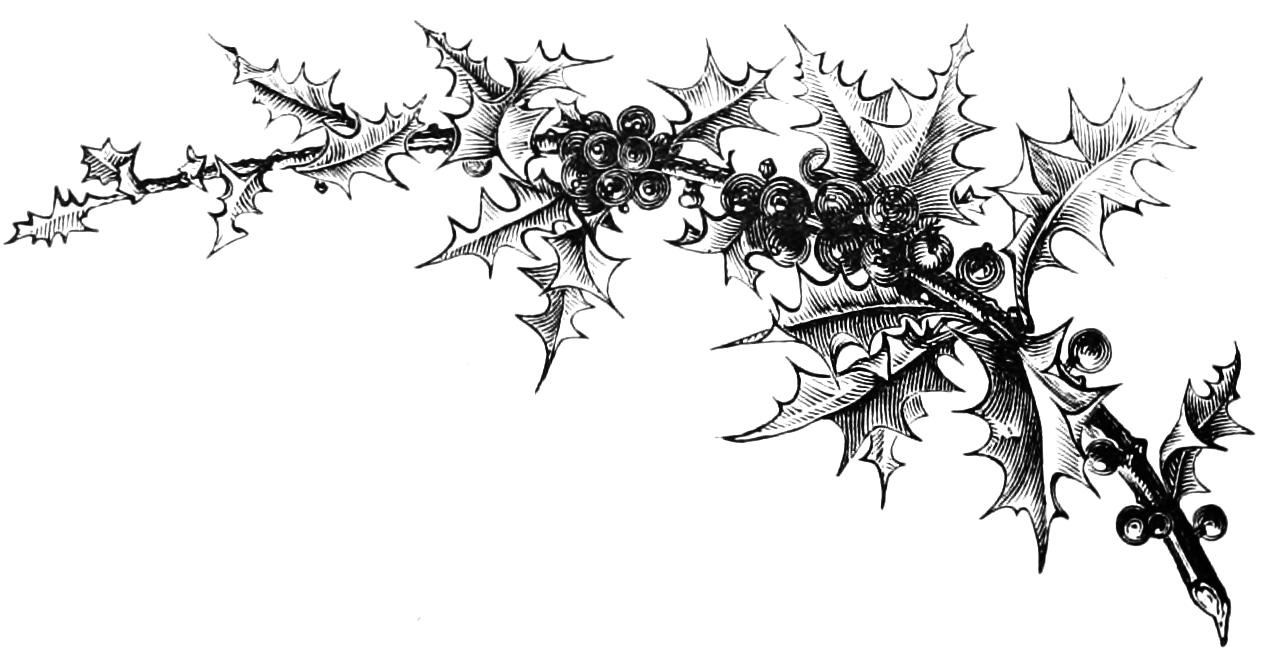
Holly and ivy were traditionally paired as masculine and feminine symbols in pre-Christian Britain. Boys carried holly branches and girls carried ivy in ritual winter contests. This ancient rivalry eventually made its way into song.
The two plants were eventually reunited under Christian symbolism: holly represented Jesus, ivy represented the Virgin Mary. This reading became the basis for one of the most enduring Christmas carols in the English language. The popular Christmas carol “The Holly and the Ivy” dates to at least the early nineteenth century and layers Christian symbolism onto the holly plant, with each physical feature representing an aspect of Christ’s life and death. The carol was collected in its current form in 1909 by folk song collector Cecil Sharp in Gloucestershire, England.
Holly in England: Trees Before Fir Trees
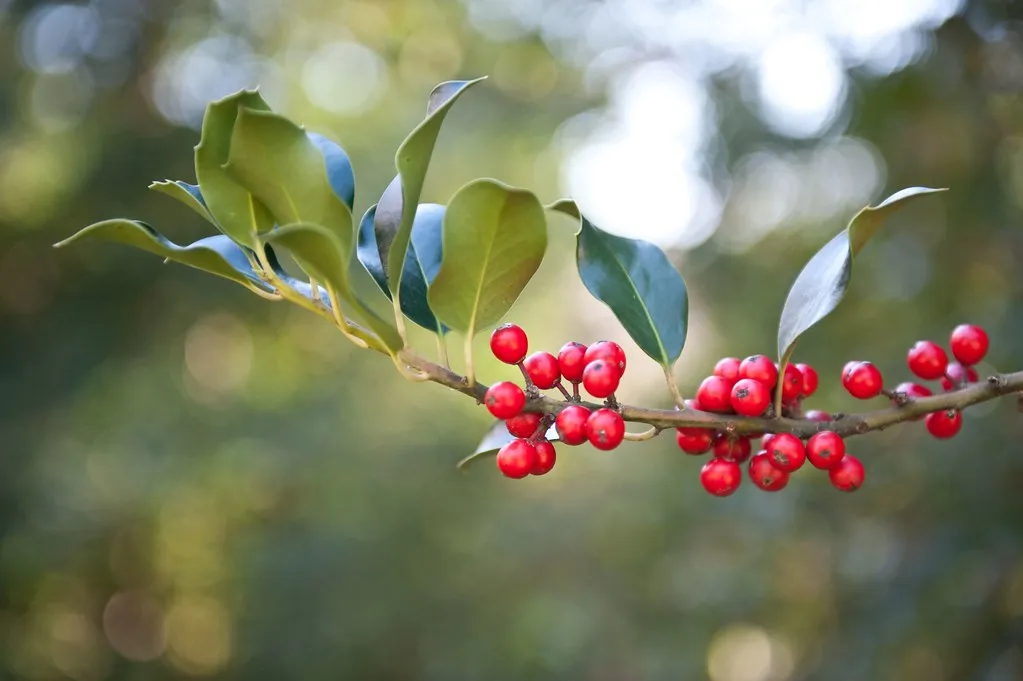
Early Christmas trees in England were holly trees, not fir trees. That detail tends to surprise people today, given how completely the conifer has claimed the role. A sprig of holly was often used to decorate the traditional English Christmas dessert, plum pudding.
Holly and ivy have been a mainstay of British Advent and Christmas decorations for church use since at least the fifteenth and sixteenth centuries, when they were mentioned regularly. The tradition was deeply embedded long before the Victorian era gave Christmas its current, more sentimental shape.
Holly in the New World

When the Pilgrims landed at Plymouth Rock, just shy of Christmas in 1620, they stumbled upon a familiar plant. There are sixteen varieties of Ilex in North America, mostly found on or near the east coast, and their “Christmas holly” reminded the early colonists of the holly back home.
When European settlers began arriving on the Eastern seaboard, they were pleased to find holly growing throughout the area. This holly was different from the European holly they were familiar with. This holly was American holly, Ilex opaca. The American holly leaves are flatter, and the spines stick straight out. Despite the differences, it served the same emotional and decorative purpose: a reminder of home and of the season’s deeper meaning.
Holly in the Modern Christmas

Few people hanging a holly wreath on their front door are thinking about Saturnalia or the Holly King. The symbolism has been compressed into pure visual shorthand: saw-toothed green leaves plus red berries equals Christmas.
Today, holly is regarded as carrying meanings of peace, protection, strength, and goodwill towards others. Much of the complex symbolism associated with this plant has probably faded over time, giving way to a more spontaneous and sincere celebration of Christmas. The layers are still there, though, for anyone who wants to look.
The Takeaway
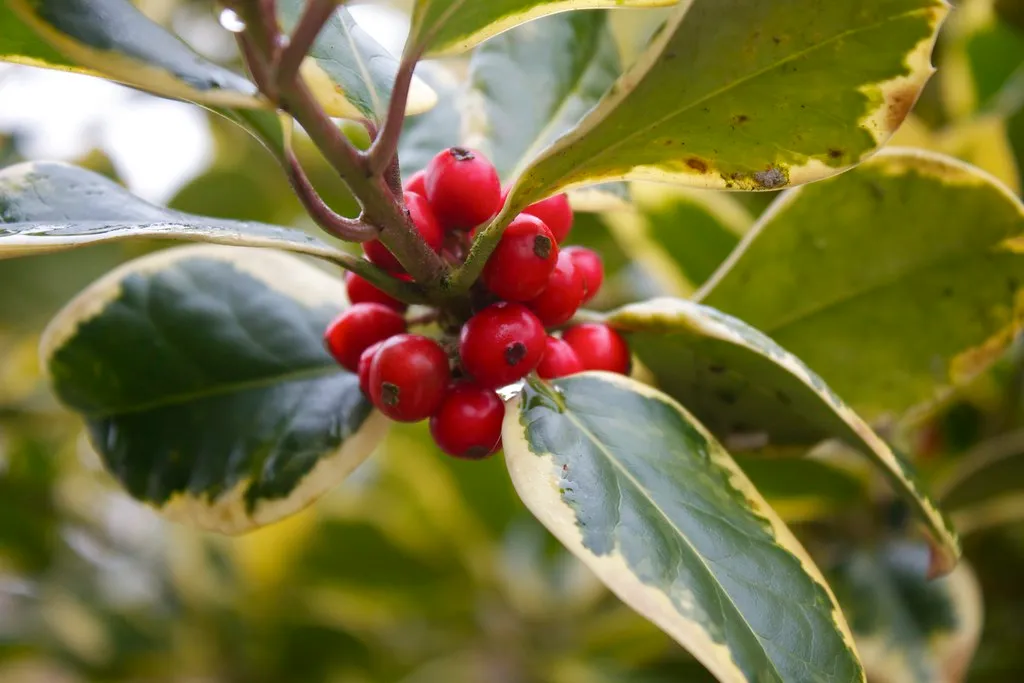
Holly did not arrive at Christmas through a single decision or a single faith. It got there the way most enduring traditions do: slowly, through thousands of years of overlapping cultures each finding their own meaning in the same persistent, quietly striking plant. Druids, Romans, Norse peoples, Celtic communities, and early Christians all looked at those glossy green leaves and bright red berries and saw something worth keeping close through the darkest months of the year.
What’s remarkable is not that holly became a Christmas symbol, but that so many different peoples independently felt its pull. That kind of staying power is hard to manufacture. Some things simply mean something, season after season, long after the reasons have been half-forgotten.
AI Disclaimer: This article was created with the assistance of AI tools and reviewed by a human editor.