

What the Tradition Actually Involves
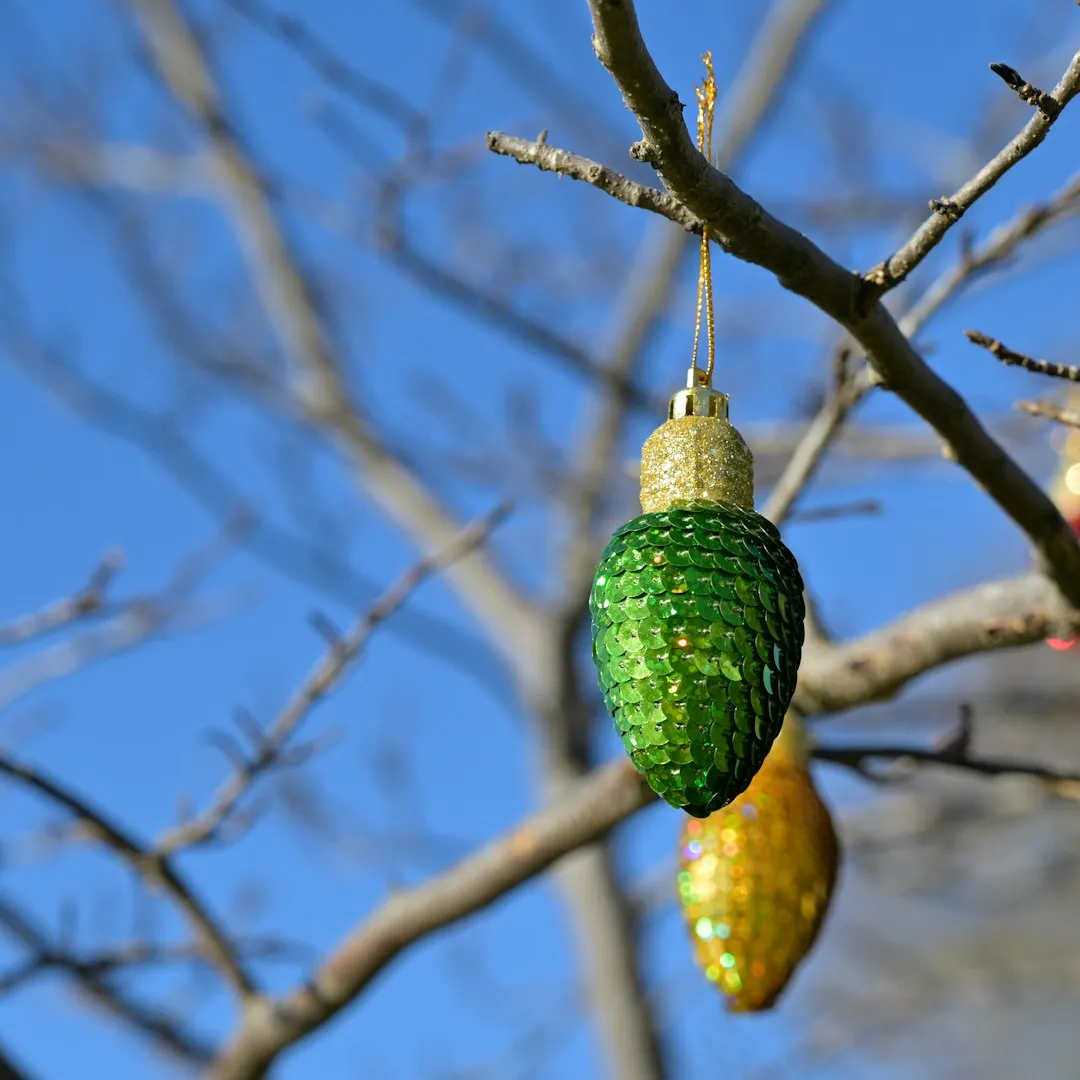
The Christmas pickle tradition is essentially a hidden-ornament game. A green glass pickle is tucked deep among the Christmas tree branches on Christmas Eve. The first person or child to find the ornament receives an extra present, though exactly where this tradition started is genuinely unclear.
The most basic version of the Christmas pickle meaning is simple: whoever finds the ornament on the tree receives good fortune for the year to come. Some families keep it competitive among children, while others make it a whole household hunt. The ornament’s deep green color, nearly identical to evergreen branches, is precisely what makes finding it such a small triumph.
The Supposed German Roots

The most prevalent tales of the Christmas pickle involve Germany, where the Christmas pickle tradition, known as Weihnachtsgurke, reportedly began. In the United States, it has generally been believed that this tradition began in Germany, where the pickle was referred to as Weihnachtsgurke. Native Germans, however, largely have no knowledge of the tradition they supposedly started.
Within Germany, the custom is so puzzling that German newspapers have published articles explaining this tradition that is supposedly theirs. That detail alone says a lot. A tradition so deeply embedded in a culture that the culture itself needs it explained from the outside is probably not deeply embedded at all.
What the Numbers Actually Show

A common misconception is that Weihnachtsgurke is an old German tradition, but according to a 2016 survey cited by the New York Times, roughly nine in ten people in Germany have never heard of it. That same 2016 survey found that only about eight percent of Germans even knew what the Christmas pickle tradition was, and just two percent said their families actually practiced it.
Those are striking numbers for something that gets sold across America as a timeless piece of German heritage. The tradition is not universally practiced in Germany, and in fact it seems to be far more popular in the United States than in Germany itself.
The Woolworth Connection and the Marketing Theory

In the 1880s and 1890s, Woolworth stores began selling glass holiday ornaments imported from Germany, including ornaments shaped like fruits and vegetables. According to the Woolworth Museum website, in 1880 businessman Frank W. Woolworth imported the first American case of 144 glass tree ornaments for his store in Lancaster, Pennsylvania, charged customers two for $25, and sold out within a day. By 1900, Woolworth was ordering 200,000 shining glass tree ornaments a year.
Pickles likely didn’t sell as well as the other decorations because their color is the same as that of an evergreen Christmas tree. Woolworth management found themselves looking at a tremendous amount of unsold glass pickle ornaments. It is likely that the “tradition” was a clever invention by an enterprising salesman with the hope that a charming tale would lead to more sales of these unusual ornaments.
The Civil War Soldier Legend

One widespread legend holds that a Union soldier born in Bavaria, Germany, was taken captive and imprisoned during the American Civil War. Starving, he begged his captors for one last pickle as his final meal. The guard took pity on him and the pickle miraculously gave him the strength to survive through the end of the war in April 1865. After returning home, he commemorated the miracle by placing a pickle-shaped ornament on his Christmas tree every year.
The story connects the Christmas pickle to remembrance of the pain the soldier lived through, though this account is not verified by historical record. It’s a compelling story, emotionally speaking, but researchers have found no documentary evidence to firmly pin it to any real individual’s life.
The Children in the Barrel Fairy Tale

Another origin story is a Victorian fairy tale about two children who were trapped in a pickle barrel by an evil innkeeper. The legend goes that St. Nicholas discovered the children and rescued them in a Christmas miracle. It’s a dark little story by modern standards, but Victorian holiday folklore had a habit of leaning into peril before delivering the happy ending.
This particular tale is commonly told in Berrien Springs, Michigan, which is the self-appointed Christmas pickle capital of the world and has even held parades in honor of the tradition. Whether the story inspired the ornament or the ornament inspired the story is, characteristically, something nobody can say for certain.
Lauscha: Where the Glass Pickles Are Born

Traditional hand-blown glass pickles are still made in Lauscha, in Germany’s Thuringia region, the birthplace of glass Christmas ornaments in the 1840s. Today, the glossy Christmas pickle tree ornament is still handmade in Lauscha using traditional methods, with some artisans descended from the original families who created the mouth-blown glassware, and they are sold in Germany and around the world with a tag telling the “German” pickle tradition story.
One ornament maker from Lauscha only learned about the pickle ornament tradition during a trip to the United States. His glass factory now makes thousands of Christmas pickles each year. There’s a certain irony in that: the craftsmen who make the ornament learned the story of its supposed cultural meaning from Americans.
Berrien Springs and the Pickle Capital
The American city of Berrien Springs, Michigan, also known as the Christmas Pickle Capital of the World, has an annual pickle festival held during the early part of December. The town has leaned fully into the tradition, making it a point of civic pride and seasonal tourism. It’s the kind of place where the legend, however murky its roots, has become genuinely local and genuinely loved.
In Berrien Springs, Michigan, they have billed themselves the Christmas Pickle Capital of the world, and it’s obviously a huge thing outside of Germany. Whatever the ornament’s true origin, its cultural home today is clearly American.
The Tradition Circling Back to Germany

Ironically, the Christmas pickle has actually started to catch on in Germany in more recent years, but as a funny American tradition. Germans encountering it today often treat it with the bemused curiosity of someone hearing about themselves from a stranger. Whatever the explanation, the Christmas pickle tradition lives on in trees near and far, and even Germans seem to be warming up to this amusing custom.
It is possible, as one academic has noted, that hiding a pickle may have been popular in just one specific region of Germany, even if most Germans don’t know about it today. That’s not proof of an ancient tradition, but it at least leaves a small door open.
The Best-Selling Ornament Nobody Can Explain
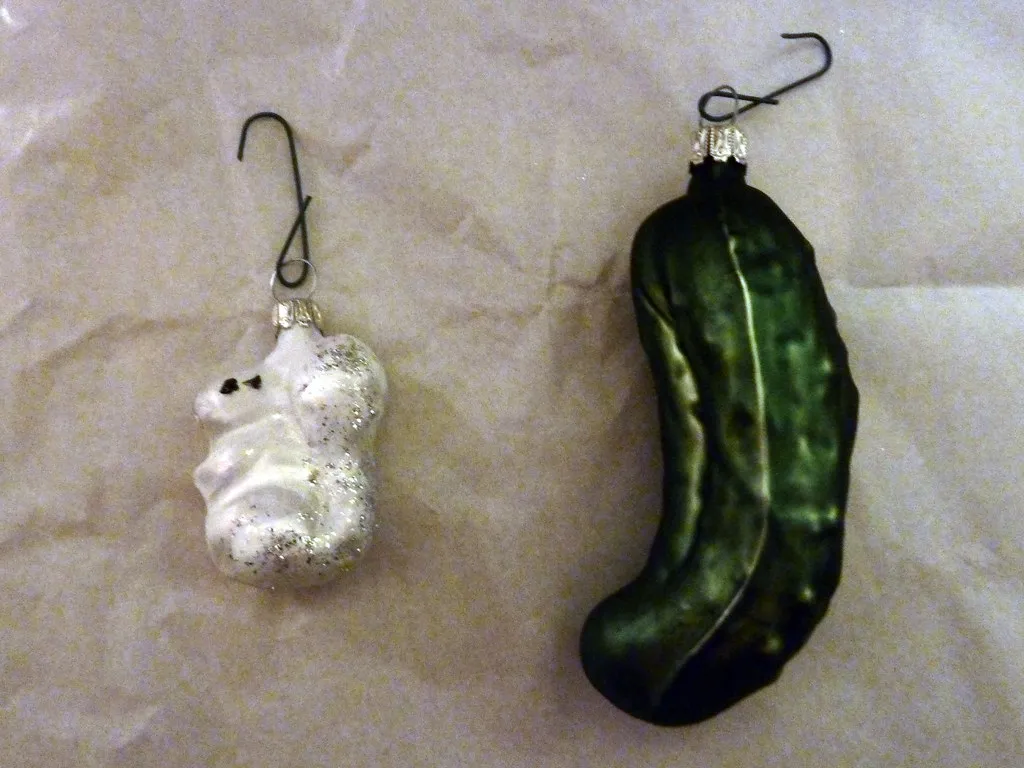
Old World Christmas, a shop that sells traditional mouth-blown glass ornaments, prints the origin “story” of the pickle tradition in every ornament box. According to a spokesperson for the company, the pickle ornament has been the company’s best-selling ornament for over 40 years. That’s a remarkable commercial fact for something with no confirmed historical basis.
The pickle ornaments proved slow to sell initially, so Woolworth’s employees devised a fabricated backstory portraying the pickle as an ancient German custom. This enduring narrative has transformed the pickle into a form of “guilty pleasure” folklore, embraced for its whimsical appeal even after the debunking. People know it might be myth. They hang it anyway.
The Takeaway

The Christmas pickle is, in a way, a perfect holiday object. Its origin is unverified, its legend is entertaining, and its game is genuinely fun. As journalist Alexandra Churchill wrote in a 2014 article, she found no historical or other evidence to indicate that the Weihnachtsgurke is a genuine Christmas custom from Germany. And yet families across the United States have been playing the game for generations, and show no signs of stopping.
Some traditions earn their place not through documented history but through the feeling they create. A hidden green glass pickle, a few excited children scanning the branches, the moment someone spots it first. That’s the actual tradition, and it doesn’t need a provenance certificate to work.
AI Disclaimer: This article was created with the assistance of AI tools and reviewed by a human editor.