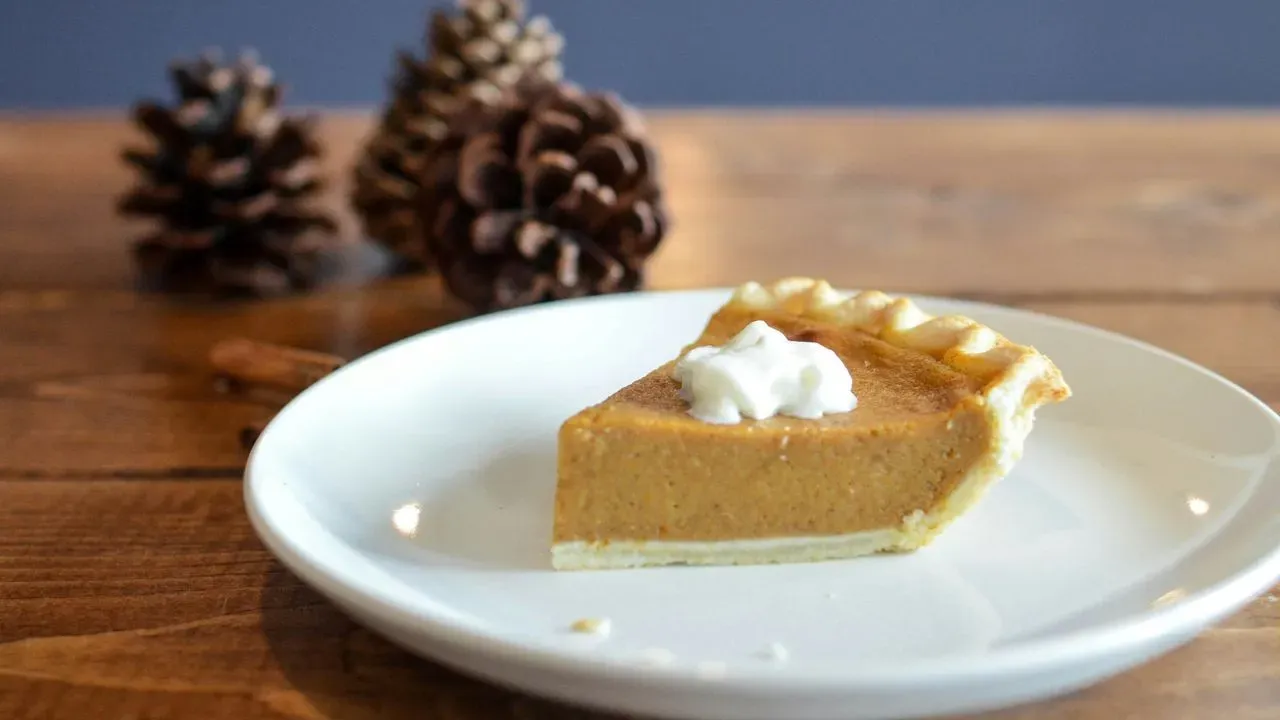

Thanksgiving leftovers tend to outlast the holiday, and half a pumpkin pie in the refrigerator is a familiar problem. Freezing can stretch that pie well past the weekend, yet the guidance on how well it holds up is far from uniform. Extension services generally say the pie freezes, while one test kitchen reports a filling that turns grainy and wet. The sources do agree on the basics, and they are laid out in detail on ([1]), which is where this comparison begins.
A Qualified Yes From Most Extension Services
Iowa State Extension says pumpkin pie freezes well, whether it is homemade or store-bought, and it can be frozen either baked or ready to bake. For the best texture, the university recommends keeping a frozen pie no longer than about a month. The FoodSafety.gov cold storage chart offers a wider window of 1 to 2 months in the freezer after baking, while placing custard and chiffon pies in a do-not-freeze category.
The time limits are about quality rather than safety. Iowa State notes that a pie left in the freezer beyond a month does not become a foodborne illness risk, although its taste and texture may decline. FoodSafety.gov takes a similar line, stating that food held continuously at 0°F can be kept indefinitely, with the shorter figures meant to protect flavor and texture.
Where the Sources Part Ways
The most direct dissent comes from America’s Test Kitchen, which advises against freezing pumpkin pie at all. Its test pies, baked or unbaked, emerged with a grainy, wet filling and a soggy crust. The explanation centers on water. Pumpkin filling carries a good deal of moisture from both the dairy and the squash, and ice crystals appear to weaken the egg proteins that normally hold that water in place. When the pie thaws, the liquid seeps out.
Other extension pages add another layer of caution. NDSU, Clemson and Missouri all warn that custard and cream fillings can separate, turn watery or soak into the crust, yet each still lists pumpkin pie as freezable. That tension is not a clean contradiction so much as a difference in how each source weighs texture against convenience. For a home cook, the real question is how much a looser, wetter filling would bother the people at the table.
Baked or Unbaked: What Changes
A baked pie follows a simple path. It needs to cool fully, ideally on a rack, before wrapping, because trapped steam can produce a soggy result. Iowa State suggests baking a whole pie meant for the freezer in a disposable aluminum pan, since a thin pan helps it freeze quickly. Kansas State’s general pie guidance adds that pies are easier to freeze before wrapping and should be wrapped once they are frozen solid.
An unbaked pie takes a different route. NDSU, Clemson and Missouri recommend adding cold filling to a chilled, unbaked shell, then baking it without thawing, starting at 400°F for 10 minutes and finishing at 325°F. Iowa State instead advises thawing the pie in the refrigerator first, which may add time to the bake if the custard is still cold. Iowa State describes a finished pie as one with a center that reaches 175°F, or one where a knife comes out clean. Guidance on total baking minutes for a frozen unbaked pie is thin, so the doneness checks matter more than the clock.
Thawing, Timing and Thanksgiving Leftovers
Thawing is where many soggy crusts begin. Iowa State says to remove the wrapping and thaw the pie in the refrigerator for at least 12 hours, since thawing at room temperature produces condensation that softens the crust. Wisconsin Extension allows a longer cooling window than Illinois, but the more cautious figure of two hours is a sensible limit for refrigerating a pumpkin pie after it comes out of the oven. The same caution applies to whipped cream. Wisconsin Extension says some custard or whipped cream topped pies lose quality when frozen, so adding the topping after thawing is the safer choice.
Timing for the holiday depends on when the pie is frozen. FoodSafety.gov gives 3 to 4 days in the refrigerator after baking, so freezing within a day or two keeps the pie comfortably inside that window. Refreezing is less clear. USDA notes that thawed food can be refrozen with some loss of quality, while NDSU advises against refreezing prepared foods that have thawed, and Marie Callender’s says not to refreeze its own dessert pies once they are fully thawed. Freezing leftover slices in portions makes it easier to thaw only what will be eaten.
What matters now
- Pumpkin pie can be frozen, baked or unbaked, and most extension guidance supports it.
- Expect possible changes in texture, since one test kitchen reported a grainy, wet filling.
- Cool fully, refrigerate within two hours, and wrap tightly in plastic and foil.
- Thaw in the refrigerator, and add whipped cream after the pie has thawed.
- Freeze within a day or two of baking, and aim to finish within about a month.
For Thanksgiving cooks, the choice is less about whether pumpkin pie can survive the freezer and more about what kind of result is acceptable. A carefully cooled, tightly wrapped pie frozen early and thawed slowly in the refrigerator gives the best odds. Anyone expecting the filling to match the day it was baked should plan on a small loss in texture.
AI Disclaimer: This article was created with the assistance of AI tools and reviewed by a human editor.