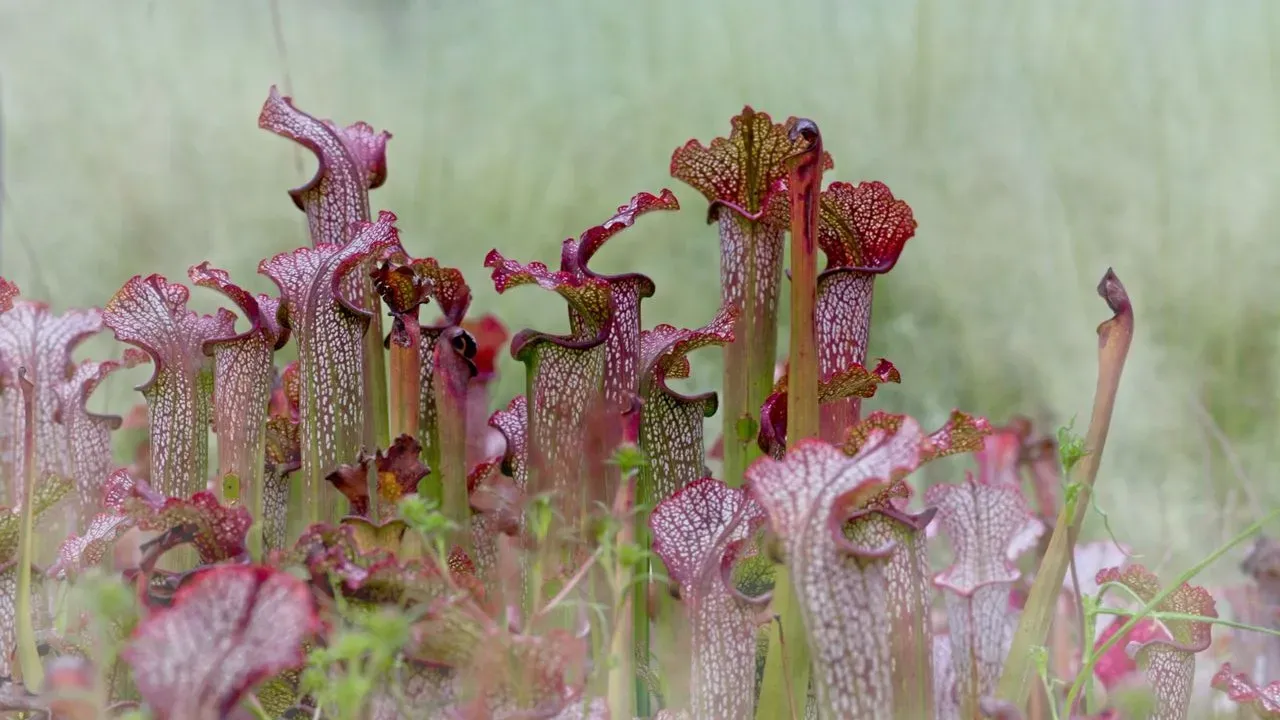

Carnivorous plants are often imagined as tropical oddities that need a greenhouse to survive. A garden in northeast Tennessee suggests otherwise. Jeff Calton grows a notable collection of pitcher plants outdoors in a climate with real winters, and the result is a display that draws the eye long before any insect is caught ([1]).
Leaves that outshine the blooms
Pitcher plants are native to the bogs and wet savannas of eastern North America. Their leaves have evolved into hollow, upright or sprawling tubes that collect rainwater and digestive fluid, which helps the plants make up for the poor soil they grow in ([2]). For a gardener, the more striking feature is color. The white-topped pitcher plant, Sarracenia leucophylla, carries foliage that is more vivid than most flowers, which makes it a strong choice for a plant bed that needs visual weight.
Not every species competes for attention in the same way. The yellow pitcher plant, Sarracenia flava, has a more muted tone, yet its tall, graceful form gives a garden a quieter kind of elegance. Gardeners who want more pigment often turn to hybrids, and the Scarlet Belle cultivar is a good example of a plant that stands out even among other plantings.
Choosing species and placing them well
Calton’s garden includes several plants that show how much variety the group offers. The ranges below come from the original feature, which lists the cold tolerance of each plant:
- White-topped pitcher plant (Sarracenia leucophylla), zones 5 to 8
- Yellow pitcher plant (Sarracenia flava), zones 6 to 9
- Scarlet Belle (Sarracenia × ‘Scarlet Belle’), zones 5 to 10, shown in front of a mixed planting that includes a golden eastern hemlock
Light plays a large role in how these plants look. Strong sun keeps pitchers upright and their colors deep, while shade tends to produce floppy growth that is greener and less dramatic ([2]). Most growers recommend a site with plenty of direct sun during the growing season.
Moisture is equally important. These plants do best in bog beds or in containers sunk into the ground, with soil that stays wet but not stagnant. They are sensitive to tap water and fertilizer, and rainwater or distilled water is generally the safer choice ([2]). Because the plants trap their own food outdoors, they rarely need feeding.
How they handle a cold winter
The genus is more cold tolerant than many gardeners expect. Some references list Sarracenia hardiness from zone 3 through zone 9, and the purple pitcher plant, Sarracenia purpurea, is known for tolerating hard freezes ([2]). A grower who keeps these plants in the open may see them endure winters that would be hard on more familiar tropical species.
Winter rest is essential, however. Pitcher plants need a cold dormancy period of roughly two to four months, and the foliage often dies back in the cold ([3]). One care sheet reports that plants have survived temperatures as low as minus 15 degrees Fahrenheit, with or without a few inches of mulch. Gardeners in colder areas, or those growing plants in pots, should still protect the roots and watch for rodents that may nibble at the crowns.
What to weigh before planting
Pitcher plants are not a universal answer for every landscape. Their needs for sun, constant moisture, and a cold rest period mean that a shady border or a dry bed will not suit them. Hybrids and southern species may also need more protection than the hardiest types, so checking the cultivar before buying is worthwhile.
For gardeners willing to create a bog or a sunny container arrangement, however, the reward is a display that changes with the seasons and carries its own color. In a region where many gardens depend on familiar perennials, a few well-placed pitcher plants offer something different, and they can show that carnivores have a place in an ordinary American yard.
AI Disclaimer: This article was created with the assistance of AI tools and reviewed by a human editor.