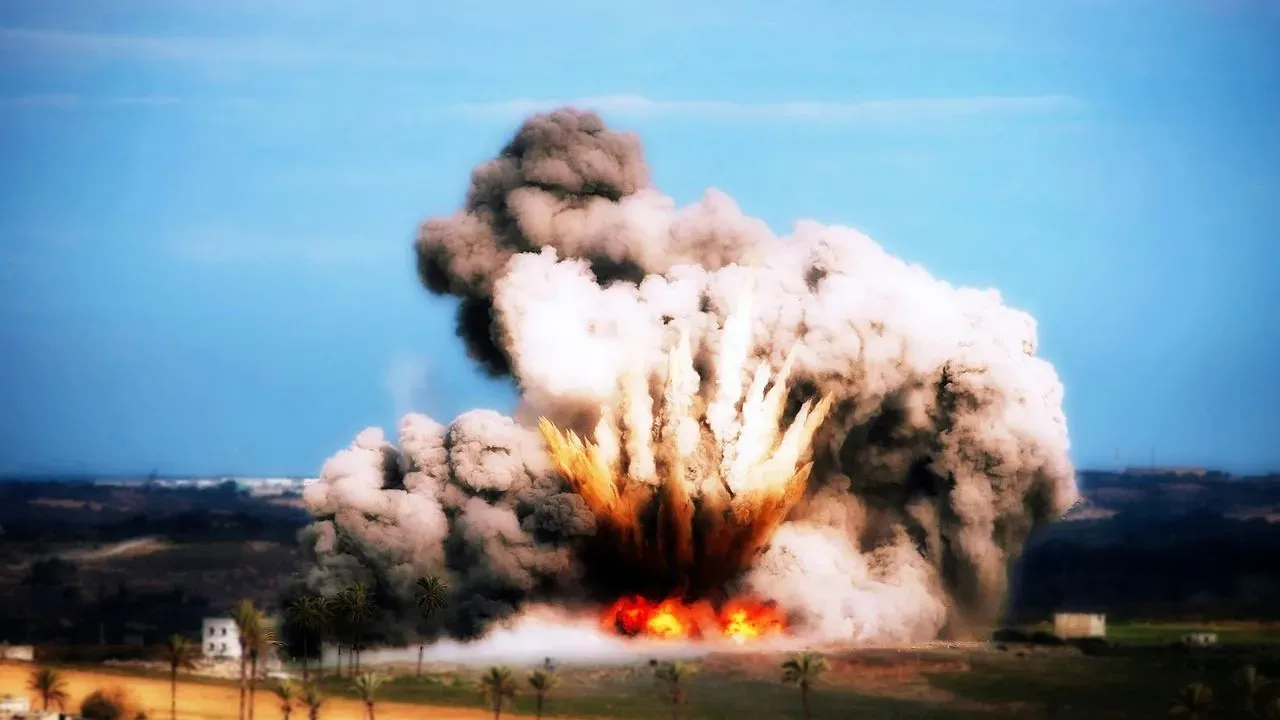

MIDDLETOWN, Iowa – On Wednesday morning, the U.S. Army set off the nation’s full supply of lead azide at a military plant on the edge of this small town, closing out a long storage problem in a single controlled blast. Residents, farmers and officials across the region had worried that the detonation could send a toxic dust cloud over nearby homes and fields. Early readings have so far been encouraging, but the agencies involved say the confirming work is still underway. The original Associated Press report on the blast is available at this link ([1]). ([1])
A chemical with a difficult history
Lead azide has been used in munitions since World War I, where it helps set off other explosive charges. It is far from a routine material to store. During an inspection in March, staff at the plant found the lead azide had partially crystallized, making it sensitive to friction and cold temperatures and creating the risk of spontaneous detonation.
The health concern is separate from the explosion risk. Lead is the reason residents were told to pay attention to dust. Lead is a metal that is not considered safe at any level and is especially dangerous to children and pregnant women. The stockpile itself had been aging for years. Defense officials raised concerns about a 40-year-old stockpile deteriorating at the plant, which led the Army to begin developing replacements in 2004.
Smoke that cleared in minutes
The blast itself was quick and, by most accounts, tightly managed. An Associated Press reporter watched from a spot less than a mile away and upwind from the site. Following two loud booms around 9 a.m. local time, a pair of wispy white plumes rolled high in the air before quickly dissipating.
Much of the work went into controlling what could rise from the bunkers. The Army set up additional blast barriers around the two bunkers where the 68 barrels were detonated, with concrete and sand barriers two stories high. Ballistic gels, foams and more than 100,000 gallons of water were intended to absorb the lead dust. The Army said the foam was responsible for much of the white smoke seen after the blasts.
Plan compared with early results
Officials had laid out specific goals before the detonation, and the first reports on each measure have been mostly positive. The table below sets the pre-blast plan against what has been reported so far.
| Area | Plan before the blast | First reported result |
|---|---|---|
| Dust control | Foam and absorbent gels to capture lead dust | Officials say early signs show no toxic dust reached nearby homes and farms |
| Air monitoring | EPA tests air, water and soil before, during and after the blast | EPA air monitors reported no airborne lead around the plant |
| Plume path | Wind expected to carry the cloud southwest toward Missouri and away from Burlington | Still unclear whether the plume carried any toxic lead |
Army officials were quick to claim success. Maj. Gen. Eric Shirley, who led the Army operation, said at a news conference that all five tons of lead azide were destroyed. He described the outcome as having “wildly exceeded my expectations.” President Donald Trump also weighed in online, saying early reports from Iowa show that the Army’s “mitigation efforts” had “far exceeded expectations.”
What is still unknown for farms and soil
For a rural region built around farmland, the open questions matter most. The Army had said the cloud would be made up mostly of harmless material. Models released showed the cloud would largely consist of non-toxic substances, including nitrogen gas, water vapor, clean sand and soil, while a very small portion would be fine lead oxide from the original barrels. That small portion is the part that matters for fields, since the Army also acknowledged that the detonation would produce an air plume with lead-containing particles that disperse in the air and deposit on the ground.
The Environmental Protection Agency has also been careful about its early message. The agency said it expected a brief increase in lead in the air above Middletown and along the predicted plume path immediately after the detonation. Officials also plan more testing. Government agencies plan more testing in the coming days. Scientists have made a similar point, with multiple experts agreeing that it is too early to draw conclusions about lead pollution levels.
Public trust was not uniform. One source quoted by NBC News said the lead-up to the detonation should never have been so chaotic and unclear. Several residents had also been told to leave their homes or stay indoors, and the state moved to protect a wide area. Iowa Governor Kim Reynolds issued an emergency proclamation for several counties that are home to more than 77,000 people.
What comes next
For now, the headline is that the stockpile is gone and the first checks found no airborne lead at the monitors. The fuller picture will depend on sampling of soil and surfaces, which had not been finalized when officials spoke on Wednesday. Residents with gardens, pastures or private wells will want to follow the results as they are released, since those samples will say far more about the ground beneath the farms than the first hours of air readings can.
AI Disclaimer: This article was created with the assistance of AI tools and reviewed by a human editor.