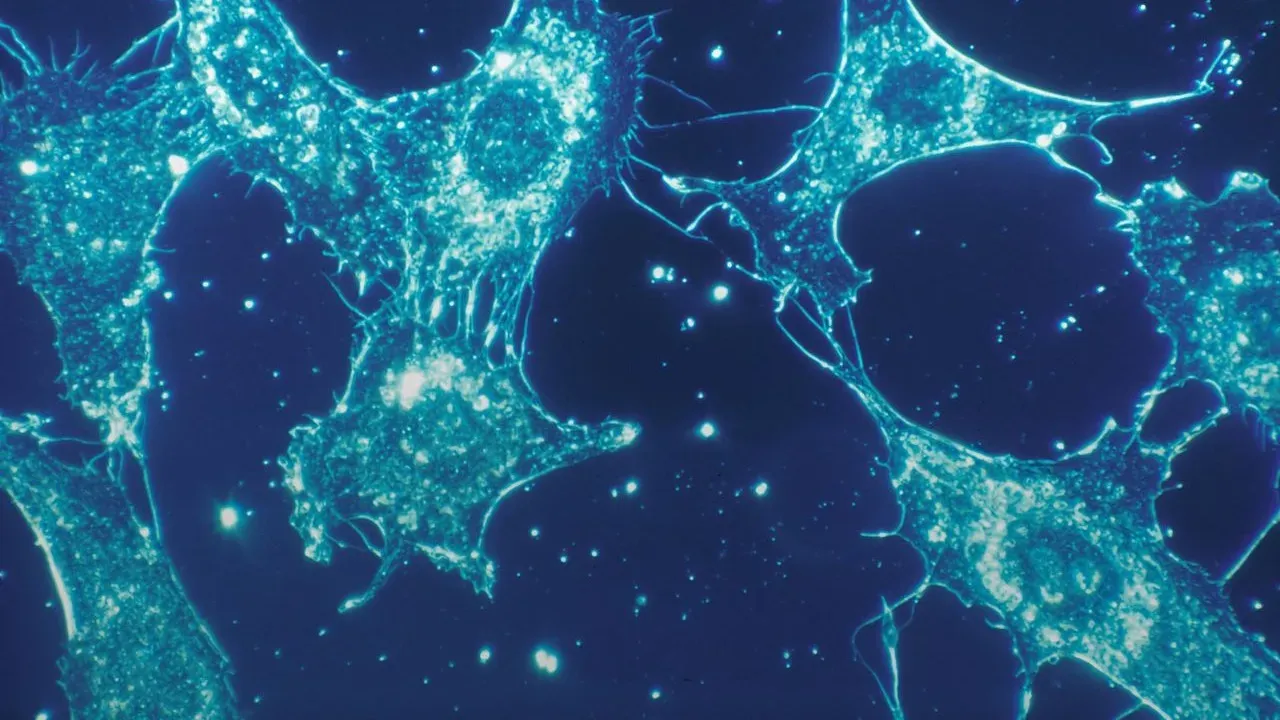

Tumors have long been known for slipping past the body’s defenses, but researchers are paying closer attention to a less obvious tool: a coating of sugar molecules on the surface of cancer cells. A recent report describes how this natural cellular process may help tumors evade the immune system, spread and resist drugs, which has drawn interest to it as a possible new target ([1]). The work is still early, but it moves attention beyond the genes inside a tumor cell to the surface the cell presents to the immune system.
A coat that makes cancer look like the body’s own cells
Scientists refer to this outer layer as the glycocalyx, a dense mesh of sugar-based molecules that surrounds cells. In malignant tumors, cancer cells exploit this dense layer as a disguise, effectively hiding from T cells and other immune defenders.
A central piece of the puzzle involves sialic acid, a sugar that appears on many healthy cells too. Sialic acid is thought to function as a self-associated molecular pattern to suppress immune responses, allowing cancers with hypersialylation to evade immune attack. Put simply, the sugar appears to act as a label that tells immune cells to stand down.
A study published in Cancer Research illustrates how this plays out in pancreatic cancer. Researchers led by Mohamed Abdel-Mohsen found that pancreatic tumor cells evade immune attack by cloaking themselves in a specific sugar molecule – sialic acid – that tricks the immune system into thinking the cancer cells are normal. The researchers described the effect with a memorable comparison: “This sugar tells the immune system, ‘Don’t attack me – I’m one of you.'”
What recent laboratory work has found
Several recent studies have tested ways to weaken the shield rather than simply describing it. In one project from the Sanford Burnham Prebys Institute, the protein HSF1 enhances the ability of cancer cells to evade immune detection. The same work also tied the sugar layer to blood sugar levels. Hyperglycemia boosted cancer cells’ ability to evade the immune system only when HSF1 was present in cells cultured in conditions mimicking the tumor microenvironment. That finding raises a possible connection between metabolic health and tumor defenses, though the evidence so far comes from cell cultures.
A separate team from MIT and Stanford approached the problem from another angle. The scientists found that blocking these glycans with proteins known as lectins can greatly strengthen immune activity against cancer cells. In leukemia research, investigators identified a protein called CD43 on the surface of leukemia cells that is coated so heavily in sugar molecules that it forms a physical barrier, shielding the cells from immune attack. When that protein was inhibited, other cancer-killing immune cells, T cells and NK cells, showed a greater ability to attack AML cells.
Taken together, these projects point to three broad approaches now under study:
- Thinning the sugar coat by targeting HSF1, which the researchers suggest may thin the glycocalyx and prevent cancer cells from avoiding detection by the immune system.
- Blocking the sugar-based signals that switch immune cells off, using lectin-based tools.
- Aiming at sugar-linked immune checkpoints such as Siglec-10, which could open up new therapeutic avenues for diseases that currently have few effective treatments.
What matters now: The sugar shield is a real, measurable barrier in several cancer types, and it may help explain why some tumors resist immunotherapy. Researchers are testing ways to remove or block it, but these approaches have so far been tested mainly in cells and animal models.
Open questions before any clinical use
The field has moved quickly, yet significant gaps remain. Despite advancements in immunotherapy, particularly with immune checkpoint inhibitors, the glycocalyx remains a powerful barrier to effective cancer treatment. Much of the evidence comes from laboratory experiments. Even the MIT and Stanford team described its results as coming from lab experiments with cultured cells, which leaves open how these strategies would perform in patients.
Other questions are less settled. Researchers still need to determine which tumors rely most heavily on the sugar coat, how safely it can be disrupted without harming healthy tissue, and whether the blood sugar connection holds beyond laboratory conditions. Sugar-related immune signals also appear in other diseases, which means any therapy would need careful testing to avoid unintended effects.
For now, the sugar shield offers a clearer picture of how tumors hide and a set of targets worth pursuing. The next phase will show whether removing that disguise can help the immune system do what it was built to do.
AI Disclaimer: This article was created with the assistance of AI tools and reviewed by a human editor.