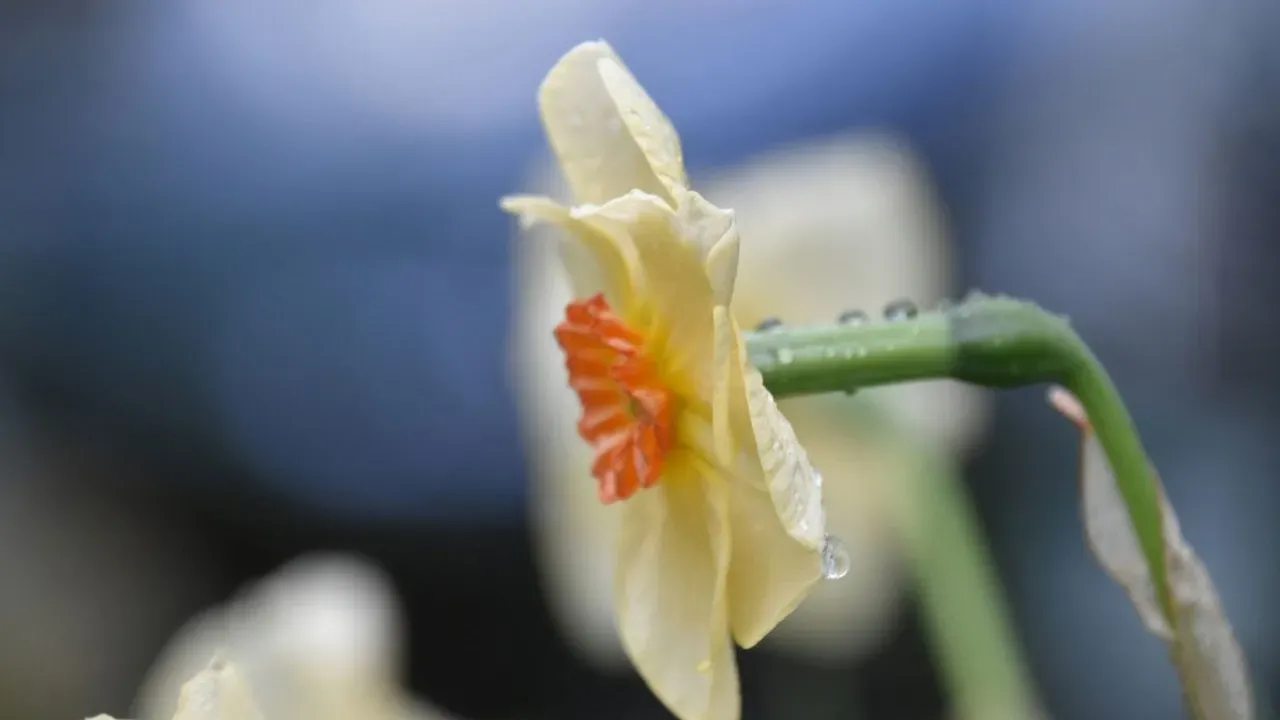

Few garden sightings look more out of place than a daffodil in late summer. One gardener spotted a yellow trumpet daffodil on a London street in August, admired it from across the road, and only later learned it was plastic. The writer shares the story on GardenRant ([1]) as a light confession, but it also raises a serious question about what counts as a real flower and what gets lost when artificial ones take its place. ([1])
A Mistake Made From Across the Road
The error was easy to make. The writer was not wearing glasses, and the flower looked convincing from a distance, with the bright color and upright form expected of a spring bulb. Nothing about its placement suggested artifice, which is what makes the anecdote stick.
Plenty of fake garden decor announces itself. Lawn ornaments and concrete figures are obviously decorative, so nobody mistakes them for living plants. This daffodil, by contrast, seemed like an ordinary plant that had simply lost track of the calendar. The writer jokes that a philosopher might rework the famous line about thinking and existing into one about planting real daffodils, a playful touch that keeps the story from feeling like a complaint.
The Long Route From Field to Florist
Real cut flowers often travel much farther than the shoppers who buy them realize. According to the writer, South American blooms pass customs and USDA inspection in Miami before heading to distributors across the United States. Most shipments then ride refrigerated trucks, while some cut flower loads move through the UPS Worldport hub in Louisville.
The volume is striking. The Associated Press reported that 990 million flower stems were processed through Miami in the run-up to Valentine’s Day earlier this year. The writer recalls visiting a Miami broker in the late 1980s, when wholesale orders arrived by phone and the stock was tracked on a blackboard. Stems that look fresh on a grocery shelf have usually been handled by many hands.
Freshness depends on more than the trip itself. The writer finds that many imported flowers have little scent, with carnations from one large grocery chain offering only a faint fragrance. Growers and buyers tend to prioritize shelf life, stem strength and disease resistance. Alstroemerias, which can stay in a vase for 10 days or longer, show how long a well-bred cut flower can last. The writer recalls a Colombian alstroemeria grower who could trace a stem from field to store display within two days.
Domestic Growers Are Making a Comeback
The United States once had a thriving domestic trade in greenhouse cut flowers. Carnation growers in Western North Carolina formed a small industry between the late 1950s and the early 1980s. Over time, production moved to Colorado and California, and South American growers eventually took much of the market.
The trend appears to be reversing. The American Society of Cut Flower Growers, co-founded in 1988 by Allen Armitage of the University of Georgia, told the writer by email that it has about 2,000 members. Those growers span all 50 states and several Canadian provinces, from small farms to large commercial operations. Judy Laushman, another co-founder who had worked as a research technician at the university, led the group for 35 years before retiring in 2023.
Ways to Bring Living Blooms Home
An office without flowers does not have to stay that way. The writer notes that a small bouquet of fresh cut flowers can cost as little as $5, and single stems sometimes sell for about a dollar. Seasonal choices still exist in late November, including the Thanksgiving mum, a hardy perennial the writer values for its long life in a garden.
Shoppers who want more local options have a few routes to explore:
- Farmers markets, where the freshest stems often come directly from growers
- The American Society of Cut Flower Growers online directory, which lists local flower producers
- Hardy mums, which can carry a display through the cold season
- Sunflower seeds sown directly in full sun after the last frost, with several sowings spaced a couple of weeks apart
The sunflower option is the easiest entry point for a home garden. Children tend to be captivated by the tall plants, and goldfinches gather the seeds once they ripen. The writer’s broader message is that a real bloom, even a modest one, offers something a plastic substitute cannot. The daffodil on the London street was convincing from across the road, but up close, the difference was clear.
AI Disclaimer: This article was created with the assistance of AI tools and reviewed by a human editor.