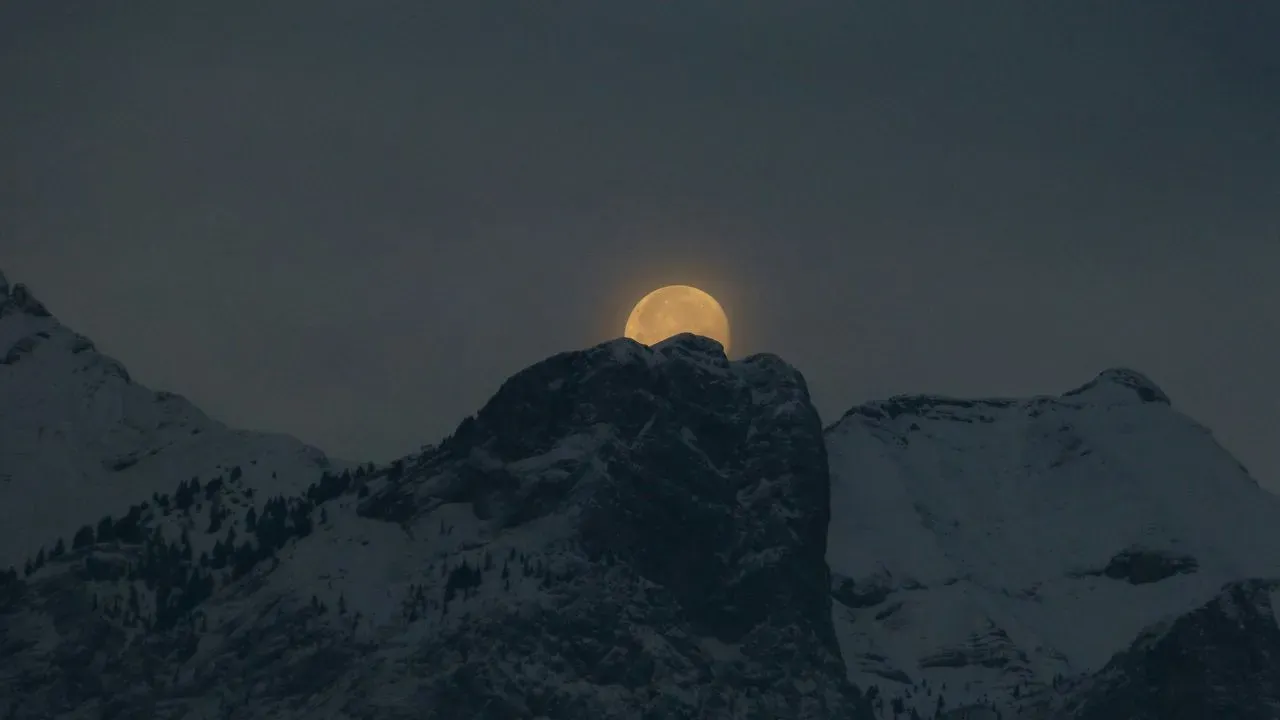

Thanksgiving week is usually defined by crowded airports and long grocery lines, but the sky has its own plans for Tuesday evening. The November full moon, known as the Beaver Moon, is also a supermoon this year. The New York Post [1] reports that it will light up the New York City skyline soon after sunset, giving residents a brief pause in the holiday rush. ([1])
Timing matters more than the official peak
The moon reached full at 9:53 a.m. Eastern on Tuesday, November 24, while much of North America was still in daylight ([2]). That means the exact moment of fullness is not the moment to watch. Most people will get their best look when the moon clears the eastern horizon in the evening, and the window for that is short.
Moonrise depends on location, so the clock changes from city to city. In New York City, the moon is expected to rise around 4:16 p.m. Eastern, just before sunset at 4:32 p.m. In Los Angeles, moonrise falls near 4:43 p.m. Pacific, only a couple of minutes ahead of sunset ([3]). Anyone outside a major city should check local moonrise times, since small differences in position can shift the first sighting.
Where to look and how to get the best view
NASA advises looking east around sunset on November 24, when the supermoon begins to climb ([4]). Because the moon sits low at first, obstructions matter. Trees, hills and buildings can delay the first glimpse by several minutes or more, so an open eastern view is the priority ([5]).
- Choose a spot with a clear line of sight to the east, such as a park, rooftop or open field.
- Arrive a few minutes before the posted moonrise time to allow for delays.
- Watch Monday, November 23, as well, since the moon will look nearly full on both evenings ([4]).
- Expect a nearly full moon on Thanksgiving night too, according to the same guidance ([4]).
- If clouds or tall buildings block the horizon, a free livestream from the Virtual Telescope Project starts at 10:30 a.m. Eastern, weather permending ([2]).
Why it looks so large, and what comes next
This full moon falls close to the point in its orbit nearest Earth, which is why it is classed as a supermoon. On November 24, the moon is about 224,170 miles away, closer than its typical distance at that point in the orbit ([6]). The difference is subtle to the eye. Near the horizon, however, the moon illusion can make it look even larger, and the moon appears slightly brighter than an average full moon ([5]).
It is also the first of several closely spaced supermoons. The November event kicks off a series of four, which will carry through to early 2027 ([5]). Some viewers may also prefer a different approach. One guide notes that, from the United States, the moon sinks toward the western horizon before dawn, offering a predawn option for those who miss the evening rise ([6]).
The name behind the moon
The name comes from the animal’s late-autumn routine. Beavers work through November to fell trees and stock food before the water freezes, and that activity is one explanation for the name ([7]). A second explanation links the moon to the fur trade, when trapping season began in November and beaver pelts were at their thickest in winter ([7]). Other names include the Frost Moon, Freezing Moon and Snow Moon ([7]). For anyone who spends time in a garden this time of year, the name is a reminder that the season is shifting from harvest to winter preparation.
Plans can be simple. Step outside for a few minutes around sunset, face east and look for the moon above the treeline or rooftops. The moon should still look nearly full on Thanksgiving night, so a missed Tuesday does not necessarily mean a missed moon.
AI Disclaimer: This article was created with the assistance of AI tools and reviewed by a human editor.