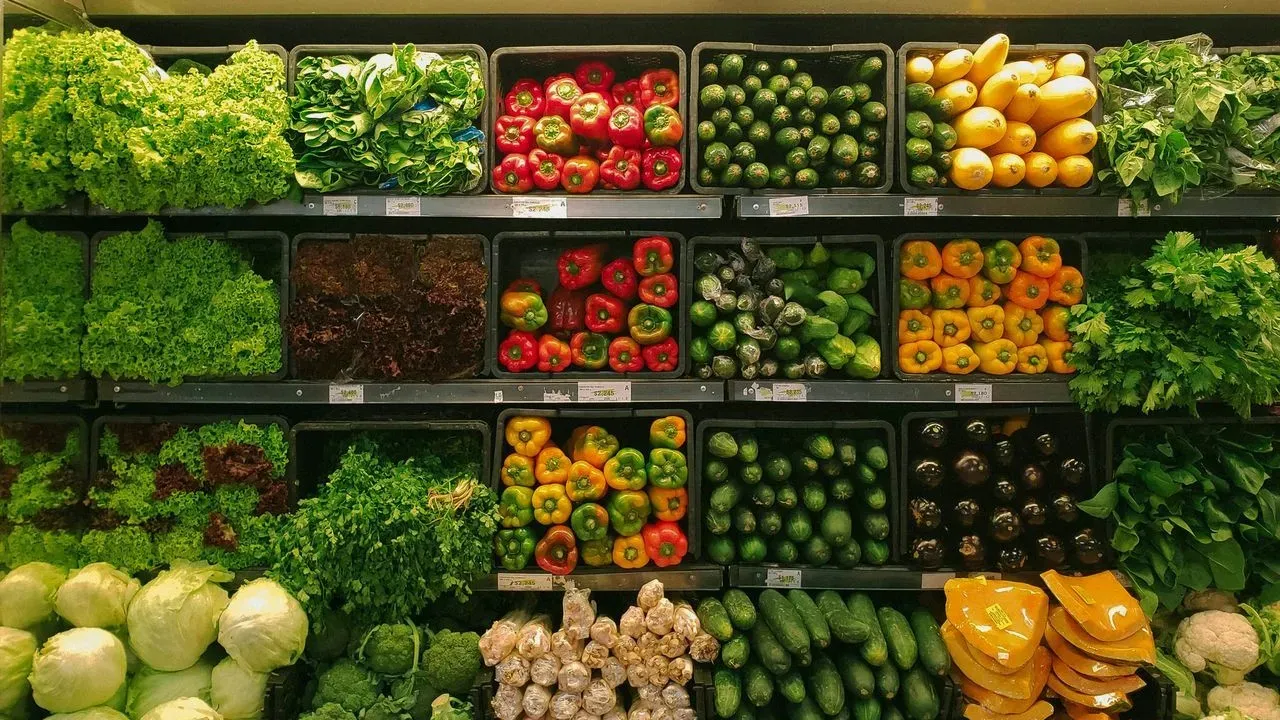

MOM’s Organic Market began in 1987 with $100 and a young founder’s interest in organic food. Scott Nash was a 22-year-old college student when he started selling organic groceries from his mother’s garage, and that modest beginning grew into a multistate retailer with a loyal following. ([1])Its growth rests on more than the organic label. The company’s environmental commitments and product rules have given it a identity that many conventional supermarkets have not matched.
Starting With a Station Wagon
The business started as a delivery service rather than a storefront. Nash carried orders to customers in his sister’s Chevy Malibu station wagon, and his first sale went to a buyer in Rockville, Maryland. Those early days were far removed from the traditional supermarket model that most shoppers knew.
A lift arrived in 1989, when a 60 Minutes report on Alar, a chemical used on apples, drew public attention to pesticides in food. Interest in organic products rose, and an NPR program featured a MOM’s customer who praised the quality of the company’s vegetables. The added exposure brought in new shoppers. Nash, however, was aiming for more than a different grocery list. He wanted to prove that a retailer could make environmental responsibility a core principle of the business.
Standards That Reach Beyond the Label
The company’s stated purpose is simple: to protect and restore the environment. That goal shapes what goes on the shelves and how the stores are run. MOM’s has sold only certified organic produce since its founding, and its rules extend to the wider grocery aisle, where artificial colors and certain preservatives are excluded.
The standards are concrete. Beyond the produce section, the company weighs sourcing, animal welfare, sustainable agriculture and the environmental footprint of each product. Recycling programs accept items that are often hard to dispose of, such as denim, corks, cell phones and other electronics. The company has also invested in solar and wind power to offset the energy its stores consume.
| Commitment | What the company does |
|---|---|
| Produce | Sells only certified organic produce, a practice held since the start |
| Ingredients | Maintains a list of more than 250 banned ingredients |
| Packaging | Eliminated plastic shopping bags in 2005 and banned bottled still water in 2010 |
| Energy | Invests in solar and wind power to offset store energy use |
These rules also change the relationship with suppliers. A manufacturer seeking shelf space must show more than strong sales potential. It needs to understand the company’s standards and demonstrate how its product fits that philosophy.
A Different Path From Whole Foods
MOM’s is often compared with Whole Foods Market, and the comparison is fair in one respect. Both chains helped move organic and natural products into mainstream grocery shopping, and both attract shoppers who care closely about what they eat. The similarities end there. Whole Foods, backed by Amazon, operates on a far larger national scale and offers extensive selections, prepared foods and a premium shopping experience.
MOM’s takes a narrower approach. Its stores average between 12,000 and 14,000 square feet, a size that falls between a traditional supermarket and a small specialty grocer. The company favors a curated range that features local and regional manufacturers. It also gives smaller producers a chance that larger chains may not. A small food maker with a product that fits the company’s standards may find the door more open at MOM’s than at a supermarket that depends on established national brands and high volume orders.
Expansion Tests the Model
MOM’s growth has been deliberately measured. Rather than expanding rapidly across the country, the company has focused on markets where it believes its customers and operating philosophy can support a successful store. Its presence now covers Maryland, Virginia, Washington, D.C., Pennsylvania, New Jersey, New York and Massachusetts.
That strategy faces a harder challenge than it did in 1987. Organic products now sit in nearly every major supermarket, and national chains such as Walmart, Kroger and Costco carry them as everyday items. MOM’s can no longer stand out on organic alone. Its answer has been a mix of strict ingredient standards, emerging brands, environmental initiatives and a shopping experience built around the customer.
The clearest test is the company’s move into Chicago. Its Mount Prospect store marks an important step outside its traditional Mid-Atlantic and Northeast footprint, and a second location in Naperville is planned. Chicago has established natural and organic retailers, specialty grocers and conventional supermarkets that have expanded their organic offerings, so the company will need to show shoppers what sets it apart. The move also gives MOM’s a chance to reach people who already know Whole Foods or Trader Joe’s but have never tried its approach.
Behind the stores, the company is also changing its operations. It has moved its distribution from KeHE to UNFI, a shift that affects ordering, warehouse availability, item setup and promotions for suppliers. It is also working with RELEX Solutions to improve forecasting, replenishment and inventory management as the store base grows.
The Chicago openings and the new distribution network will show whether a retailer built on a clearly defined purpose can keep its identity as it grows. Organic food is now a mainstream category, and an industry focused on scale and efficiency leaves little room for a chain that puts environmental responsibility first. MOM’s has found a place in that market by refusing to treat its standards as a marketing slogan. The next few years will test whether those standards can travel as far as the company’s ambitions.
AI Disclaimer: This article was created with the assistance of AI tools and reviewed by a human editor.