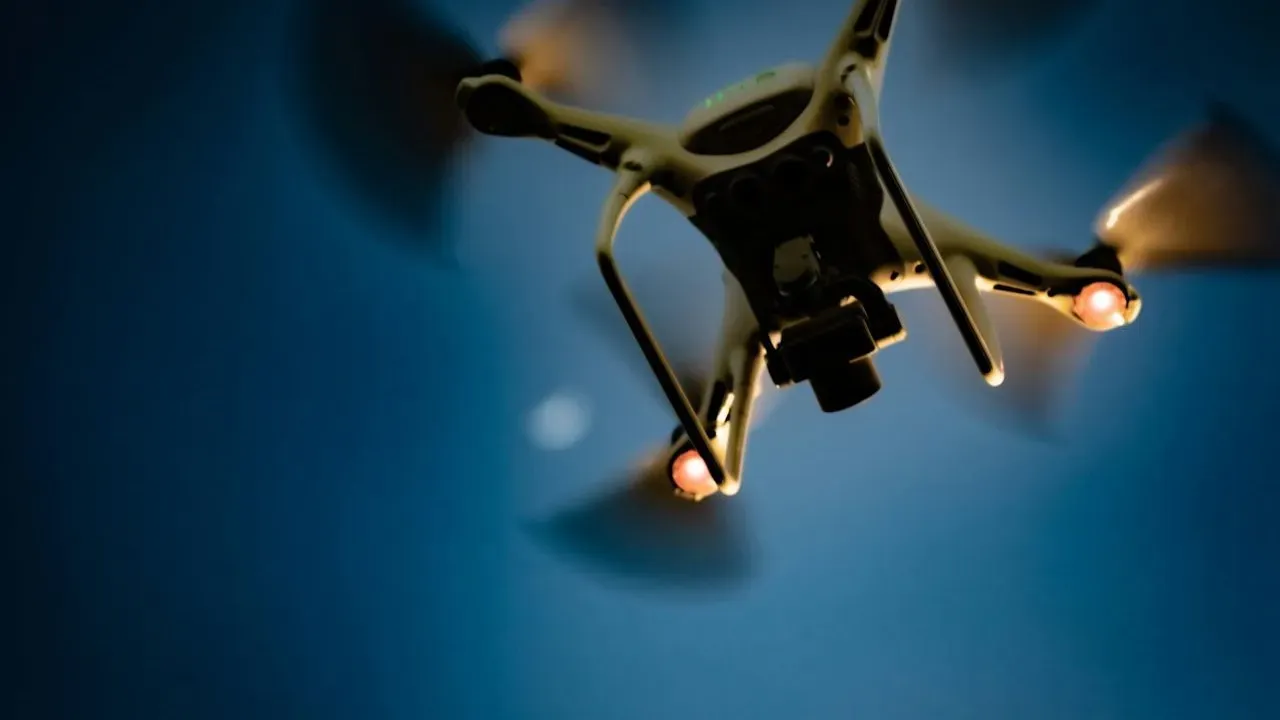

Amazon’s drone delivery program is expanding quickly, and a Friday incident in a Detroit-area suburb has raised new questions about how these aircraft operate over residential yards. An Amazon Prime Air drone delivered a bottle of shampoo in Huntington Woods, Michigan, then crashed onto a neighbor’s garage. The Federal Aviation Administration is investigating. ([1])
A delivery that arrived in minutes
The order began with a routine household purchase. Jim Brennan said his wife ordered shampoo expecting a conventional delivery truck. Instead, the family received a notification that a drone would arrive in about seven minutes. The package was left in the backyard as planned.
The trouble came during takeoff. Brennan told WXYZ that the drone struck a fiberoptic cable as it lifted off, knocking a propeller loose. He said he realized the aircraft was heading under a wire and watched it become tangled. A video recorded by a neighbor, Claire Brennan, who is not related to Jim Brennan, shows the aircraft struggling to stay airborne before it wobbled and came down as she walked past.
Damage limited to a roof
The drone landed on the garage of Logan Coomes, the next-door neighbor. Coomes described the damage as minor. He said a corner near the peak of the roof could let water through in heavy rain, and several shingles had lifted from their original positions.
No one was hurt, according to Amazon, which said in a statement to CNN that it had removed the damaged drone from the garage and was in contact with the homeowner. Amazon has not publicly described what caused the drone to lose control, and the FAA review will be the main source of official answers.
What the company says about safety
Amazon spokesperson Jack Stelzner said safety is the company’s top priority and that serious incidents are rare. He added that when a delivery goes wrong, the company examines what happened and applies the findings to its service. The company says Prime Air has delivered hundreds of thousands of packages this year and flies nearly 6,000 a day.
The MK30 aircraft involved are described by Amazon as highly autonomous. According to the company, they can carry items weighing five pounds or less, including groceries, cosmetics, medicine and electronics, to locations near their bases. Amazon says the drones use a perception system designed to detect and avoid obstacles, including trampolines and clotheslines that may not appear in satellite imagery.
What matters now: The FAA is reviewing the Huntington Woods incident, and Amazon says it is examining the flight. The crash caused no reported injuries but damaged a neighbor’s roof and raised questions about wires and other low obstacles in residential areas.
A growing network and a pattern to watch
The incident comes as Amazon expands its drone network. In August, the company announced plans to reach nearly 500 cities and towns by the end of the year, a sixfold increase from current coverage. Amazon also says it aims to serve half a billion customers a year by the end of the decade.
Crashes are not unprecedented for the program. Last fall, two MK30 aircraft collided with a crane outside Phoenix, prompting Amazon to briefly halt drone flights. No one was injured in that case either, though the drones sustained substantial damage. Amazon said at the time that it had added enhanced visual inspections of landscapes to watch for moving obstructions such as cranes.
As drone deliveries move into more suburban neighborhoods, the Huntington Woods case shows how quickly a routine drop-off can turn into an investigation. The FAA’s findings and any changes Amazon makes to its flight procedures will likely determine how residents view the service in the months ahead.
AI Disclaimer: This article was created with the assistance of AI tools and reviewed by a human editor.