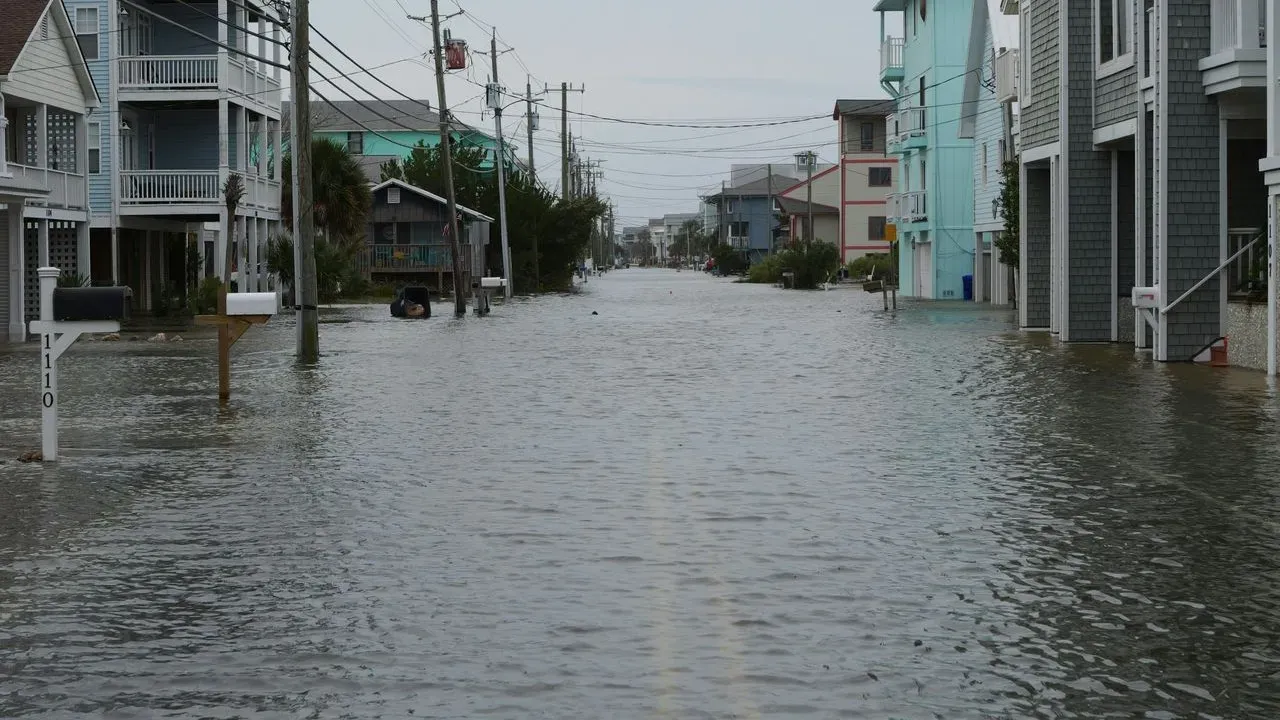

Travelers rolling through San Francisco International Airport this week will be passing through a place that sits only a few feet above sea level. As Thanksgiving trips pick up, the airport is watching whether unusually high tides could push water past its defenses. ([1])Flooding is a risk under watch, not a confirmed event, and officials say the airport is prepared.
A margin measured in feet, not yards
The concern centers on the seawall. Forecasts show tides at SFO ([2])climbing to nearly 10 feet, which would put the water about two feet above some sections of the existing wall. The highest tides are expected to arrive Tuesday and Wednesday, when a storm system could add to the pressure.
The timing is what makes the week stand out. The U.S. Coast Guard has warned that the highest predicted king tides in 18 years begin November 24. For Thanksgiving week, the agency said predicted astronomical heights of about 7 feet could be observed closer to 7.5 to 8 feet, driven by El Niño conditions. Water levels are expected to run one to two feet above normal high tides, and possibly higher when storm surge is added.
Why the water is running so high
Several forces are stacking on top of one another. Warmer ocean water caused by El Niño has expanded in volume, the moon’s gravitational pull is close to a cyclical peak, and melting ice linked to climate change has contributed to rising seas. ([3])Together, those factors have pushed the tides toward levels that could challenge the bay’s shoreline defenses.
San Francisco officials now expect the pre-Thanksgiving tide levels to exceed a record set during destructive flooding in January 1983. Forecasters caution, however, that scientists often struggle to predict exact tide heights until an event is underway. Tide tables are also conservative, since they do not fully account for extra water from storms. That uncertainty is part of why the airport is treating the week as a test rather than a forecast it can ignore.
What the airport says it can handle
SFO has staged sandbags, portable flood barriers and pump stations along vulnerable stretches of its shoreline. Crews have also been clearing drainage areas and checking equipment. An airport spokesperson said SFO is prepared to respond to flooding and to continue safe operations. ([4])
Not everyone is reassured. A National Weather Service meteorologist has said he expects water to overtop the seawall in the days before Thanksgiving. UC Davis researcher Fraser Shilling, whose flood study examined SFO, put it bluntly: “I think it’s possible SFO would flood.” He cautioned that flooding would require the peak of the tide, the storm surge and the rain to line up. Even so, Shilling has said he could not imagine the airport closing for more than a day, and the weather service has said it remains unclear whether runways or taxiways would be affected.
- SFO sits only a few feet above sea level, and tides this week could reach nearly 10 feet.
- Officials describe flooding as a risk being monitored, not a confirmed disruption.
- The most serious tide window is expected Tuesday and Wednesday mornings.
- Travelers are advised to check directly with their airlines for updates.
What travelers should do before they leave
Hundreds of thousands of passengers are expected to move through Bay Area airports during the holiday period, so even a short disruption could ripple widely. The city’s mayor, Daniel Lurie, has urged residents and visitors to avoid travel unless it is absolutely essential during the coming storm and tides. Forecasters have also warned people not to drive through water of unknown depth.
For anyone flying through SFO, the practical step is to confirm flight status with the airline before heading to the airport. Those who plan to drive to the terminal should also allow extra time, since flooding could affect roads and transportation routes near the shoreline.
The tide cycle will not end with Thanksgiving. Additional king tides are scheduled for December 23 to 25 and January 21 to 22, which means the airport’s flood defenses will face more tests before winter is over. For now, the question is whether the seawall, the pumps and the crews can hold through the week’s highest water.
AI Disclaimer: This article was created with the assistance of AI tools and reviewed by a human editor.