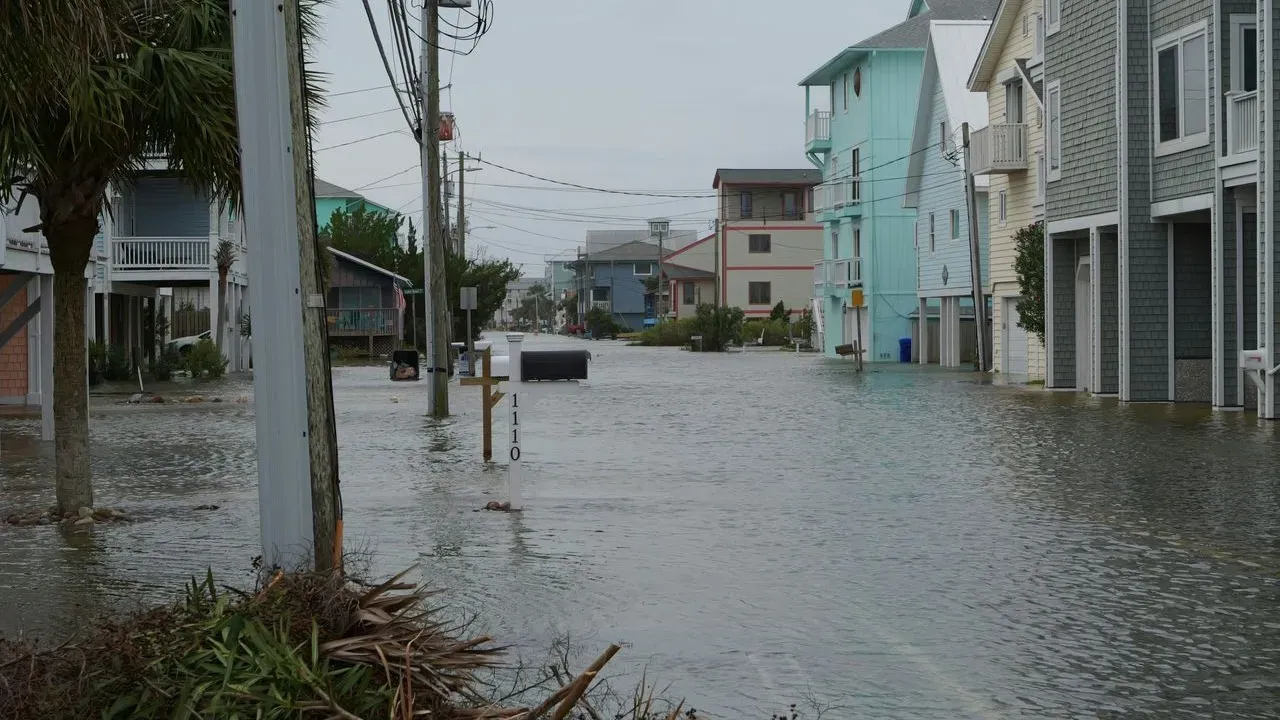

SUNSET BEACH, Calif. – Minor flooding appeared in this Huntington Beach community as the Monday morning high tide came in, opening a week of possible coastal flooding across Southern California ([1]). Many residents are still repairing homes and businesses damaged by high water in October. Forecasters say the coming tides could challenge records, but no record has been confirmed.
Residents still counting October’s losses
Water over the high-tide line is not new to Sunset Beach. Residents say flooding during king tides is not unusual, but the October event caused far more damage than usual ([1]).
On Park Avenue, one resident said the street was about a foot deep in water last month. Neighbors are now trying new methods because earlier flood-control efforts did not hold ([2]).
Business owners face their own bills. One has already received repair estimates above $20,000 for flood damage, and he said the full scope of the work is still coming into view ([2]). The community sits between the Pacific and Huntington Harbour, which makes it especially exposed. One resident described the risk this way: when heavy inland rain drains into the harbor during a king tide, the harbor “just kind of raises like a bathtub” ([1]).
Why king tides bunch together
King tide is a term people use for exceptionally high tides rather than a formal scientific category ([4]). This week’s event is being shaped by several conditions at once, according to forecasters and coastal officials:
- A full moon, which pushes tides higher during this stretch of the month ([5])
- Abnormally warm ocean water combined with high tides ([6])
- Kelvin waves and other ocean conditions that raise water levels ([8])
- Large westerly swells arriving alongside the tides ([5])
Because these factors overlap, the flooding risk can rise well above what a routine high tide would bring. Coastal planners have long treated the most extreme tides as a seasonal hazard that arrives in predictable clusters.
A forecast that has moved over the week
The National Weather Service placed Southern California’s beachfront communities under a coastal flood advisory and coastal flood watch beginning Monday ([5]). The agency’s warning calls for moderate coastal flooding, with significant flooding possible. The highest risks are expected Wednesday and Thursday ([6]).
Estimates for the peak have varied. One forecast puts the tides between 7.7 and 8 feet, with surf reaching up to 12 feet on Wednesday and Thursday ([7]). Another report cites projected water levels above 8 feet ([2]). Earlier in the week, the federal gauge at Los Angeles was forecast to top 7 feet, with a highest predicted level of 7.2 feet ([10]).
Records are the open question. Weather officials have said this week’s tides could break the all-time records set in October, while also warning that the impacts could be worse than the numbers alone suggest ([9]). Forecasters expect shallow flooding in beach parking lots, moderate erosion and isolated building damage ([9]).
What residents and drivers should watch
Crews and standby pumps are stationed at vulnerable spots along Pacific Coast Highway and beach areas for the week ([7]). Long Beach officials made sandbags available ahead of the tides, and they expressed concern that some seawalls could be overtopped ([6]).
What matters this week
- Coastal flood advisories and watches cover Southern California beaches, with the highest risk on Wednesday and Thursday.
- Records are possible but not confirmed, and forecast peaks differ between sources.
- Drivers should plan ahead, especially on low-lying coastal roads.
- Residents should keep sandbags and pumps ready and follow official instructions.
Whether the tides set new marks will be known only after the readings come in. For Sunset Beach, the more immediate test is whether the defenses residents have built can keep this week’s water out of homes and shops that are still recovering from October.
AI Disclaimer: This article was created with the assistance of AI tools and reviewed by a human editor.