

Most people associate Parkinson’s disease with shaking hands. It’s the image that sticks. What rarely gets discussed, though, is how the disease often spends years quietly announcing itself through symptoms that have nothing to do with movement. By the time a visible tremor appears, the neurological process is already well underway.
Research from Chalmers University of Technology confirms that by the time the motor symptoms of Parkinson’s disease appear, between fifty and eighty percent of the relevant brain cells are often already damaged or gone. That’s not a minor head start. That’s the entire first act of the disease playing out in silence. Understanding what comes before the tremor isn’t just medically interesting. For many people, it could be the difference between early intervention and a delayed diagnosis.
1. Loss of Smell That Doesn’t Come Back
A diminished or absent ability to detect odors affects up to ninety percent of Parkinson’s patients and can appear several years before any motor symptoms develop. This is one of the most statistically consistent early markers researchers have identified, yet it’s almost universally dismissed as a nuisance or blamed on allergies.
Protein aggregates in the brain can cause olfactory dysfunction long before motor symptoms emerge. The olfactory bulb is one of the first regions affected by the misfolded alpha-synuclein protein that characterizes Parkinson’s pathology. It’s not a coincidence that smell goes first.
Sensory hyposmia or anosmia can precede motor diagnosis by anywhere from five to twenty years, making it one of the longest-running early warning signals known. If a previously healthy person notices a persistent, unexplained decline in their sense of smell, it’s worth mentioning to a doctor rather than waiting to see what else develops.
2. REM Sleep Behavior Disorder

Sleep disturbances are often mentioned as early Parkinson’s symptoms, but the specific disorder, REM sleep behavior disorder, is frequently overlooked. This condition causes people to physically act out their dreams during sleep, sometimes shouting, punching, or kicking, often without any memory of it in the morning.
Clinical studies have documented the onset of rapid eye movement sleep behavior disorder as occurring ten to twenty years before a Parkinson’s diagnosis. That’s a remarkably wide window of opportunity for earlier detection, one that the medical community is still learning to use systematically.
People who have this disorder carry a thirty percent chance of developing Parkinson’s or another related condition within three years, and it is considered one of the most predictive signs, capable of appearing up to ten years before the onset of tremors and other movement symptoms. Sleep studies that capture this pattern can serve as a meaningful early flag.
3. Chronic Constipation
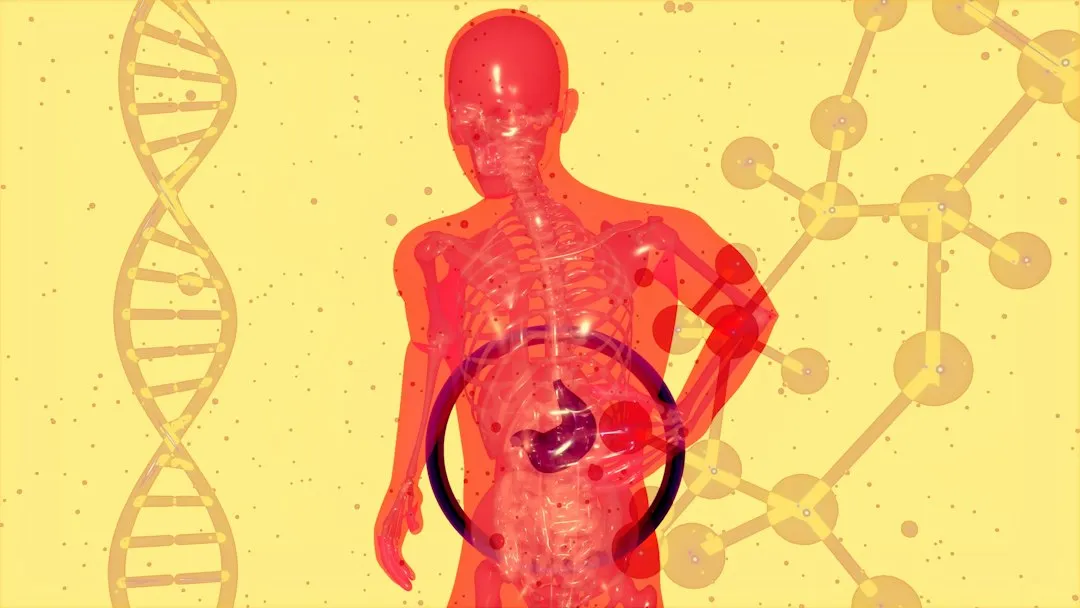
Nonmotor symptoms such as constipation may appear years or even decades before the characteristic movement symptoms of Parkinson’s develop. The gut connection to Parkinson’s has been an area of growing research interest, particularly around the enteric nervous system, sometimes called the “second brain.”
Chronic constipation has been found to be an early sign of Parkinson’s disease, affecting about two thirds of people with the condition. The important distinction here is persistence. Occasional digestive trouble is universal. Chronic, treatment-resistant constipation without an obvious dietary or medication cause is a different matter entirely.
Gastrointestinal symptoms like chronic constipation and altered enteric motility can precede a Parkinson’s diagnosis by up to sixteen to twenty years. This is partly because alpha-synuclein deposits appear in the gut’s nerve tissue very early in the disease process, long before they reach the brain’s motor control centers.
4. Depression and Anxiety With No Clear Cause

Symptoms such as depression can appear years or even decades before motor symptoms begin, which makes mood disorders one of the more complicated early signals to interpret. Depression is common for many reasons, and most people experiencing it don’t have Parkinson’s. Context and pattern matter enormously here.
Clinical markers such as anxiety and depression can manifest up to ten years prior to an official motor-based Parkinson’s diagnosis. Researchers tracking large population cohorts have found this association to be statistically significant within that specific ten-year window, which gives it meaningful predictive weight beyond ordinary coincidence.
Mood changes are common in Parkinson’s disease and frequently predate motor symptoms. Depression affects roughly forty percent of people with the condition, and anxiety is similarly prevalent. New onset of depression or anxiety without a clear external cause, especially in a person over fifty, can be an early sign. Taken alongside other prodromal symptoms, it becomes a more significant piece of the picture.
5. Shrinking Handwriting (Micrographia)

Small, cramped handwriting, called micrographia, is characteristic of Parkinson’s and is frequently one of the early symptoms. In addition to words being generally small and crowded together, the size of handwriting might get progressively smaller as the person continues to write. People often assume this is just an age-related change or blame it on stiff fingers.
Micrographia occurs due to bradykinesia, the slowing of voluntary movement, and reduced fine motor control. The brain’s impaired regulation of hand movements makes it challenging to maintain consistent size and spacing in handwriting. The key signature is that the shrinkage is progressive, letters getting smaller as writing continues rather than being uniformly small from the start.
Handwriting changes are a frequent and early manifestation of Parkinson’s, often preceding other motor symptoms. James Parkinson himself noted in 1817 that writing difficulties could precede walking impairment. It’s a signal that has been recognized for over two centuries, yet still regularly goes unidentified in clinical settings until more obvious symptoms emerge.
6. Constipation’s Lesser-Known Partner: Fatigue and Mood Shifts Together

Fatigue, described as chronic low energy not improved by sleep, is a moderate to common early symptom that can appear years before a Parkinson’s diagnosis. On its own, fatigue is easy to attribute to dozens of other causes. The significance builds when it appears alongside other items on this list.
Nonmotor symptoms including fatigue, sleep disturbances, and urinary problems may appear years or even decades before the characteristic movement symptoms of Parkinson’s disease develop. Researchers increasingly recognize that these symptoms cluster together during the prodromal stage, and that the combination carries more predictive value than any single symptom viewed in isolation.
Few studies have explored combinations of premotor symptoms for early disease detection, although preliminary evidence indicates that multiple symptoms may occur in people at higher risk. One study found that people with more than three premotor symptoms were significantly more likely to develop Parkinson’s within five years compared to those with just one symptom. That clustering effect is what makes the whole picture important, not just the individual pieces.
Why So Many Cases Still Go Undetected Early

Research over the past two decades has revealed that non-motor symptoms are often the earliest manifestations of Parkinson’s disease, preceding motor symptoms by years and sometimes by a decade or more. Despite this knowledge, the standard diagnostic pathway still tends to wait for visible motor problems before Parkinson’s enters the conversation.
Primary care clinicians may encounter the earliest signs of Parkinson’s disease long before a patient develops a visible tremor or slowed movement. The challenge is that symptoms like constipation, low mood, and disturbed sleep each have dozens of possible explanations, making pattern recognition across symptoms harder in a standard appointment.
Many people live with Parkinson’s symptoms for several years before they see a healthcare professional. Greater public awareness of the non-motor prodromal picture could meaningfully close that gap, particularly for people who already have a family history of the disease.
The Dopamine Deficit That Builds in Silence

The dopamine deficiency that characterizes Parkinson’s disrupts the motor system, leading to hallmark symptoms such as tremor, rigidity, akinesia, and postural instability. What’s less understood publicly is that this deficiency develops over a long period before those motor signs ever show up.
More than half of dopaminergic neurons in the substantia nigra are lost before motor symptoms occur, making it difficult to identify patients early enough to benefit from potentially disease-modifying therapies. This biological reality is precisely why the premotor symptom window matters so much clinically.
Parkinson’s disease is the second most common progressive neurodegenerative disorder after Alzheimer’s, and its global burden continues to grow with an aging population. Finding ways to act on the prodromal phase isn’t a future ambition. It’s an active area of research right now, with real implications for how the disease is managed.
What Research Is Doing About It

As Parkinson’s progresses, the death of dopamine-producing neurons reduces motor functions, thinking, and memory. In recent years, studies have shown that reductions in cell resilience and problems with DNA maintenance might be behind this damage. Understanding these cellular mechanisms is opening new doors for earlier detection strategies.
A study of the health records of over a million people in East London identified two additional conditions, hearing loss and epilepsy, that might be early symptoms of Parkinson’s disease. This kind of large-scale epidemiological work is helping to expand what clinicians look for during the prodromal stage.
Early detection of Parkinson’s disease and associated conditions remains a paramount goal for clinicians and researchers, driven by the potential for improved patient outcomes. The earlier a diagnosis can be made, the earlier lifestyle interventions and monitoring can begin.
Who Should Pay Closest Attention

The average age at Parkinson’s diagnosis is sixty, according to the National Institute of Neurological Disorders and Stroke. That means the prodromal window for many people falls squarely in their forties and early fifties, a period when unusual fatigue or low mood is easily written off as work stress or midlife change.
Displaying any one of these symptoms alone is not predictive of a person developing Parkinson’s disease. That’s worth emphasizing. The concern, and the reason to speak to a neurologist, comes when several of these symptoms appear together, persist without explanation, or gradually worsen.
Research indicates that twenty-five percent of people with Parkinson’s disease may never develop a tremor. For this group especially, awareness of non-motor early signs isn’t a secondary concern. It’s the only early warning system available to them.
The Takeaway

The tremor has long been the defining image of Parkinson’s disease, but science has steadily reframed it as a relatively late arrival. Loss of smell, disrupted REM sleep, chronic constipation, persistent low mood, shrinking handwriting, and unexplained fatigue each tell part of a story that starts long before movement is affected.
Recognizing these nonmotor symptoms as part of a possible neurological pattern could help patients reach appropriate evaluation earlier. That earlier evaluation doesn’t necessarily mean a faster diagnosis of something frightening. It means more time, more options, and a better-informed conversation with a specialist.
None of these symptoms in isolation should cause alarm. Together, in a pattern, in a person over fifty, with no better explanation, they deserve more than a shrug. That’s the quiet point this research has been making for years.
AI Disclaimer: This article was created with the assistance of AI tools and reviewed by a human editor.