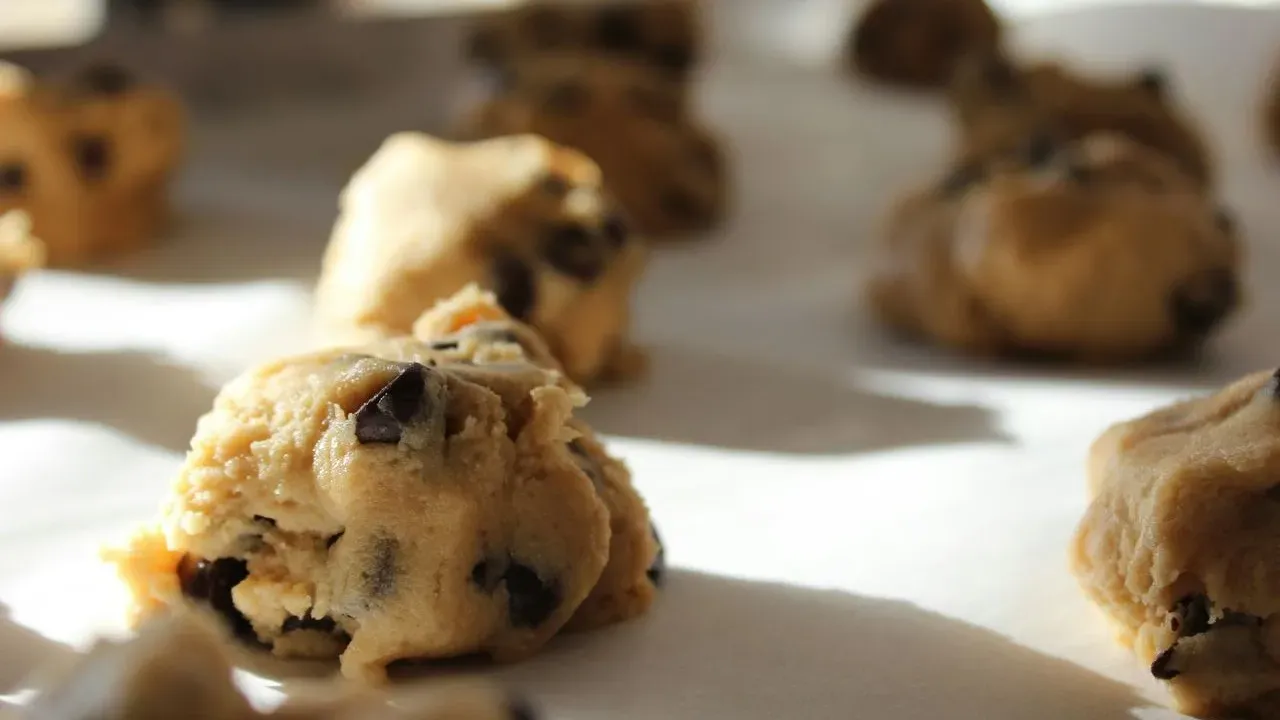

Holiday baking tends to leave a tub of dough in the refrigerator, whether from a double batch for a cookie swap or a package of store-bought dough bought on impulse. Many bakers assume it will keep for about a week, but the food storage guidance is more restrictive. Colorado State University Extension’s storage table lists cookie dough at ([1])3 to 4 days in the refrigerator and about 3 months in the freezer, and the reasons behind those numbers matter as much as the numbers themselves.
Three to four days is the working limit in the fridge
Colorado State’s table keeps refrigerator storage between 35 and 40 degrees Fahrenheit, and it lists a row labeled “dough” under its cookies section. The row does not specify whether it refers to homemade or store-bought dough, so it is best read as a conservative guide for dough made at home. The table is older than many home cooks might expect, having been first published in 2000 and reviewed in 2012.
Baking sources offer a longer window. King Arthur Baking says basic drop or roll-out cookie dough can stay refrigerated for up to five days, although that figure reflects how the dough performs in baking rather than a food safety cutoff. Past that point, the dough can absorb odors from the fridge and begin to turn grayish. America’s Test Kitchen found that dough made with baking soda was at its best within two days, while dough with baking powder or no leavening held up for about seven days. Those findings concern texture and flavor, not whether the dough is safe.
Refrigerator temperature is part of the equation. Colorado State advises checking the fridge with a thermometer to confirm it stays between 35 and 40 degrees.
Quick reference: homemade dough lasts 3 to 4 days in a fridge kept at 35 to 40 degrees. Store-bought dough follows the Use or Freeze By date on the package. Dough left out more than 2 hours, or 1 hour above 90 degrees, should be discarded.
Store-bought dough runs on the date stamped on the wrapper
Refrigerated dough from Toll House carries a “Use or Freeze By” date printed on the side of the wrapper. The company says it does not recommend using its products past that date and encourages replacing older product once the date passes. Pillsbury uses a use-by date on its refrigerated sugar cookie dough and says the dough can be frozen for up to 2 months for longer storage.
The USDA explains that “Freeze-By” marks when a product should go into the freezer to keep its peak quality, while “Use-By” is the last recommended day for use at that quality. The agency also notes that these dates are not a signal of safety. That distinction is useful, but it does not mean an expired package is a good choice for raw dough. Bakers should check the label on each product, since wording and dates vary by brand.
For store-bought refrigerated dough, the practical step is simple. Bake the dough or freeze it before the date passes, and do not wait until the final day.
Freezer storage protects quality, not raw dough safety
The freezer offers more room. Illinois Extension lists unbaked cookie dough at 3 months for top quality when stored at 0 degrees Fahrenheit, and Colorado State’s dough row also gives 3 months. Toll House’s refrigerated bar dough can be frozen for up to 2 months if it goes into the freezer before the date on the package.
Those windows describe flavor and texture. Illinois Extension says food held at 0 degrees stays safe as long as it has not thawed, and that long storage is not dangerous in itself, although quality can decline over time. USDA guidance adds an important caveat. Freezing inactivates microbes, but they can become active again after thawing, so thawed dough should be handled like any other perishable food.
Packaging also helps. Colorado State recommends freezer wrap, freezer-quality plastic bags or aluminum foil to limit dehydration and quality loss. A practical method is to scoop the dough, freeze the balls on a tray until firm, then move them into a labeled bag with the date and baking temperature. Dough thawed in the refrigerator can generally be refrozen, though some quality may be lost, while dough left on the counter beyond the safe window should be thrown out.
Why raw dough carries a risk that time alone does not solve
Most flour is a raw product that has not been treated to kill germs, and the FDA and CDC both say that baking or cooking is what eliminates bacteria in flour. Raw and lightly cooked eggs can also carry Salmonella. Penn State Extension points out that many people focus on eggs, but raw flour can carry E. coli as well, so leaving out the eggs does not make raw dough safe to eat.
Edible cookie dough is a separate category. The CDC says some stores sell cookie dough made with heat-treated flour and pasteurized eggs, or with no eggs at all, and shoppers should read the label to confirm the product is meant to be eaten without baking. Pillsbury markets one refrigerated sugar cookie dough as safe to eat raw, although that label applies only to that product.
Households with children should take extra care. The FDA advises against letting children use raw dough for crafts or play clay, since they may put their hands in their mouths. The CDC recommends washing hands, bowls, utensils and counters with soap and water after handling raw dough.
Signs that dough should go in the trash
Appearance is an unreliable guide, because the USDA notes that people cannot see, smell or taste the germs that cause illness. Even so, certain signs call for an immediate discard:
- Any visible mold, which the USDA says can run deep in porous foods
- An odor or appearance that seems off
- Dough left out more than 2 hours, or more than 1 hour above 90 degrees
- Store-bought dough past its date, since the manufacturer does not recommend using it
- Homemade dough kept beyond 3 to 4 days in the refrigerator
Dry, grayish spots on frozen dough are a different matter. The USDA says freezer burn makes food dry in spots but does not make it unsafe. Dough that is firm from chilling is also normal, since well-chilled dough is easier to handle. Tasting dough to check it is never a good test, and the FDA and Toll House both advise against eating or tasting raw dough.
For bakers planning ahead of Thanksgiving, the safest routine is straightforward. Bake what you can on the day, freeze extra dough in labeled portions, and use the fridge only for short-term holding. Dough that is past its limit belongs in the trash, not the oven.
AI Disclaimer: This article was created with the assistance of AI tools and reviewed by a human editor.