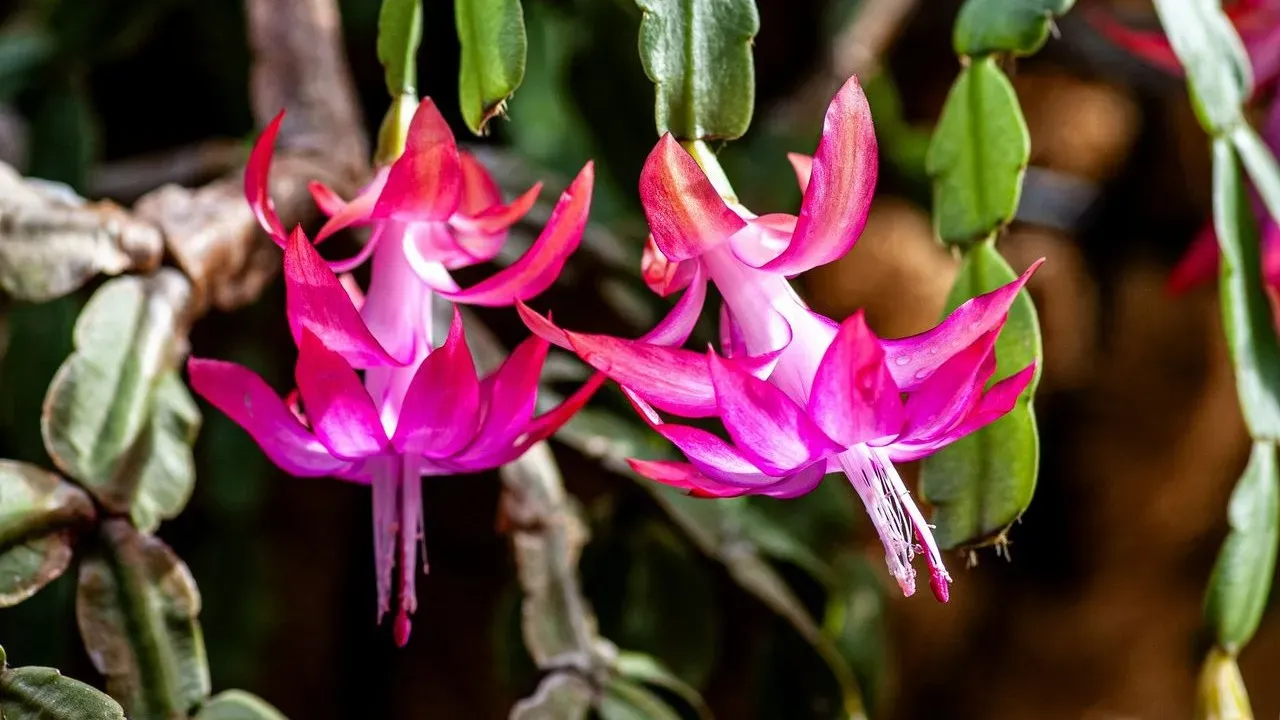

Christmas cacti often reach homes in late autumn as gifts or holiday purchases, and owners tend to notice changes in the stems just as the blooms open. The plant is native to tropical rainforests, where it grows in bright, filtered light and loose, fast-draining material. Its flat green segments can sometimes turn brown and harden, and many owners reasonably wonder whether this signals decline ([1]). The answer depends on how the stem looks and feels.
Why the base hardens over time
In most cases, a woody base is simply a sign of age. Mature Christmas cactuses exhibit lignification, where older stems, typically near the base, become woody and brown. Growers often describe the pattern as a plant that slowly shifts its energy upward. Flowers are produced on new vigorous growth, and over time the growth becomes less vigorous, so it is normal for the lower stems to become woody. That means the lower part of an older plant may look tired while the newest segments remain full and bright.
Experts who work with these plants generally treat the hardening as harmless. One tropical plant specialist has said that this is normal, and there is nothing that can be done to prevent it ([3]). A plant that keeps producing fresh green segments is generally doing well, even if its lower stems have changed color. Owners should look at the whole plant before deciding that something is wrong.
Normal aging or a sign of rot
The difference usually shows in texture and color. Firm, even browning is typical of age, while soft, dark or shriveled segments point to a problem. The table below summarizes the most common patterns that growers and plant guides describe.
| What you see | Likely cause | What it suggests |
|---|---|---|
| Firm, even brown base | Natural aging | Usually harmless |
| Mushy, dark or black segments | Overwatering, stem rot or freezing | Needs prompt attention |
| Bleached or reddish patches on young segments | Too much direct sun | Move to lighter shade |
| Shriveled, dry segments | Severe underwatering | Adjust watering |
Mushy stems deserve closer attention. Excessively wet soil suffocates roots, causing decay and mushy, brown, or black stems that may also appear wilted or droopy. Cold can cause similar damage, since freezing temperatures cause stems to turn brown or black and become mushy as plant cells burst. Dry, shriveled segments are a different matter. Even a woody texture does not make them healthy, because these stems are definitely not healthy, even if they have a dry, woody texture. Some growers also link overwatering to splitting stems, since too much water can cause the Christmas Cactus root to rot, which damages the stems. ([5])
Steps worth taking this season
If the browning is firm and limited to older growth, the main job is light maintenance. Heavy, old stems near the base can split under their own weight. If they get too long and heavy they can cause it to split, opening up a wound that is vulnerable to disease. Trimming should be gradual. You should periodically give it a trim, but only remove 1/3 of a stem at a time. ([2])
Soft or mushy tissue calls for a different response. Cut away the affected material with clean tools, and make cuts at the joint between two segments. If rot has spread deeply, starting over may be the more realistic path. Stem rot is very difficult to treat, and usually, your best bet is to start a new plant from healthy leaf cuttings. ([9]) When taking cuttings, choose younger material, since this tissue roots more easily than older, woody stems. ([7])
What matters now: A firm, woody base on an older plant is usually normal. Soft, dark or spreading rot needs quick action, and the roots should be checked first.
Timing matters too. Christmas cacti bloom about a month after Thanksgiving cacti, and the Thanksgiving cactus is most predominately encountered for sale during the winter holiday season. ([6]) Holiday blooms are a good reason to keep the plant in the best possible condition, but repotting is better left for later. Growers generally suggest waiting until spring or early summer, when the plant is not flowering. Pruning works best in January or February, right after blooming ends ([10]).
For most owners, the woody base is a sign of a maturing plant rather than an emergency. The real warning signs are soft, dark or spreading tissue, and those call for a check of the roots and watering routine. With steady care after the holidays, an older Christmas cactus can keep producing new growth and blooms for years.
AI Disclaimer: This article was created with the assistance of AI tools and reviewed by a human editor.