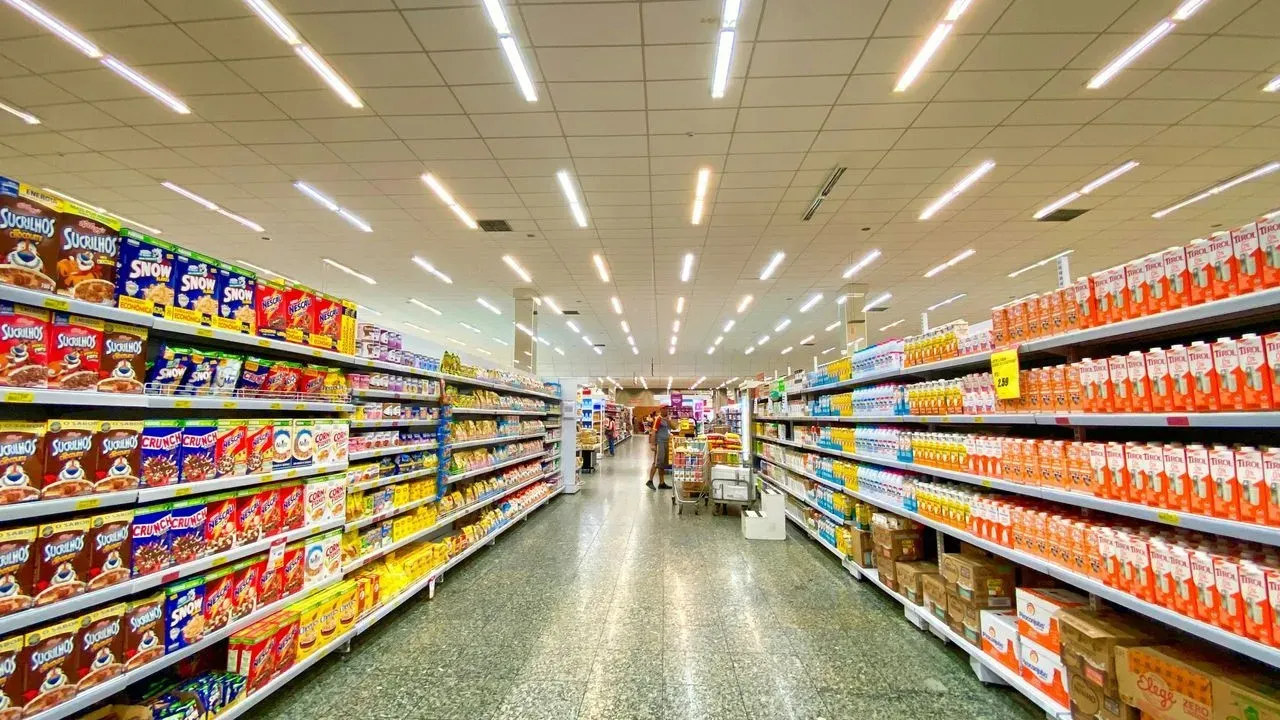

Walk through a typical American supermarket and the middle aisles hold the familiar packaged goods, from crackers and cookies to frozen dinners. Shoppers who take GLP-1 medications appear to be spending less time there. A new report from the customer data firm dunnhumby found that users of GLP-1s are focusing their grocery spending on fresh offerings in store perimeter departments, marking a shift away from center-aisle packaged foods ([1]). The report, published Nov. 18, suggests the medications are changing far more than what sits in a medicine cabinet. ([1])
Where the spending is moving
The research team surveyed 8,500 adults across six Americas markets – the United States, Canada, Mexico, Brazil, Colombia and Chile – about their use of GLP-1 drugs such as Ozempic, Wegovy, Mounjaro and Zepbound. The results point in two directions. Categories that have long anchored the center of the store lost ground, while the produce section gained.
Among GLP-1 users, the steepest declines came in the following areas:
- Bakery, which posted the largest drop
- Ready-to-eat meals
- Deli meat
- Packaged food
On the other side of the ledger, fresh produce posted the largest gain, ahead of health care, natural, organic and free-from products, and fresh meat. dunnhumby summarized the pattern in a single line: “Put simply, the perimeter of the store gains while the middle loses.”
Reading the numbers carefully
The figures in the report are not straightforward dollar totals. Category scores in the report are control-adjusted net scores among category buyers who have used a GLP-1. In practical terms, the numbers show the direction and relative size of change in purchasing behavior rather than the exact amount of money shoppers are spending less.
The report also found that the shift is not necessarily permanent. Seventy-one percent of GLP-1 users have reduced spending on at least one food or beverage category, yet dunnhumby concluded that “that demand is not lost for good.” The firm estimated that ninety-two percent of reduced category demand is recoverable. Only 8% of users who cut back on food and drinks said nothing would bring them back.
Brazil shows the pattern in a stronger form
The report’s clearest example comes from Brazil, where the trends appear more pronounced. Brazilian users report the same shifts as users in the other markets surveyed, but at around twice the depth. Among Brazilian GLP-1 users, alcoholic beverages fell 72.9 points, nearly double the Americas figure, followed by ready-to-eat meals down 62.1 points and bakery down 53.2 points. Fresh produce gained 52.5 points, and health care rose 43.9 points. Brazil also stood out in overall reach. The share of consumers changing what they eat and drink because they or someone in their household uses a GLP-1 was highest in Brazil (33%) and the US (31.7%) and lowest in Chile (10%).
The United States follows closely behind. The United States leads with 16.7% of adults that have ever used and 10% now using a GLP-1. A separate industry survey from earlier this year points in the same direction. Among 213 current GLP-1 users in that study, shoppers are picking up more fresh produce (55%), yogurt (32%), fresh chicken (31%), protein shakes and powders (30%) and protein bars (29%) ([2]).
What food makers and grocers may do next
The report’s authors argue that the change is an opening rather than a loss. dunnhumby chief executive Jamie Samaha put it this way: “GLP-1s are not taking demand out of the grocery cart, it’s creating an opportunity”. The firm also said that “food makers are already moving,” although the report did not detail specific product launches.
Consumer preferences offer some direction. Users were most interested in lower-sugar (52.4%), higher-protein (51.6%) and lower calorie options (42.9%) compared to fewer users (29.7%) who wanted smaller portions or pack sizes. The report concluded that “the recovery sits in reformulation: Lower-sugar and higher-protein options lead, and smaller portions or pack sizes rank last.” For retailers, the audience may also be larger than current user counts suggest. That 10.2% of GLP-1 users influencing others’ food and beverage habits, when applied to ever-used penetration, grows to 21.3%, according to the report.
For now, the message from the data is fairly clear. The produce aisle and the fresh counters are gaining ground while the center of the store gives up some of its share. How lasting that change will be depends on how consumers feel about their medications over time, and the report does not attempt to answer that question.
AI Disclaimer: This article was created with the assistance of AI tools and reviewed by a human editor.