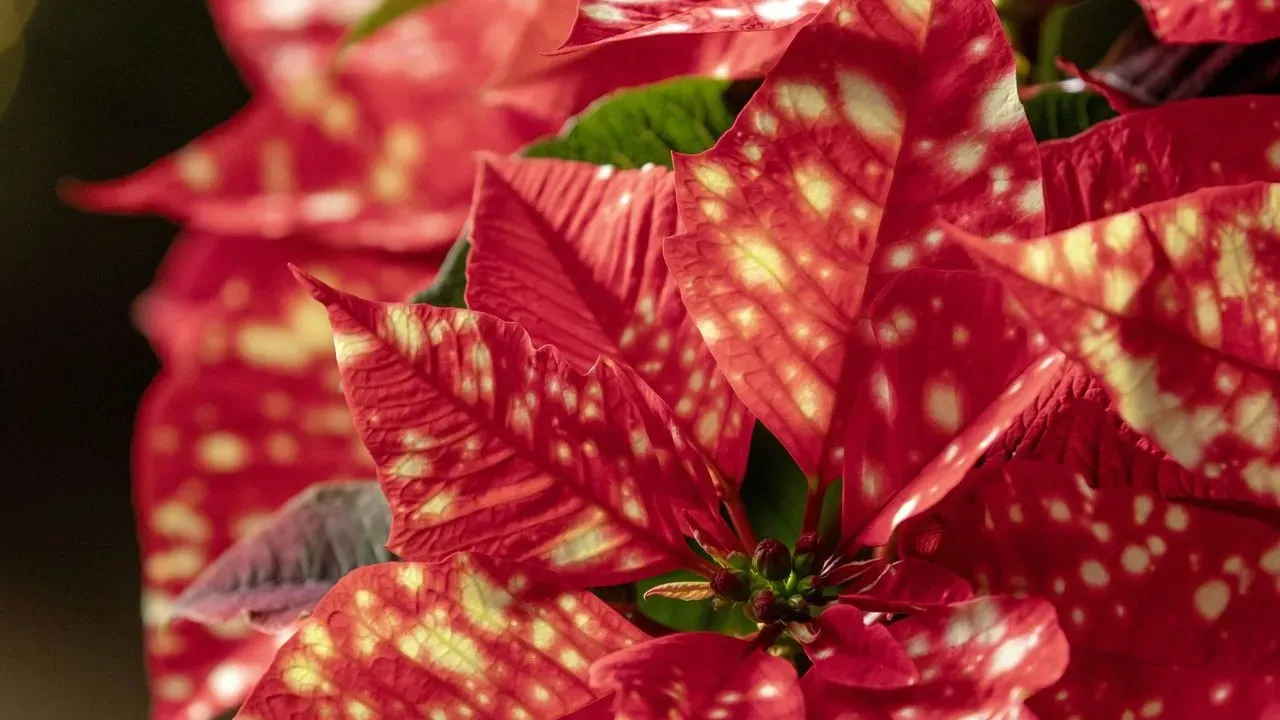

Each year, more than 30 million poinsettias (Euphorbia pulcherrima) are bought in a few short weeks around Christmas, making the plant America’s most popular houseplant and giving it roughly a third of indoor plant sales ([1]). Popularity, however, does not guarantee survival. One gardening writer has joked that the plant could just as easily be called the country’s most killed houseplant, and the reason has less to do with the buyer than with the plant’s natural preferences.
Why the Plant Struggles Indoors
Poinsettias evolved in the warm climates of Mexico and Central America, where temperatures rarely swing sharply. Indoors during the holidays, they often face the opposite. Changes in temperature prompt the plant to shed its leaves and colored bracts, which are the showy parts most shoppers take home.
The bright red, pink or white display is not really a flower. Those colored parts are modified leaves that sit beneath a small cluster of tiny yellow flowers at the center. Once those flowers open and fade, the bracts gradually return to green, so the color is temporary even under good conditions.
Signs of Stress to Check at the Store
Shoppers have more control over the plant’s condition before it reaches their home than they might expect. A few quick checks can help identify a healthier specimen:
- Leaves that extend all the way down the stems to the soil line, rather than a bare lower stem
- Tightly closed buds at the center of the colored bracts, which typically means a longer display
- Plain, natural coloring, since plants that have been sprayed or dyed in unusual shades such as blue or deep purple are a warning sign of unnecessary handling
- Few or no fallen leaves or bracts on the foil or in the pot
Plants with thinned foliage may already have been exposed to cold drafts or temperature swings during shipping or display, and those stresses tend to show up weeks later at home.
Keeping the Plant Healthy After Purchase
Placement matters as much as selection. Poinsettias do best away from drafty windows, heat sources such as radiators and fireplaces, and exterior doors that let in cold air with every visit. Bright indirect light supports the plant over the long term, though it can tolerate dimmer conditions for a few weeks during the holidays.
Watering requires a steady hand. The soil should not dry out completely, but the pot should not sit in standing water either. Decorative foil or plastic sleeves often trap water at the base, so removing them is a simple step that can prevent leaf and bract loss.
A Holiday Plant With Limits
Keeping a poinsettia vibrant through the season is achievable, though it rarely lasts into the new year without extra effort. Many online guides offer detailed steps for encouraging rebloom, but those projects demand patience and consistent conditions. For most households, the realistic goal is enjoying the color through the holidays, then letting the plant go. Choosing a healthy specimen at the start makes that season considerably more rewarding.
AI Disclaimer: This article was created with the assistance of AI tools and reviewed by a human editor.