
Few gardens in Minnesota are expected to look tropical. Minneapolis sits in Zone 4B, a cold-hardiness designation that calls for careful plant choices. The original feature describes ([1])a backyard that feels like a tropical paradise, yet it occupies a modest city lot. That contrast is what makes the garden worth a closer look.
Working within a small footprint
Arianne Baldomero’s Fine Gardening series describes the Minneapolis property as a small urban space that ([2])rewards careful planning. Because the footprint is limited, plant selection and placement matter more than they would in a larger yard. Containers do much of the work. Arianne mixes flowers with foliage that already draws the eye, so each pot reads as a complete arrangement rather than a single plant.
Foliage also carries real weight in the beds. Bright and varied leaves appear in the ground plantings as often as they do in the containers, which gives the garden density and depth. Much of the abundance starts indoors, too. Arianne starts most of her annuals from seed each winter and early spring, a habit that ([2])helps explain how she fills the space without relying solely on nursery stock.
A garden built for evenings and gatherings
Many gardeners choose pale blooms for evening views, but deeper, saturated colors can look especially rich after dark. In one of the Fine Gardening features, the garden is shown glowing under low evening light, and a well-placed light draws attention to coneflowers at night ([3]). That approach suits a small yard, where the garden can be enjoyed from the patio long after sunset.
The patio is central to daily use. In summer, the backyard functions as an outdoor extension of the kitchen, a place to cook, eat, and entertain ([4]). Cut flowers from the beds also find their way indoors, where homegrown blooms and foliage are arranged into bouquets ([4]).
- Most annuals started from seed each year
- Container combinations pairing flowers with striking foliage
- Homegrown flowers used for cut bouquets
- A dwarf apple tree, a reminder that compact fruit trees suit small city lots
Tropical in mood, not in climate
The tropical impression should be read as a design effect rather than a claim about the climate. Some plants in the garden are rated for warmer zones and are grown as annuals or tender bulbs. A canna, for example, is listed as a tender bulb, and coleus is treated as an annual ([5]). Those choices allow the garden to deliver a lush, warm-toned look through the growing season without suggesting that Minneapolis winters have changed.
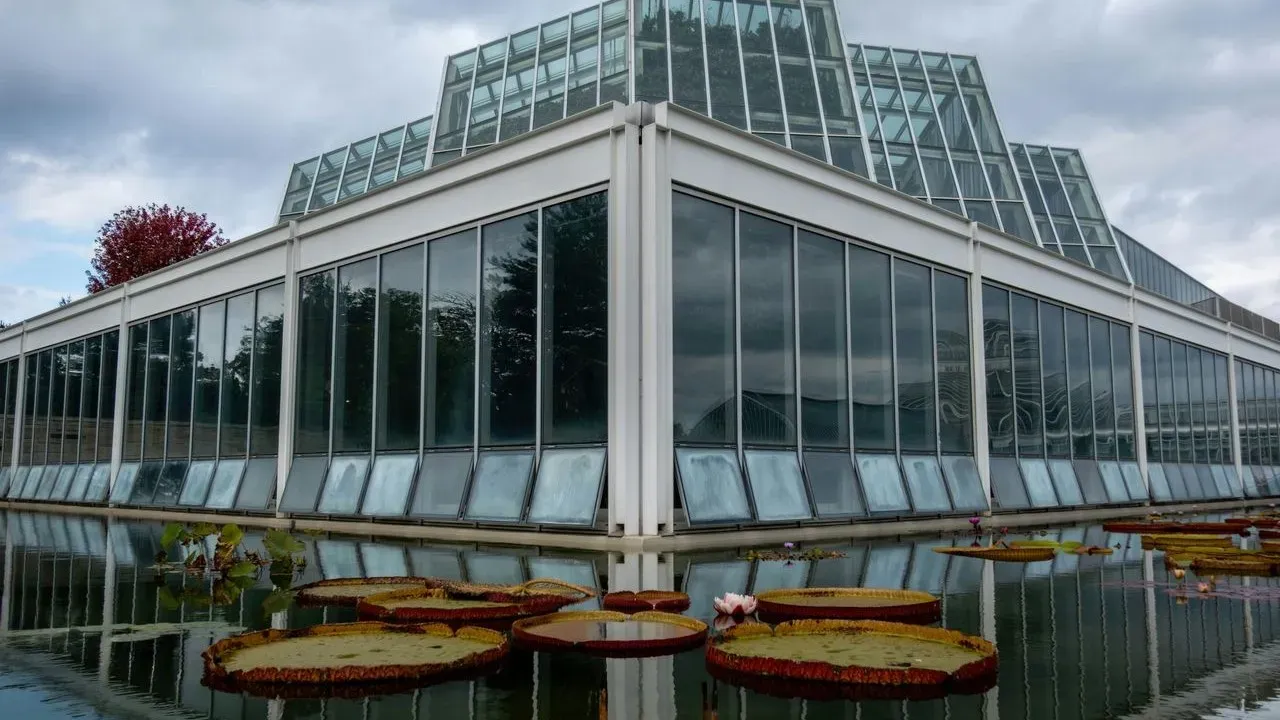
The Twin Cities also offer a point of comparison. Como Park Zoo and Conservatory in Saint Paul includes a fern room, an orchid house, and a tropical plant room, which provide year-round tropical plants under glass ([6]). A private yard cannot match a conservatory, but Arianne and Micah’s garden shows how much of the tropical effect can come from dense planting, layered foliage, and strong color within a small lot.
For gardeners in cold regions, the lesson is practical. A small plot can feel generous when it is planned tightly, started early, and used as an outdoor room. The garden does not change Minneapolis’s climate, but it shows how far careful design can carry a modest space.
AI Disclaimer: This article was created with the assistance of AI tools and reviewed by a human editor.