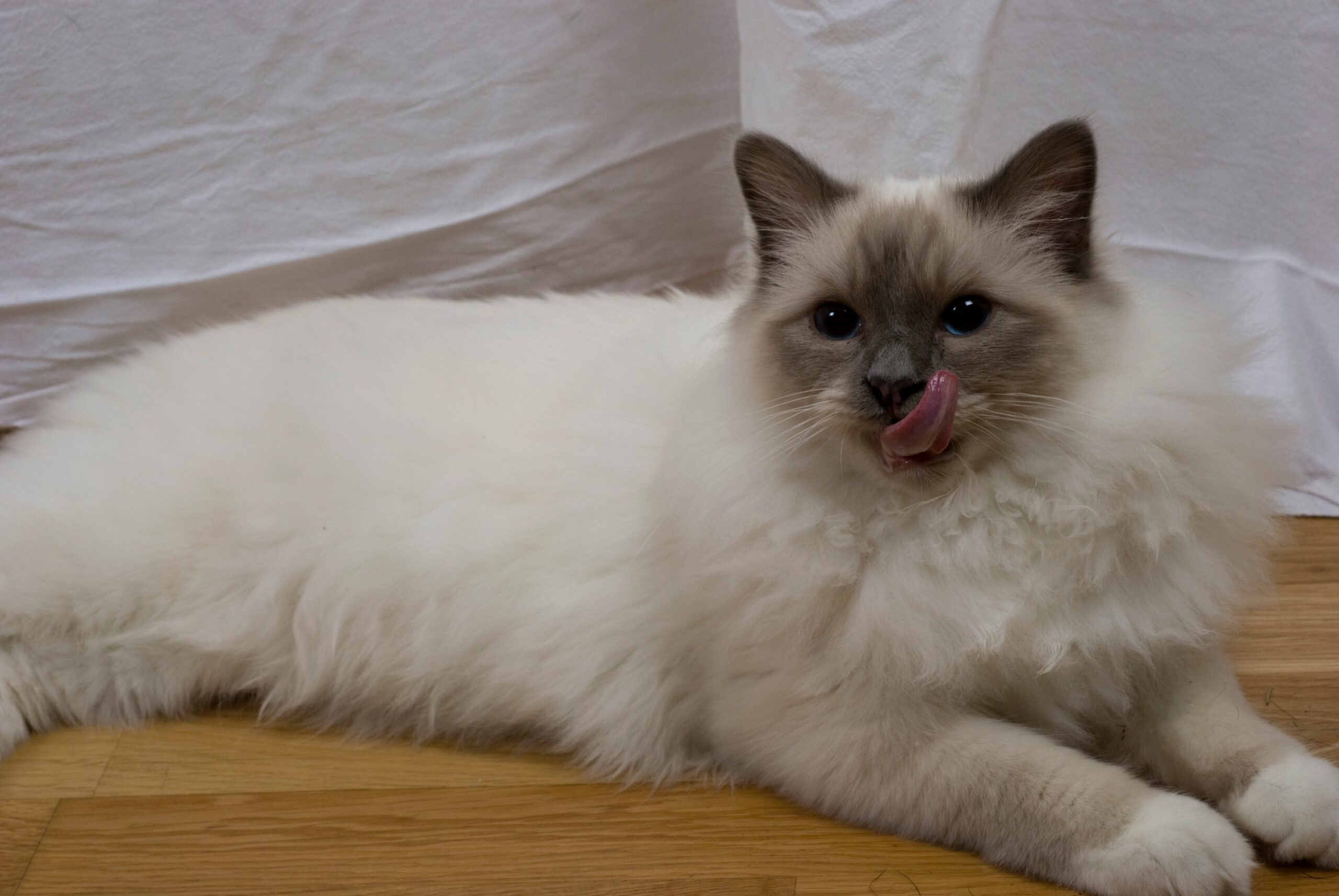

The “Blep”: When Cats Simply Forget Their Tongue
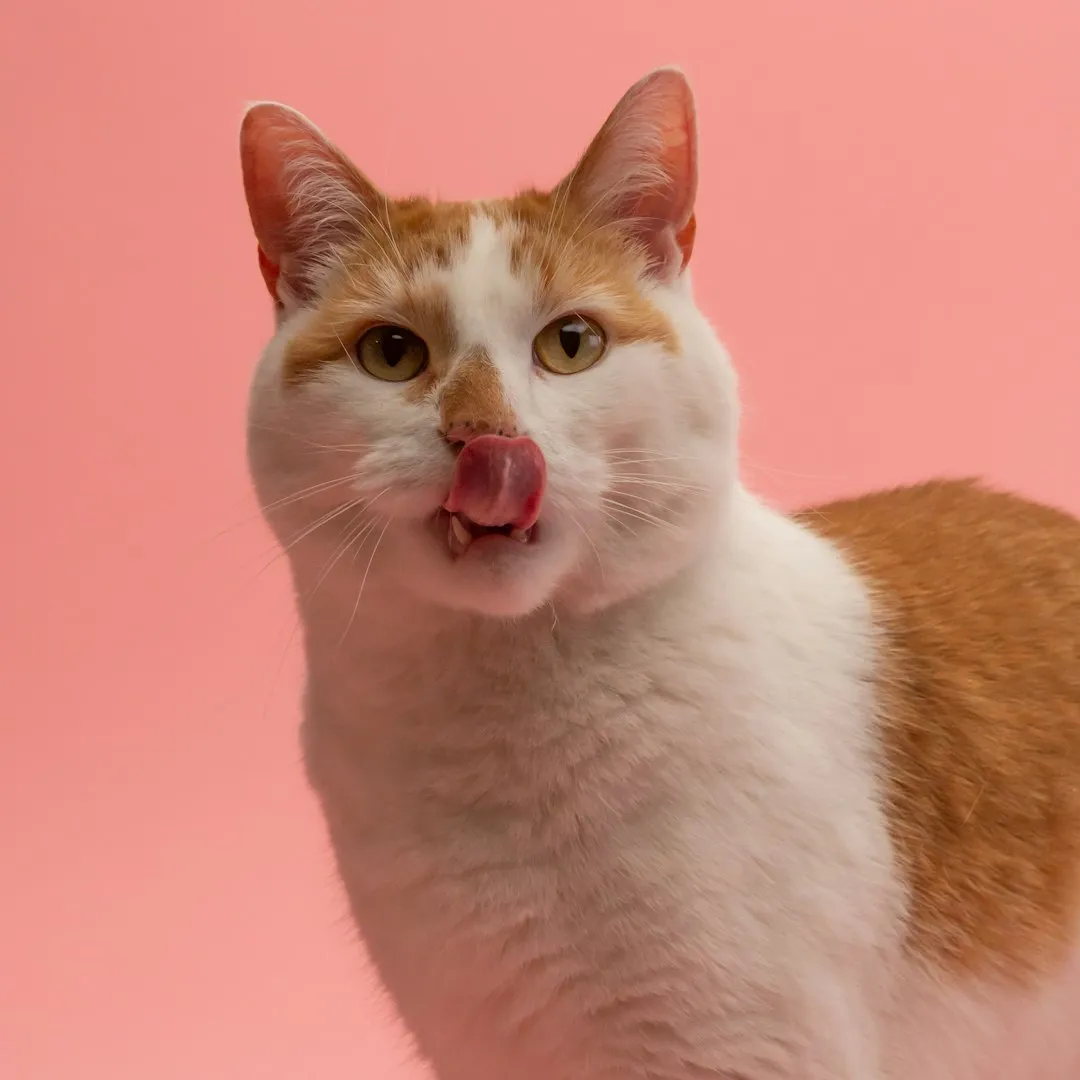
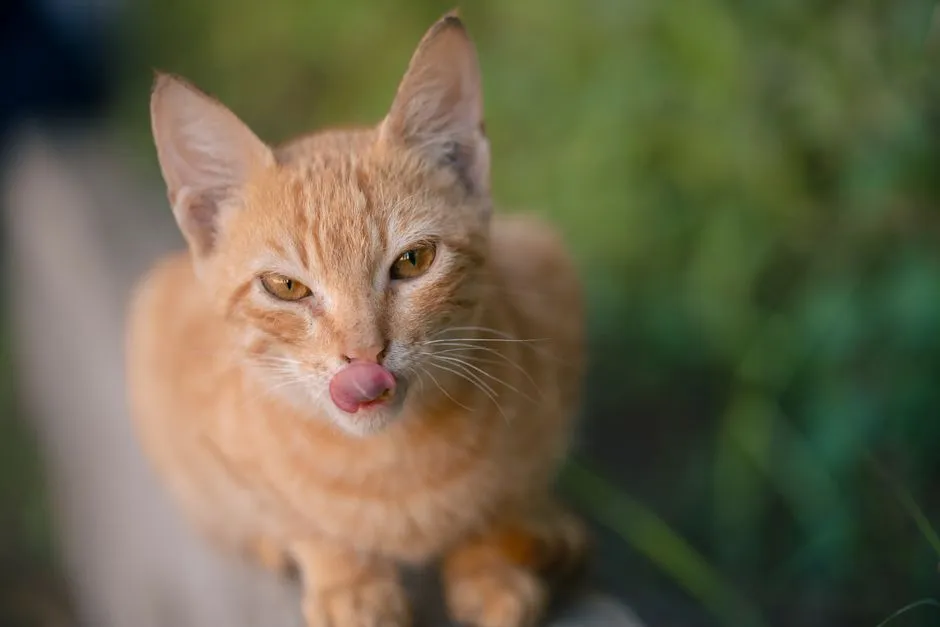
Often, when we see our cats with the tip of their tongue sticking out, it is because they have simply forgotten to put it back in. The internet has lovingly called this expression a “blep.” More formally, a blep can be defined as a partial, often unintended protrusion of the feline tongue, typically observed during states of relaxation, distraction, or post-grooming interruption.
Cats may look up at you with their tongue hanging out, having not realized it was happening at all. If the blep is repeated quickly, they may actually be attempting to remove something from their tongue. It’s one of those behaviors that looks purposeful from the outside but really has nothing to do with intention.
Deep Relaxation and Sleep
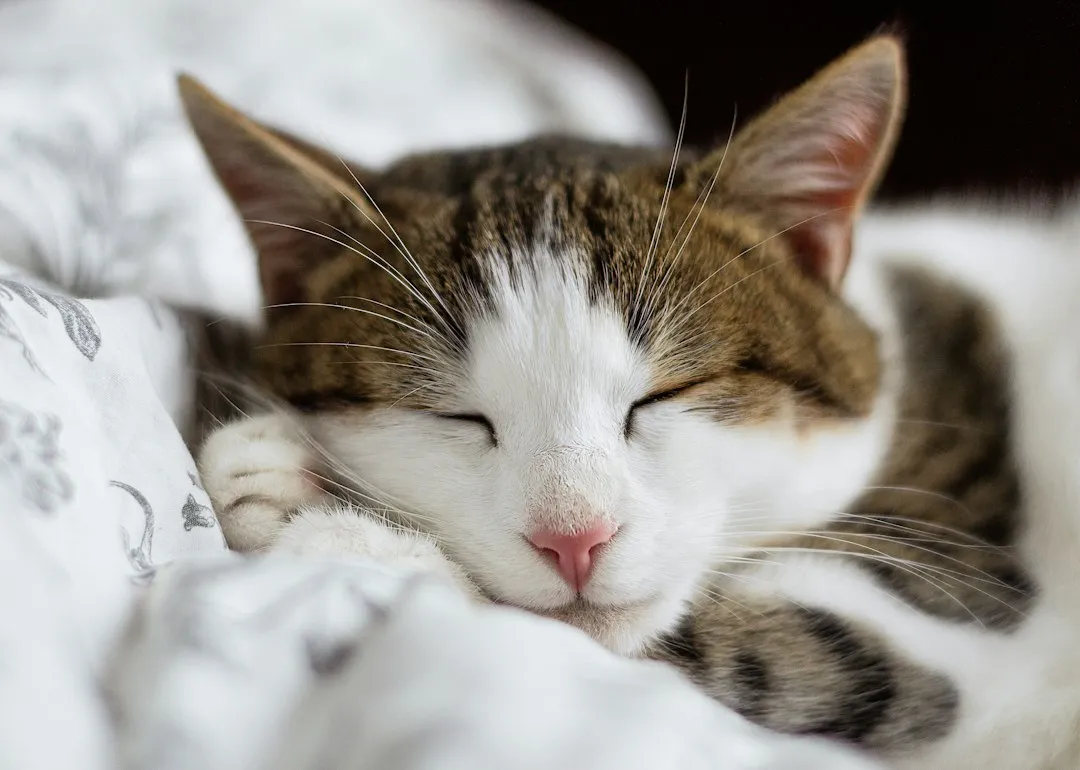
During deep sleep, a cat’s jaw muscles loosen, the mouth opens slightly, and the tongue simply slips out. Cats also blep when they’re awake and deeply relaxed, like after a long petting session or while lounging in a warm spot, with their facial muscles going slack just enough for the tip of the tongue to peek out.
A cat blepping while sleeping is a truly relaxed cat. The tongue slips out of the loosened jaw, showing you that your cat is fully asleep and resting. If anything, it’s a compliment. Your cat feels completely safe.
Interrupted Grooming Sessions
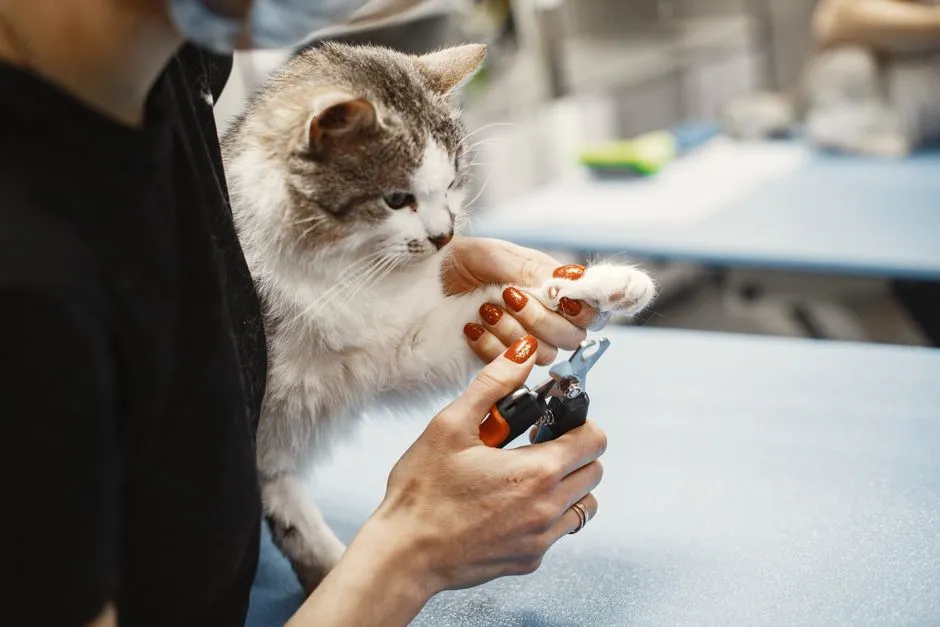
Blepping also happens when cats leave their tongue out unconsciously when they are disturbed during an activity like grooming. Their tongue will stay out for a bit, and if the distraction was harmless, they will get back to what they were doing before.
Cats have small and sharp hooks on their tongue known as papillae, which are effective for licking themselves clean. Whether they’re removing loose hair or some dirt from their coats, cats often pause regularly while grooming, which could be why you see your cat sticking out their tongue. The tongue simply stays extended mid-task while something else grabs their attention.
The Flehmen Response and Scent Detection
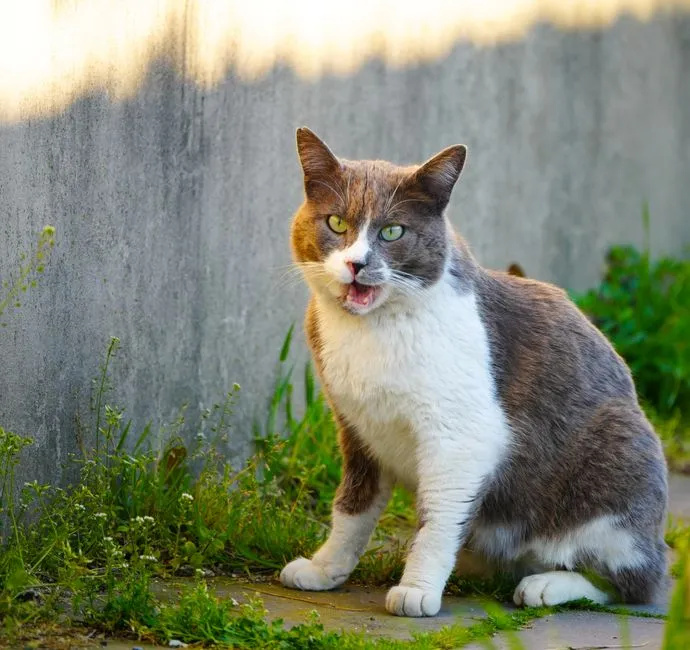
Cats use their tongues to explore the world around them. The Jacobson’s organ, located in the roof of their mouth, allows them to taste-scent the air, aiding in the detection of pheromones and other environmental cues.
Another reason why cats stick their tongues out could be part of the Flehmen Response. This happens when cats detect pheromone messages from other cats. During this response, they curl their lips back to uncover their top teeth and open their mouth so their tongue may be more obvious. Cats do this to help draw the pheromone into a special organ between the cat’s roof of their mouth and nasal cavities.
Breed Anatomy and Flat Faces
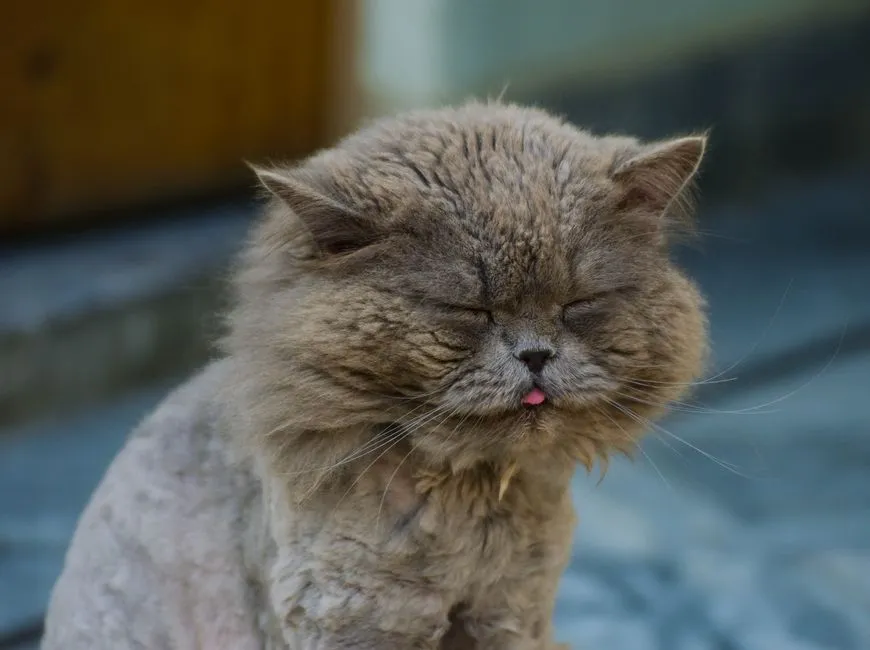
Cats with flatter faces, such as Persians, are likely more susceptible to sticking their tongues out than other breeds. It’s common to find Persian cats with their tongues sticking out. Less room in the mouth means less space for the tongue, hence you’ll frequently find them with their tongue out.
With smaller mouths, brachycephalic cats may occasionally not fully retract their tongue into their mouth. This could also be the case for cats who are missing their canine teeth. For these cats, the tongue-out look isn’t a behavior, it’s just physics.
Missing or Extracted Teeth
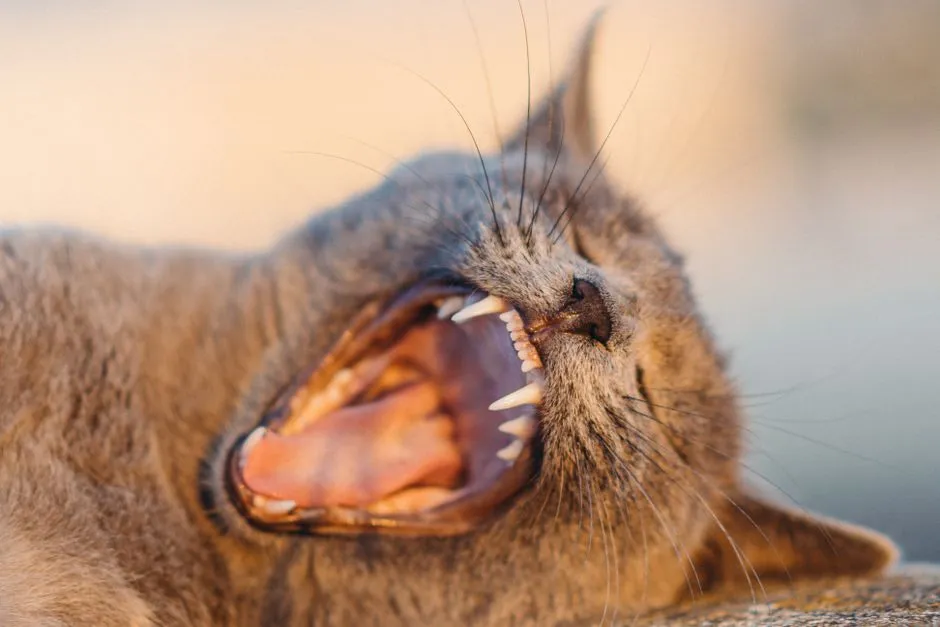
Cats with missing canine teeth are more likely to stick their tongues out because these teeth typically help keep the tongue in place. A tongue may be more likely to slip out of a cat’s mouth if they don’t have all their front teeth, particularly their canine teeth. Teeth help keep your cat’s tongue in place, and if some are gone, the tongue can slip out more easily without your cat even noticing.
It’s worth remembering that tooth loss in cats is not uncommon, especially as they age. Commonly encountered oral and dental diseases in cats include periodontal disease, tooth resorption, endodontic disease, and tooth trauma. According to published data, periodontal disease affects roughly eighty to eighty five percent of cats over two years of age. Missing teeth can be a quiet, gradual consequence of this.
Dental Disease and Oral Pain
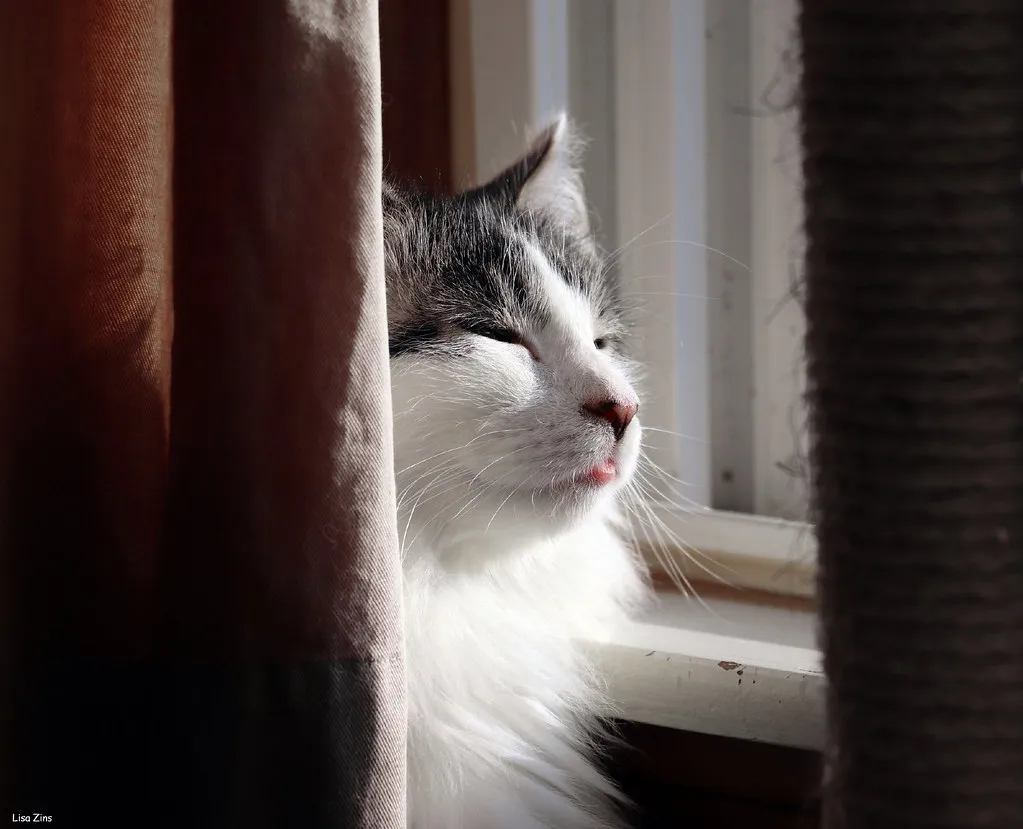
Dental problems are one of the most common medical reasons a cat keeps their tongue out. When the mouth hurts, cats may hold it partially open or let the tongue protrude because closing the jaw is uncomfortable.
Cats are prone to gingivitis, periodontitis, and other bacterial infections that stem from bad oral hygiene. Painful ulcers can make it impossible for the cat to put her tongue in her mouth. The distress of not being able to do anything with this aching mouth could cause her to pant with the tongue hanging out. Chronic gingivostomatitis is linked to an abnormal immune response, possibly triggered by feline calicivirus, and Cornell researchers report it in roughly 0.7% to 12% of cats seen at vet practices.
Nausea, Bad Tastes, and Motion Sickness
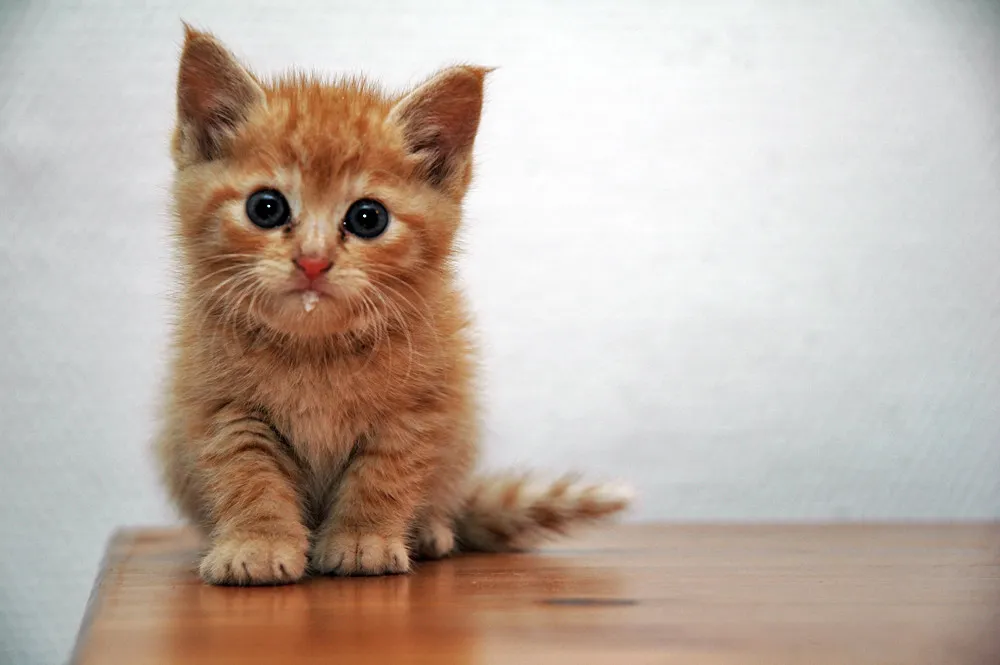
A nauseous cat will often drool and may leave the tongue out as saliva pools. Unlike dogs, cats do not normally pant to cool down. A nauseous cat will often drool and may leave the tongue out as saliva pools. You might notice the tongue protrusion just before or after vomiting.
A cat will stick out its tongue if it has a bad taste in its mouth. If your cat has eaten some food or had a taste of a treat that it wasn’t particularly fond of, it may react by sticking out its tongue. Giving cats certain types of oral medications will elicit the same response. Cats often stick their tongues out while traveling, and while it’s not necessarily a true blep, it can be a sign that your cat is suffering from travel sickness.
Respiratory Problems and Overheating
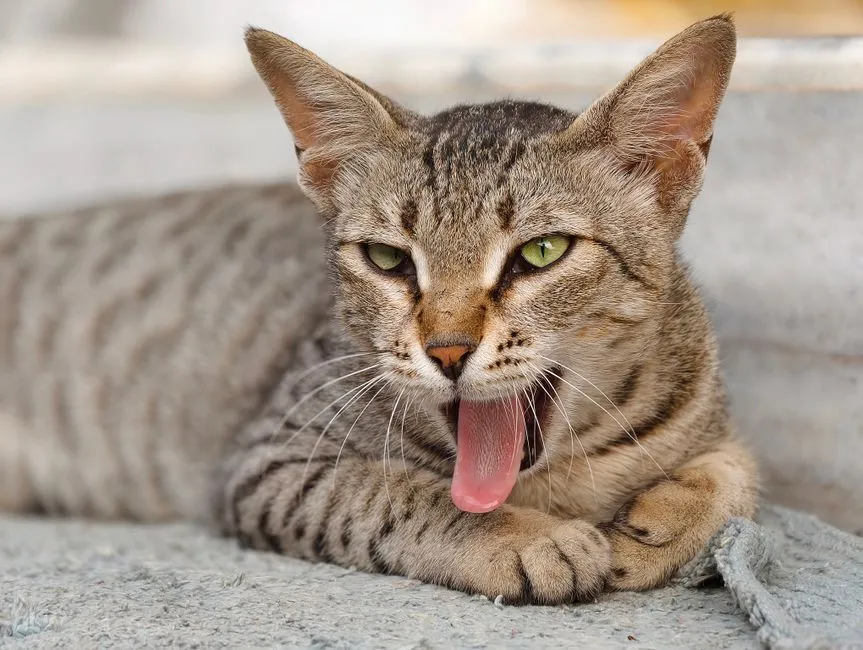
Respiratory or cardiac disease can mean a cat struggles to get enough oxygen, so it starts to pant, which leads to a cat’s tongue sticking out. If your cat is panting with the tongue out, it’s a sign of stress or overheating, not normal temperature regulation.
Cats that are too hot, often from being outside in the sun for too long, being in a poorly ventilated area, or after strenuous exercise, may pant and stick their tongue out as a way to cool themselves down. This kind of panting in cats is notably different from the casual blep. It’s visible, effortful, and deserves immediate attention.
Neurological Conditions and When to See a Vet
A tongue that sticks out could be due to a neurological disorder affecting the nerves and muscles of the face. Neurological disease is a possible cause of abnormal tongue movements in cats, often accompanied by other neurological or muscular symptoms, and requires veterinary diagnosis. This type of tongue protrusion can also occur alongside other neurological disorders that impact your cat’s facial muscle control and coordination.
Feline Orofacial Pain Syndrome is a behavioral manifestation of oral discomfort and occasionally tongue, lip, or gum mutilation in cats. There is some suspicion that this is a neuropathy arising from the trigeminal nerve. This disease is more common in Burmese cats but can be seen in any breed at any age. Signs are often linked to dental work, tooth eruption, or oral surgery. According to data from one study, the median age was seven years at first onset of signs, with the majority of cats having repeated or ongoing signs after the onset.
If your cat didn’t use to stick their tongue out much but you suddenly see them with their tongue hanging out, it’s likely to indicate a problem. Dental disease, respiratory infections, or neurological problems may cause a cat to stick its tongue out. If this behavior is accompanied by other symptoms such as drooling, difficulty breathing, or lethargy, it warrants a visit to the vet.
The Takeaway
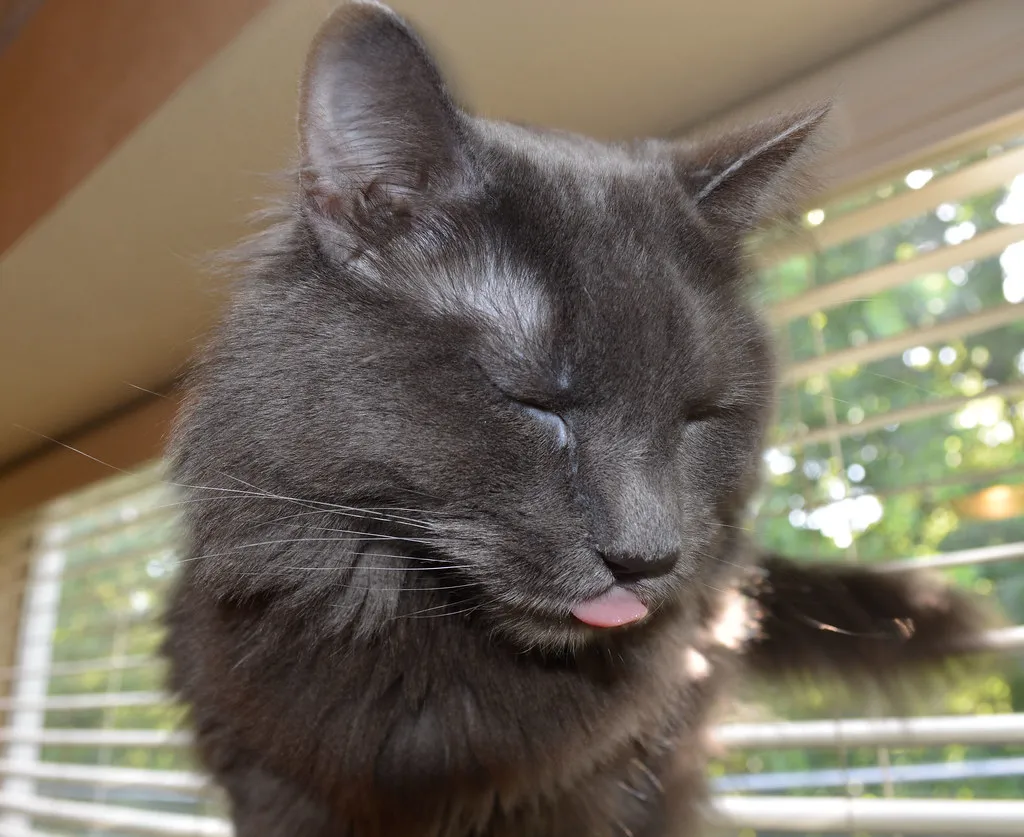
Most of the time, a cat’s dangling tongue is completely harmless. It means they’re content, distracted, mid-groom, or simply built in a way that lets a little tongue slip out. Cats blep for many ordinary reasons. They may be distracted during grooming, deeply relaxed, investigating a smell, or simply built in a way that lets the tongue peek out.
The important thing is knowing your cat’s baseline. A new, sudden, or persistent tongue-out behavior, especially paired with drooling, weight loss, labored breathing, or disorientation, calls for a vet visit rather than a photo. Veterinary organizations such as the American Association of Feline Practitioners emphasize that while “blepping” is a popular social media trope, it should never be a substitute for routine health checkups.
Knowing the difference between a sleepy blep and a genuine health signal is one of the quieter but genuinely useful things about understanding cats. The tongue doesn’t lie, even when it’s just hanging there.
AI Disclaimer: This article was created with the assistance of AI tools and reviewed by a human editor.