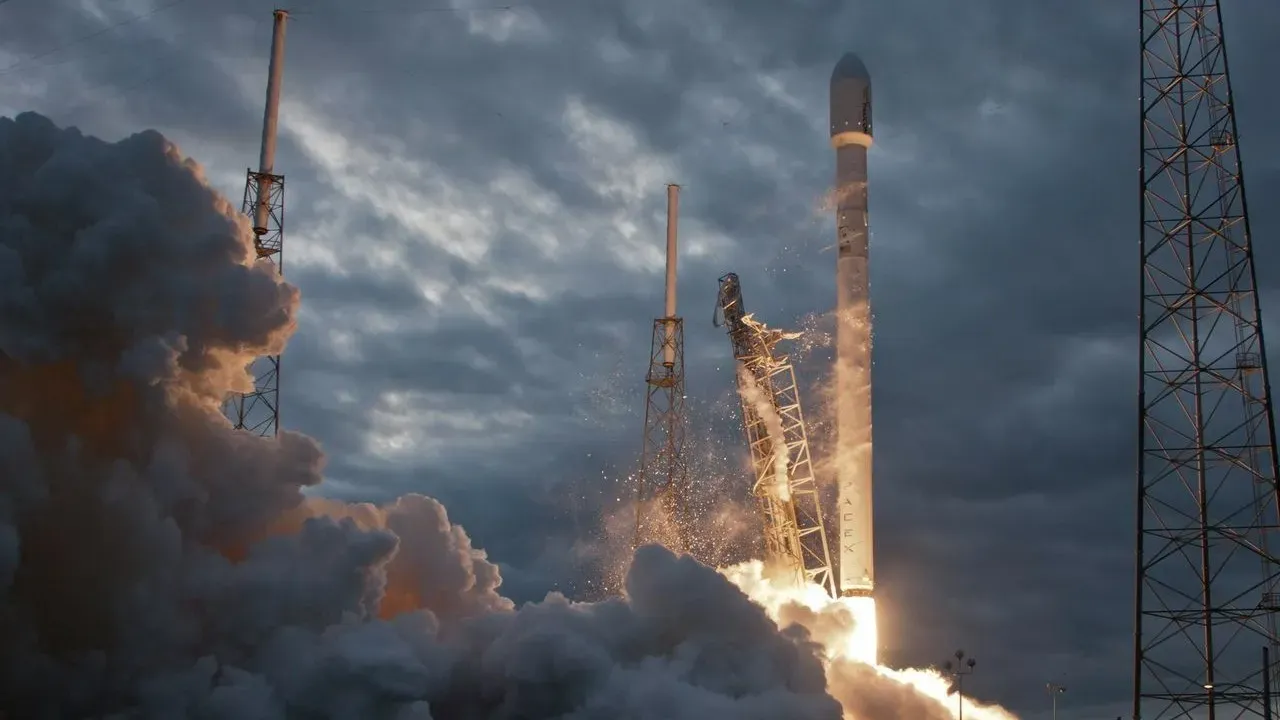

On a Sunday afternoon at Cape Canaveral, a United Launch Alliance rocket lifted off with 40 Amazon Leo internet satellites, hoping to help a planned broadband network take shape. About ten minutes later, the mission ended in failure. The satellites never reached orbit, and the loss marks the first time a ULA rocket has failed outright since the company was formed in 2006 ([1]).
A return to flight that ended early
The launch was meant to be a comeback. The Vulcan had not flown since February, when a solid rocket booster problem required redesign and retesting, and Sunday marked only the fifth flight of the vehicle overall ([2]). Earlier missions had already been marred by nozzle trouble on the boosters, so the stakes for this flight were high from the start.
Liftoff came from Space Launch Complex 41 at 12:40 p.m. Eastern. Less than an hour later, ULA issued a statement saying the vehicle had suffered an anomaly and had not delivered its payload to orbit ([3]). Observers tracking the flight also noted that the first stage appeared to burn longer than the company’s published timeline described, although the broadcast did not address that directly.
What ULA and Amazon know so far
ULA has not identified what went wrong. The company said it does not yet have enough information to explain the problem, and it has pledged to work with its customer and other organizations on the investigation ([4]). In its own words, the company said it did not meet its standard for mission success that day.
Several points are clear from the reporting so far:
- The anomaly occurred roughly 10 minutes into flight, and the 40 satellites were not placed in orbit.
- The rocket and satellites were described as healthy before the launch, so the loss came during the flight itself.
- The mission was the first of 38 Vulcan flights Amazon has purchased for its Leo network.
- Amazon will now wait for ULA’s investigation to finish before the next Vulcan flight for its satellites can proceed.
Why the loss reaches beyond one launch
The financial and schedule consequences fall on two companies at once. Amazon has built its plans around Vulcan for a large share of its launches, and the network is intended to compete directly with Starlink, the internet service run by Elon Musk’s SpaceX. Losing an entire batch of satellites adds delay to a project that depends on steady deployment.
The failure also lands in the middle of a tight market. Bloomberg reported that the loss deepens worries about a shortage of rockets at a time when demand from customers is growing quickly ([5]). For ULA, which has relied on its older Atlas V rockets for many missions, the Vulcan was supposed to be the next dependable workhorse. A grounding while engineers review telemetry could slow that transition, though the length of any pause remains unknown.
What comes next
For now, the public record offers a clear outcome but few answers. The satellites are gone, the cause remains under review, and ULA has said it intends to return Vulcan to flight as quickly as it safely can. Whether this proves to be a short setback or a longer rebuilding effort will depend on what the investigation finds, and the company has not yet said when that will be known.
AI Disclaimer: This article was created with the assistance of AI tools and reviewed by a human editor.