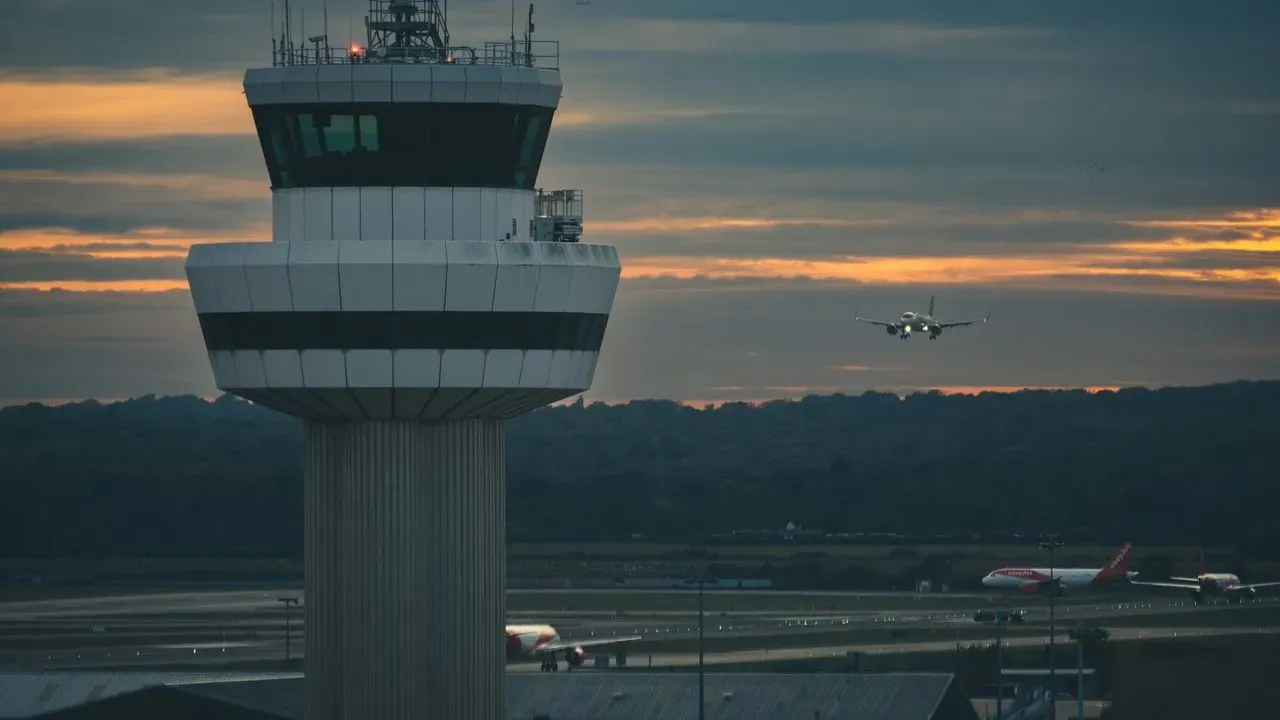

Millions of travelers spent Friday afternoon waiting to learn whether their flights would leave at all. The Federal Aviation Administration halted air travel across the country, and the stop lasted more than four hours. On Sunday, Transportation Secretary Sean Duffy said a feature on the air traffic control network has been switched off while officials investigate what went wrong. ([1])
Hours of uncertainty across the country
The FAA declared the stop at 3:54 p.m. Friday, and the agency lifted it at 8:15 p.m. More than 10,000 flights were disrupted, and the delays and cancellations were expected to stretch into the weekend. ([2])
Nationwide stops of this kind are uncommon. The previous one came in January 2023, after a failure in a pilot communication system. Aircraft already in the sky were allowed to continue, so the disruption fell hardest on people waiting at gates and on the ground. Airports also had to find space for planes that could not move, a problem that complicated recovery even after the FAA reopened the system.
The FAA chief later said he expected air travel to return to normal by the end of Sunday. Airlines, however, still faced the task of repositioning aircraft and crews that had been left out of place. ([3])
A router feature under close review
In an interview on ABC’s “This Week,” Duffy told co-anchor Martha Raddatz that the router at the center of the problem is now being examined in a laboratory in Florida. Officials believe the trouble began during routine work to replace aging copper wire with fiber cables at a site in El Dorado, Arkansas. When that router was turned on, a system in Amarillo, Texas, that had been upgraded about three weeks earlier also began to flood with data.
Government and industry officials told the Wall Street Journal that a feature designed to broadcast data more widely than necessary likely caused the overload. Duffy said the FAA has disabled that feature on all 69 routers of the same type in the network. ([4])
Duffy also said he did not believe anyone tried to sabotage the network during the installation, though he acknowledged that the root cause has not yet been identified. The contractor, L3Harris, said it is supporting the FAA’s investigation. The manufacturer, which is owned by Hewlett Packard Enterprise, has said the devices were working properly on Friday. ([3])
What comes next
Several questions remain open as the investigation continues. Officials have not yet explained why a broadcast feature that was meant to share information instead overwhelmed the network. Duffy has used the episode to renew his call for Congress to fund a major overhaul of the aging system.
- Lab testing of the Arkansas and Texas routers in Florida
- Whether the broadcast feature stays disabled across the network
- The root cause behind the failures at both sites
- Congressional funding for a broader modernization of air traffic control
- Recovery of canceled flights as Thanksgiving travel begins
For travelers, the disruption was a reminder of how much depends on equipment that most passengers never see. Thanksgiving travel is now only days away, and the answer to why a single router could bring the nation’s flights to a halt has not yet been settled.
AI Disclaimer: This article was created with the assistance of AI tools and reviewed by a human editor.