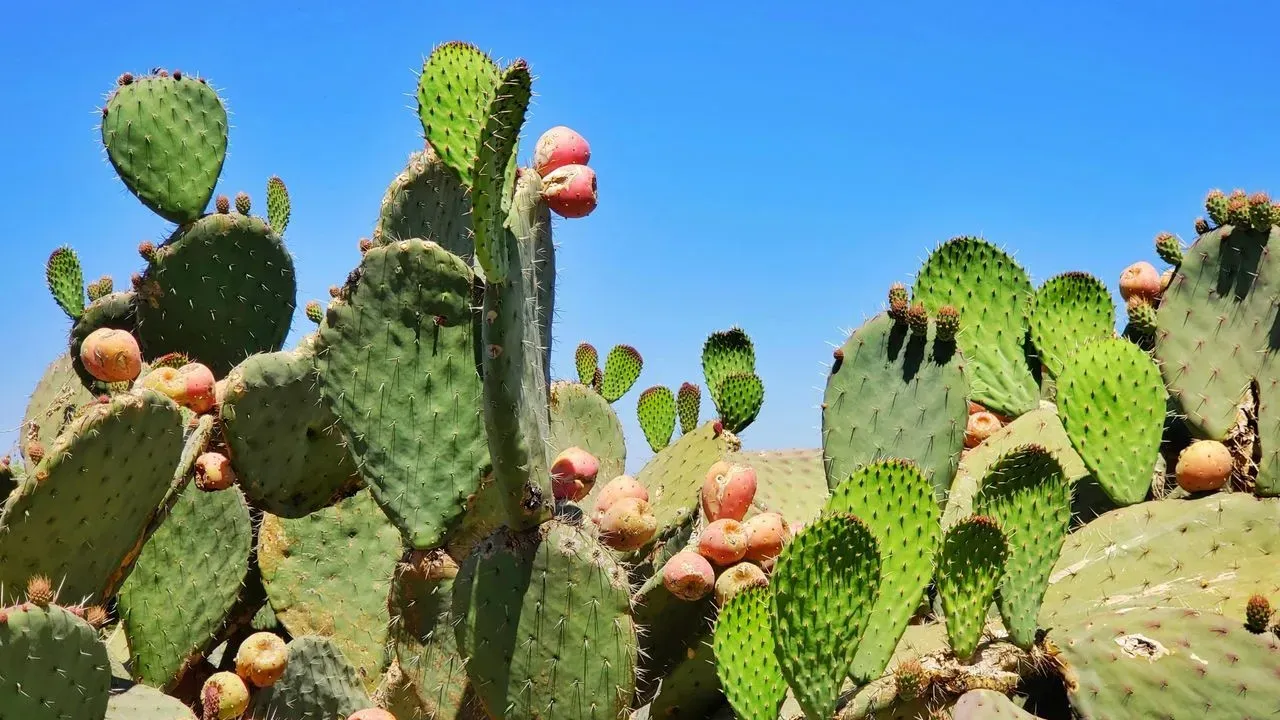

Alfalfa is one of the thirstiest crops in a region that is running short of water. In Nevada, where every acre of farmland depends on irrigation, a plant that needs far less water could matter a great deal. In an opinion column, John L. Smith points to the spineless pear cactus as a possible answer, and he draws on research at the University of Nevada, Reno ([1]). The idea is still early, but the science behind it is taking shape.
A Desert Plant Under Study at UNR
The research centers on John Cushman, a professor in the Department of Biochemistry, Molecular Biology and Biotechnology at UNR. His work focuses on crops that can produce useful yields with less water, a goal that has guided much of his career. The pear cactus, a botanical relative of the common prickly pear, is the plant at the center of his current efforts. Its spineless varieties make it easier to handle than its better-known cousin, and they are the ones under review as a source of livestock feed.
The project has drawn support from the U.S. Department of Energy, the Western Sustainable Agriculture Research and Education program and the Nevada Agriculture Experiment Station. Cushman has also filed patents on some of the findings. Researchers are testing 240 pear cactus varieties in replicated fields in Nevada, California, Arizona, Texas and Florida, which allows them to determine which strains use water most efficiently in different climates.
The Water Math Behind the Pitch
Alfalfa has long been a staple of Western livestock feed, and it remains a primary source of stockfeed in Nevada even though the state is better known for cattle grazing on sagebrush rangeland. Growing it, however, requires a heavy volume of water. Cushman’s team says the pear cactus changes that equation significantly.
| Crop | Annual water use | Notes |
|---|---|---|
| Alfalfa | Up to 8 to 12 acre-feet per year | Widely grown for livestock feed in the West |
| Pear cactus (Opuntia) | About 2 acre-feet per year | Produces similar annual biomass to alfalfa in study findings |
According to the research cited in the column, the cactus produces about the same annual volume of biomass as alfalfa while using water six times more efficiently. Cushman acknowledged that the plant grows slowly in the wild, but he said agricultural conditions change that picture. The plant also uses a form of photosynthesis that captures carbon dioxide from the atmosphere, a trait that has drawn interest in its potential role in carbon sequestration.
Feed, Food and Fuel Possibilities
The pear cactus offers several potential uses, which is a major reason researchers are paying attention. The column identifies three areas where the plant could have value:
- Livestock feed: Its water-efficient biomass could supplement or partly replace alfalfa in arid regions.
- Produce: Its fruit and paddle-shaped stems, called cladodes, already appear in some supermarkets.
- Biofuel: The plants produce methane and ethanol, which could make them a feedstock similar to corn and soybeans.
The biofuel angle is closely tied to the federal funding. Cushman has described the current state of the industry in cautious terms. “We’re pretty limited right now in the expansion of biofuel production,” he said, adding that new feedstocks would need to come from arid regions. For him, the appeal lies in a crop that needs far less water than the options available today.
Questions That Remain
The column makes clear that the pear cactus is not a near-term replacement for the millions of acres of alfalfa grown across the country. Scaling a crop from research plots to commercial farms involves costs, equipment, markets and years of testing. Cushman’s work shows what may be possible, but it does not yet prove the crop can compete at scale.
Context also matters. The Western United States is projected to become about 15 percent drier than it is now, according to the column, and the region is already experiencing extended drought. Any solution will likely involve several approaches rather than a single crop. Still, a plant that can produce feed and fuel on far less water gives farmers and policymakers a new option to consider. Whether the pear cactus becomes part of that mix may depend on what the next phase of field trials reveals.
AI Disclaimer: This article was created with the assistance of AI tools and reviewed by a human editor.