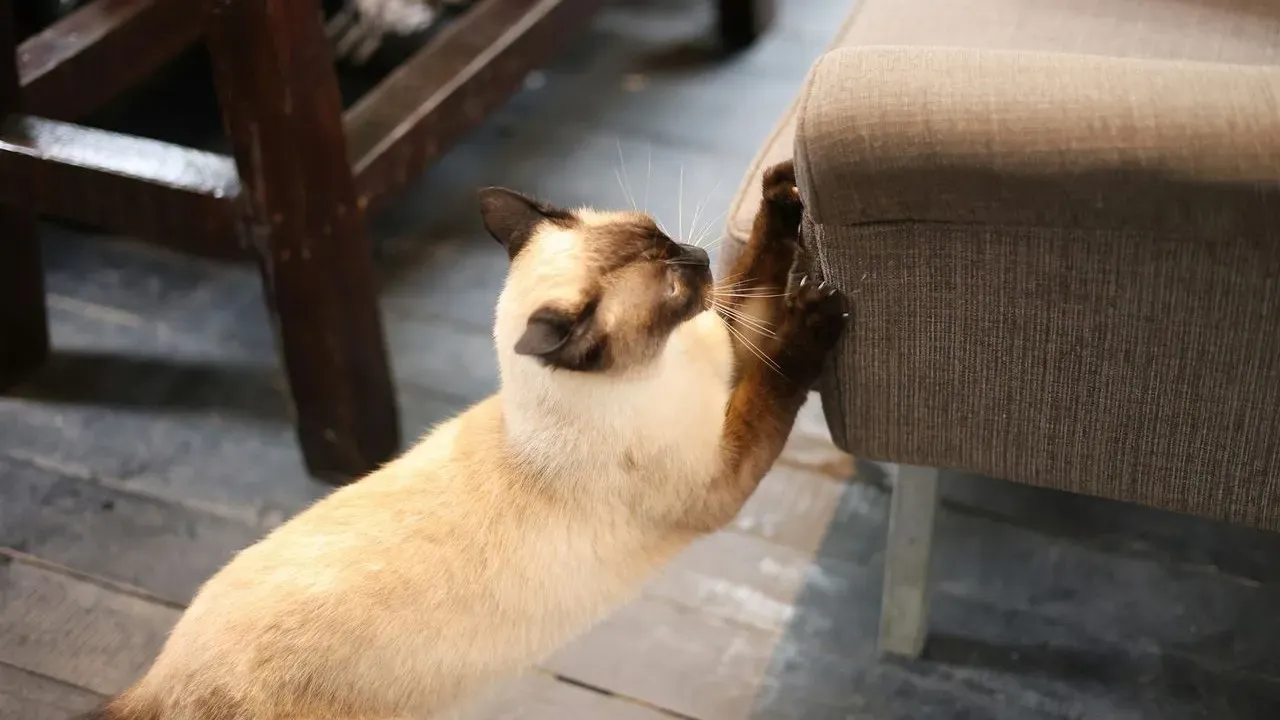

Few things change a new sofa faster than a cat discovering the arm of it. Within weeks, a favorite seat can show loose threads and frayed edges, and the cat seems unbothered. Scratching is a normal part of feline life, though, and the practical answer is to redirect it rather than try to stop it. ([1])
What the scratching is doing for your cat
Cats scratch for several reasons, and most have little to do with mischief. Scratching removes the worn outer layers of the claws, which keeps them in working order. It also gives the back, shoulders and legs a proper stretch, the kind that often follows a long nap.
Cats have scent glands in their paws, so each swipe leaves a signal that other cats can read. A sofa arm sits in the middle of daily life, which makes it a convenient place to leave that message. Some cats have also learned a simpler lesson, since a well-timed scratch can prompt a person to get up and move away.
Offer a better target, placed where the habit lives
The most reliable fix is a scratching post set directly beside the furniture your cat already favors. Height matters, so the post should stand taller than the cat when it stretches out fully. It also needs enough weight to stay put when a determined cat digs in.
Texture comes next. Cats that work the sofa arm often respond to sisal rope, while cats drawn to the carpet may prefer a flat cardboard scratcher. Placement counts for more than price, so a modest post in the right spot will usually outperform an expensive one tucked into a spare room. Once the new post becomes the habit, it can be moved gradually to a more convenient location.
A treat or a bit of praise each time the cat uses the post helps the change stick. Consistency over several weeks tends to matter more than any single effort.
Furniture that can take a few claws
No sofa is truly indestructible, but materials vary widely in how they cope with claws and hair. Tight weaves give claws little to catch on, and hair tends to brush off more easily. Knowing which fabrics to favor and which to avoid can save a great deal of frustration later.
- Microfiber and microsuede, which offer a very tight weave and let hair release easily
- Tightly woven performance fabric, which many households find resistant to both snags and stains
- Short, dense pile velvet, which many owners find surprisingly durable, although it does show hair
- Loose or looped weaves such as bouclé, tweed and chunky knits, which give claws something to grab
- Leather, which wipes clean easily but shows scratches and punctures permanently
- Delicate fabrics such as silk and loosely woven linen
Shape also matters. Tight backs and arms without loose cushions leave fewer places for a cat to dig in. Legs are generally a better choice than skirts, since skirts give a cat a hiding place and an edge to pull at. Removable, washable covers turn accidents and hairballs into a laundry task rather than a repair job.
Protecting the sofa you already have
Replacing furniture is rarely necessary right away. Clear adhesive guards or fitted covers on the arms remove the temptation while the habit shifts. Double-sided tape works as a deterrent too, since most cats dislike the sticky feel on their paws. A washable throw over a favorite spot protects the upholstery underneath and is far easier to clean.
Citrus scents may discourage some cats. A light spray placed near the furniture, rather than directly on it, can help, but check that the product is safe for pets and will not mark the fabric first.
Boredom plays a role as well. A cat tree or wall shelves near a window offer height, a view and a place to stretch. Ten to fifteen minutes of play with a wand toy before bed can use up energy that might otherwise go into the sofa. Rotating toys every few days keeps them interesting, and trimming nails every couple of weeks blunts the damage. Soft nail caps are another option, though a vet should be consulted first.
Cleaning up and shopping with cats in mind
Hair and odor collect in upholstery over time, so routine care matters. Vacuuming with an upholstery tool once or twice a week keeps hair under control, and a lint roller or rubber glove handles quick touch-ups before guests arrive. Accidents should be treated promptly with an enzyme cleaner made for pet stains.
Anyone furnishing from scratch can ask a few practical questions before paying. Those answers can prevent costly surprises later.
Before buying a sofa for a home with cats, check the following:
- How the fabric is cleaned
- Whether the cushion covers come off for washing
- Whether the warranty excludes pet damage, which many do
- Whether swatches can be ordered and tested with a light scratch at home
A cat that claws the sofa is following instinct rather than defying the household. A sturdier post, a tighter weave and a few inexpensive guards can keep both the cat and the furniture in good shape for years. Some cats will always find the sofa arm irresistible, so the realistic goal is a home where both can live comfortably together.
AI Disclaimer: This article was created with the assistance of AI tools and reviewed by a human editor.