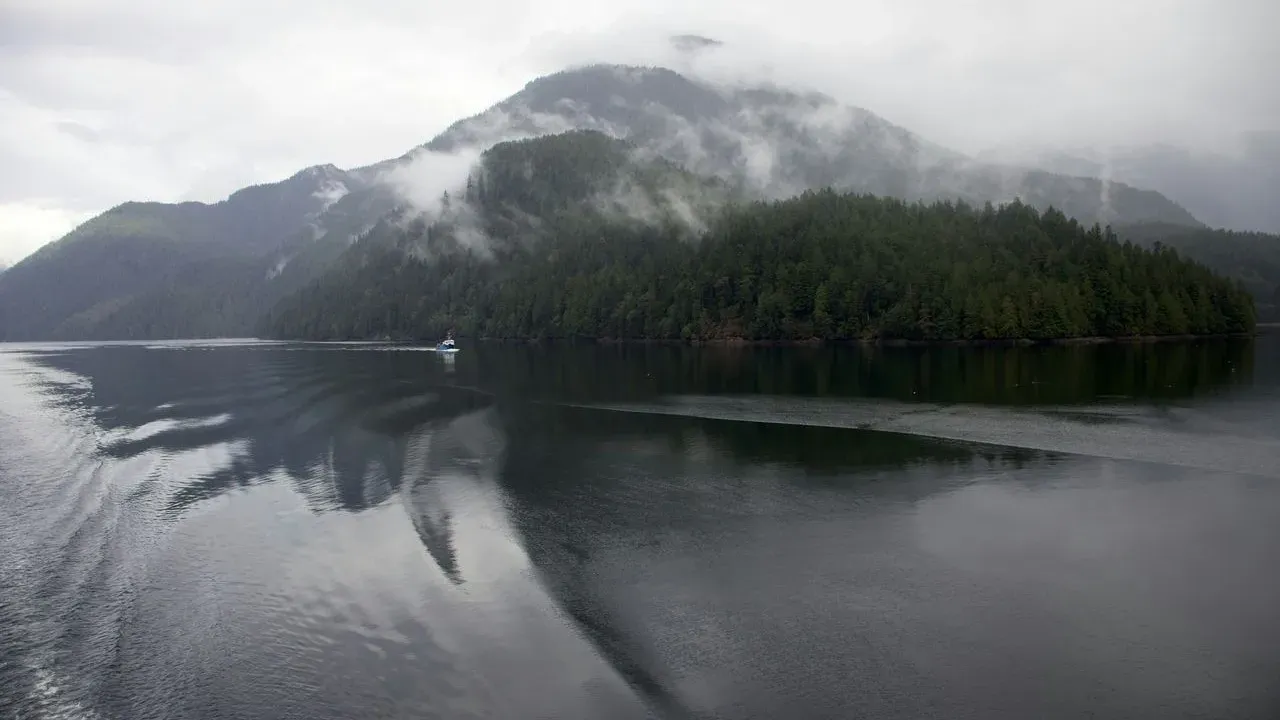

Few shoppers reaching for a sweater think about old-growth cedar on the British Columbia coast. Yet ([1])reports that the fashion industry was unknowingly contributing to the decline of the Great Bear Rainforest, one of the world’s most critical carbon sinks. The story now looks at how that connection came to light and how the industry became part of the effort to protect the forest.
A forest that holds carbon in its trees
The Great Bear Rainforest covers roughly 6.4 million hectares, stretching from the north of Vancouver Island to the Alaska Panhandle. ([2])Its old-growth stands are central to its value. Researchers and carbon-offset operators say that these forests store more carbon per hectare than the Amazon, according to ([3]), a figure that explains why the region is often described as one of the planet’s largest carbon sinks.
That role matters because a standing tree keeps carbon out of the atmosphere, while a felled one begins releasing it. Conservationists have argued that protecting old trees produces an almost immediate climate benefit, since emissions avoided today count right away.
How clothing ended up linked to the logging
The connection between closet and clearcut is less obvious than it sounds. Old-growth timber from forests around the world has been turned into products ranging from t-shirts and jeans to packaging paper. ([4])Wood pulp also feeds fabrics such as rayon, viscose and modal, which are made from trees. ([5])
Canopy, a conservation group working with brands on forest sourcing, has estimated that about 120 million trees a year end up in the clothing people wear. Its founder recalled that many designers and retailers were surprised to learn of the link when the group first contacted them about five years earlier. ([6])
From pressure to protection
Environmental campaigns in the late 1990s, led by conservation groups and Indigenous communities, pushed the issue into public view. ([5])After years of negotiations, the 2016 agreement put a large share of the region beyond industrial logging. Roughly 3.1 million hectares, or more than 85 percent of the rainforest, were made permanently off-limits. ([7])
Fashion’s role grew from there. Several apparel companies, including Timberland, Vans, Nautica and The North Face, said they would stop making products from ancient or endangered forests. VF Corporation, which owns more than 30 apparel brands, said it would no longer buy pulp from sources linked to the loss of those forests. ([6])
What matters now:
- The forest is a major carbon store, and its old-growth trees are the most valuable part of that store.
- Clothing and other forest products can connect shoppers to distant logging, even when they never see a forest.
- Brand commitments added pressure on suppliers, but the forest’s protection depends on how the agreements are enforced.
Gains that remain unfinished
The arrangement has not settled every question. Carbon offsets, which Coastal First Nations sell in exchange for protecting forests that would otherwise have been logged, were meant to replace revenue lost to reduced cutting. ([8])Offset sales have been slower than expected, raising doubts about the model’s long-term footing. ([9])
Critics also point out that loggers have concentrated on the largest and oldest trees, since those are the most valuable. Jody Holmes, director of the Rainforest Solutions Project and one of the architects of the agreement, has said that offset revenue can slow logging of second-growth stands but has not yet done enough to save old growth. ([9])She has also noted improvements, including wider buffers along salmon streams and more caution on steep, unstable slopes. ([9])
A measured takeaway
The fashion industry’s involvement shows how a supply chain can reach a forest thousands of kilometers away. It also shows how brand pressure can reinforce a conservation deal that was already in place. The Great Bear Rainforest is safer than it was a decade ago, but the work of keeping its oldest trees standing is ongoing, and the next test will be whether protection holds up on the ground as well as on paper.
AI Disclaimer: This article was created with the assistance of AI tools and reviewed by a human editor.