

Most people spend a lot of time picking the right color, material, or shape for a coffee table, then get the height completely wrong. It’s the measurement that gets the least attention in showrooms, yet it’s the one that shapes how a room actually feels to sit in. Get it right and the living room clicks. Get it wrong and something always feels slightly off, even if you can’t name why.
The professionals who do this for a living are almost unanimous on the subject. There’s a specific height rule that designers return to again and again, regardless of style or budget. Here’s what it actually says, and what else you need to know to apply it correctly.
The Core Rule: Match the Sofa Seat, Then Drop an Inch or Two
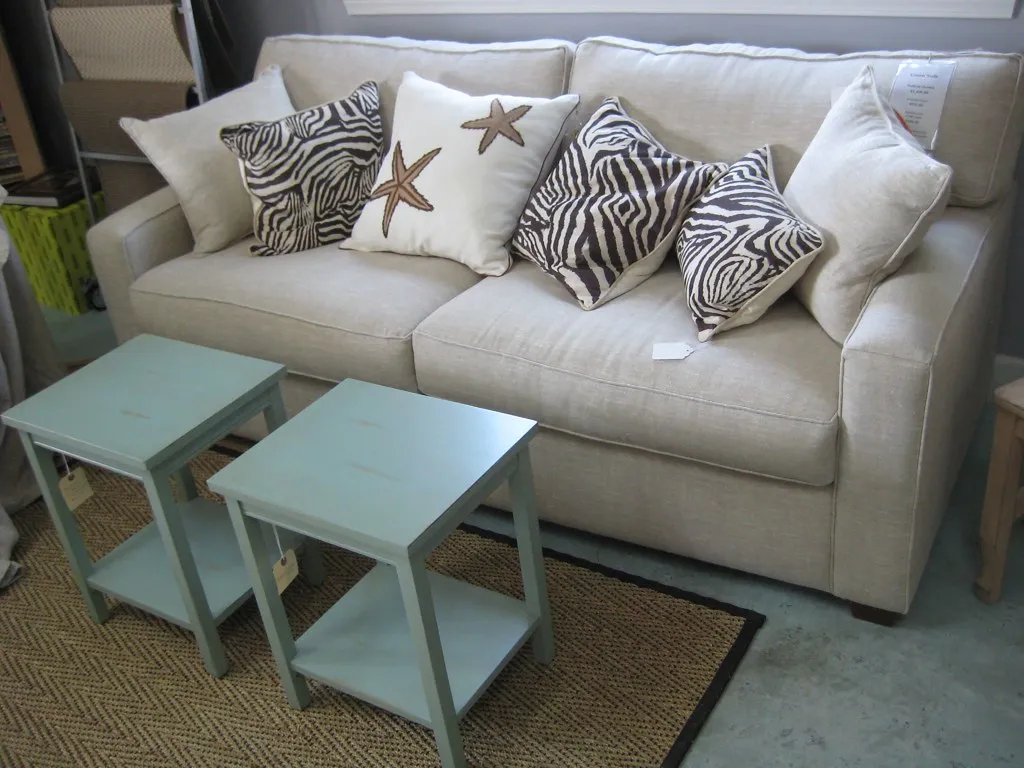
The fundamental interior design rule is straightforward: your coffee table should be equal to, or one to two inches lower than, the top of your sofa seat cushions. This isn’t a rough estimate. It’s the specific measurement that most design professionals land on after everything else is considered.
The most important principle is simple: your coffee table shouldn’t be taller than your sofa’s seat cushions. Rather, your table should be one to two inches lower than the seat of your sofa. That small downward shift prevents the table from feeling like a wall in front of the seating, while still keeping items easy to reach.
The only real cardinal rule for most design experts is to never go taller than the sofa seat, because it both throws off the room’s visual harmony and makes it more awkward to use.
The Standard Range: 16 to 18 Inches

The standard coffee table height ranges from 16 to 18 inches, offering the best balance between form and function by aligning closely with the average sofa seat height. This range has become the industry default precisely because it works across so many common sofa types.
This measurement supports comfortable reach, maintains clean sightlines, and enhances spatial proportion, which are key considerations in both residential and commercial interior design. It isn’t arbitrary. It’s the product of decades of practical furniture design.
For height, the sweet spot is simple: choose a coffee table height within about two inches of your sofa’s seat height. Most sofas have a seat height of roughly seventeen to nineteen inches, so many tables land around sixteen to twenty inches.
Why Going Too Low Is Just as Bad as Going Too High

Most coffee tables sit slightly lower than the sofa seat, and the standard coffee table height range is about two to four inches lower than your cushions. Go higher, and the table looks like it’s trying too hard. Go lower, and you’ll find yourself hunching to reach your coffee.
There’s a physical logic here that often gets overlooked in design conversations. The arm has a natural, relaxed reach arc when you’re seated. A table that sits too far below that arc forces a lean that most people don’t consciously notice but physically feel over time.
If the table is too high or too low, it can disrupt the flow of your space, making it less functional and visually unappealing. Both extremes break the same underlying rule: the table needs to serve the seated body, not the standing eye.
How to Actually Measure Before You Buy

To guarantee a perfect fit, always measure your specific sofa cushion height first. This sounds obvious, but most people skip it and rely on vague comparisons or marketing descriptions. Sofas vary more than you’d expect.
To find the perfect height for your specific living room setup, use this simple formula: Ideal Coffee Table Height equals Sofa Seat Height minus one to two inches. Write that number down before you shop, and use it as your upper limit.
When your table height aligns with the sofa’s seat, reaching for a drink or remote feels effortless and your furniture looks cohesive, not mismatched. If your sofa’s seat height is eighteen inches, your coffee table should fall between sixteen and seventeen inches high.
Different Sofas, Different Numbers
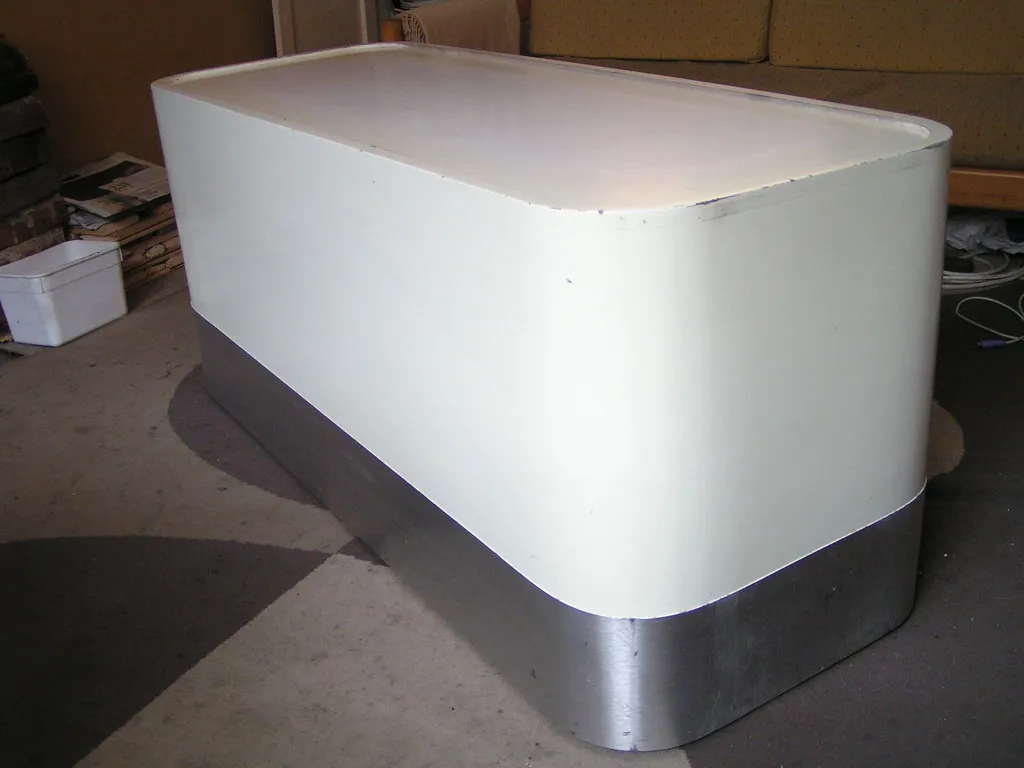
Modern sofas often have lower seat heights, which may necessitate a correspondingly lower coffee table. Conversely, a traditional sofa with higher seat heights pairs well with a taller coffee table. The rule stays constant; it’s just applied to a different starting number.
If your sofa’s cushions are twenty inches high, aim for a coffee table that is around eighteen inches tall. The two-inch drop stays consistent even as the base measurement changes. That consistency is what makes the rule universal rather than style-specific.
Castlery puts it at roughly two to four inches below the cushion and suggests sixteen to eighteen inches for everyday lounging, ten to fourteen inches next to low lounge seating, and eighteen to twenty-two inches if you eat or work at the table. So the activity matters, not just the furniture type.
The Two-Thirds Rule for Length
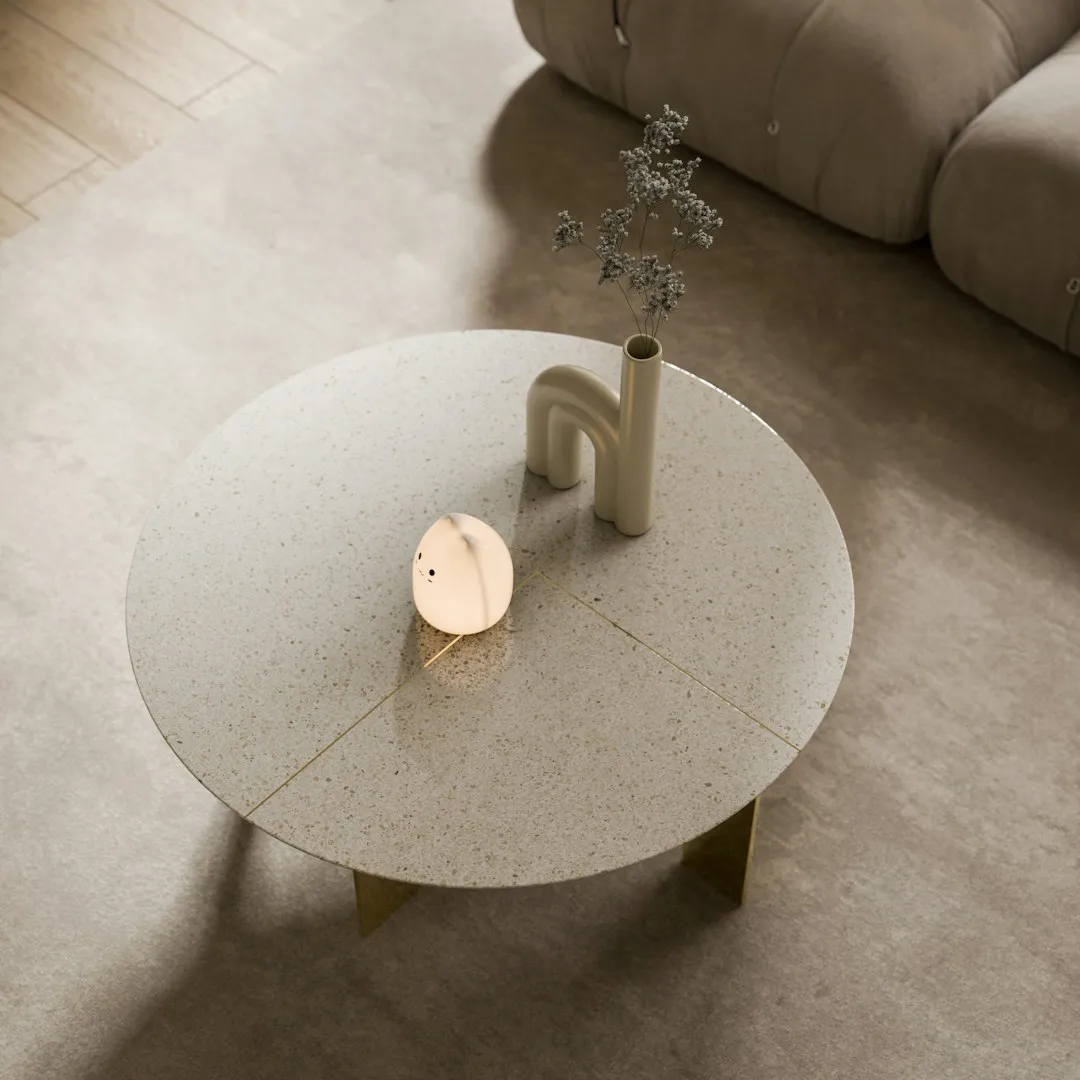
Height gets most of the attention, but length is where the other major mistake happens. One of the most common layout mistakes is choosing a coffee table that is too small. The rule is that your coffee table should be approximately two-thirds the length of your sofa.
The two-thirds rule is a simplified version of the Golden Ratio, a mathematical proportion found in nature that the human eye perceives as inherently beautiful and balanced. By following this ratio, you are addressing two of the seven basics of interior design: Balance and Proportion.
It’s been the go-to sizing guide in interior design for decades because it covers the widest range of setups without overcomplicating the decision. For a ninety-inch sofa, that means aiming for a table close to sixty inches long.
Spacing Between the Sofa and the Table
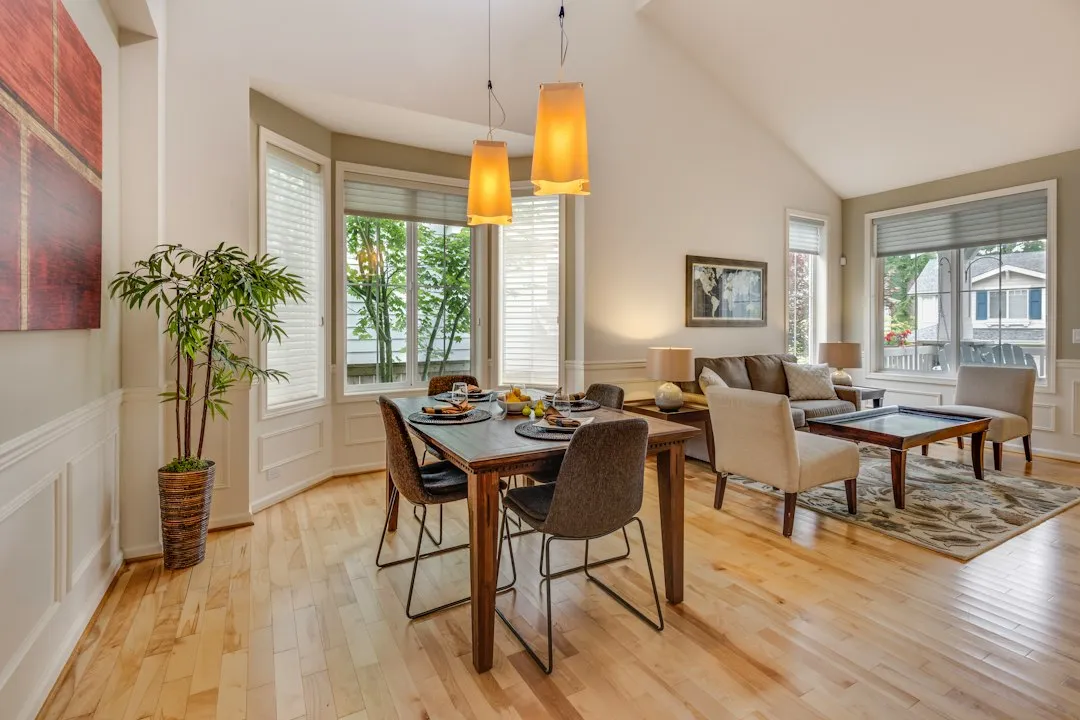
The ideal distance between a coffee table and a couch is sixteen to eighteen inches. This “Golden Rule” of interior design ensures you have enough legroom to sit comfortably while keeping your coffee, book, or remote within easy arm’s reach.
For most rooms, leaving about eighteen inches between the front edge of the sofa and the coffee table creates a comfortable “reach zone” while still giving legs and knees room. That gap is where the ergonomics actually live.
In a living room setting, a precise fourteen to eighteen inch clearance between the sofa seat edge and the coffee table is ergonomically optimal. Tighten it much further and the room starts to feel crowded, even when it isn’t.
Walkway Clearance Around the Table
Even a perfectly sized table will feel wrong if it pinches traffic flow. For comfortable movement between larger pieces, many designers aim for thirty to thirty-six inches, and treat twenty-four inches as a workable minimum when space is tight.
It’s a measurement most people don’t think about until someone trips, or the room constantly feels like an obstacle course. Keep walkways at least twenty-four inches wide around the table. In smaller rooms, this is often the constraint that determines table size more than anything else.
When the height rule and the spacing rules all align, the room stops feeling like a collection of separate furniture pieces. Everything reads as a considered grouping.
When You Might Bend the Rule
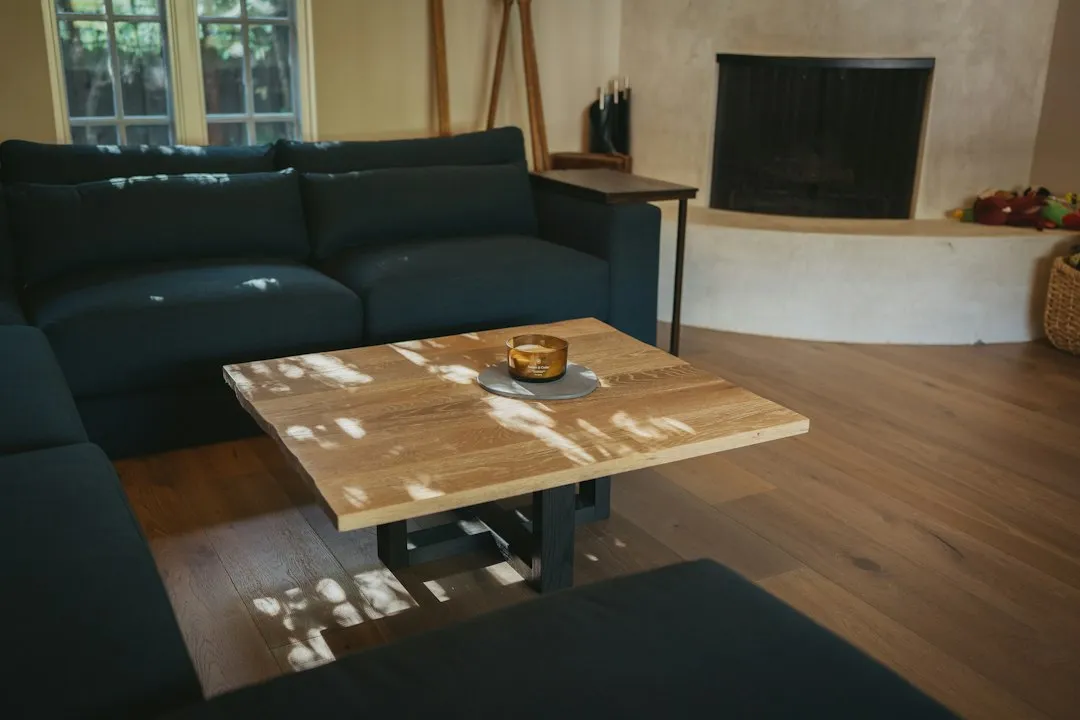
If you like to put your feet up, an upholstered ottoman or a slightly softer, lower surface may feel better. If you eat at the coffee table often, a lift top or slightly taller surface can make sense, as long as it still works with your seat height.
In rooms with varied seating heights, such as a mix of sofas and chairs, opt for a coffee table height that complements most of the seating, or choose an adjustable-height table for maximum versatility. The rule bends for function, not aesthetics.
Materials like glass or lighter metals allow for some creative height choices, but overall, sticking close to your seating height keeps your space functional and stylish. Think of heavier materials like solid wood or stone as needing to stay closer to the standard, since their visual weight already makes them feel larger.
Sectionals Change the Math Slightly
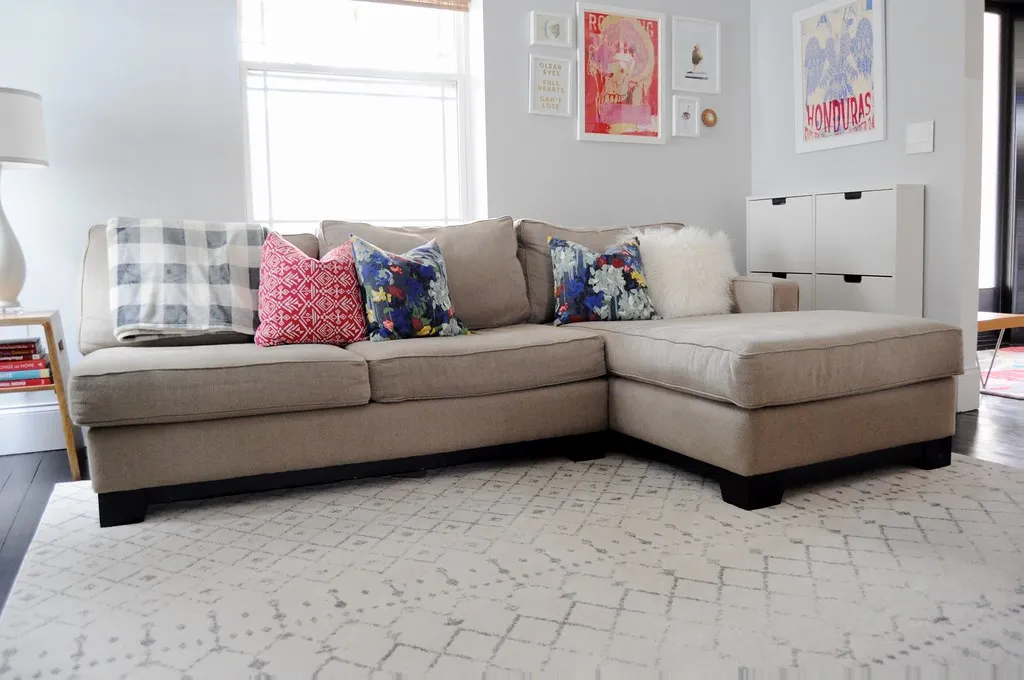
For sectionals, use the two-thirds rule on the longest seating run that faces the table. If the sectional wraps around the table on two sides, consider a larger square table, or two nesting tables to spread surface area where people actually sit.
L-shaped sectionals are a common challenge in living room design. The standard two-thirds rule often fails here because it creates dead zones in the corner of the L. The height rule still applies exactly as before. It’s the length calculation that needs adjustment.
The right coffee table is roughly two-thirds the length of your sofa, sits two to five centimeters below the seat height, and leaves roughly forty-five to fifty centimeters of legroom between the sofa and the table. Those three numbers, taken together, cover nearly every situation.
The Takeaway

The height rule designers keep coming back to isn’t complicated. Aim for the tabletop to be about one to two inches lower than your sofa seat height. That’s genuinely most of what you need to know before choosing a coffee table.
The rest of the rules, the two-thirds length ratio, the eighteen-inch clearance gap, the minimum walkway width, all build on that one foundational measurement. Start with the sofa seat height written on a piece of paper, then work outward from there. Everything else becomes easier once that anchor is set.
AI Disclaimer: This article was created with the assistance of AI tools and reviewed by a human editor.