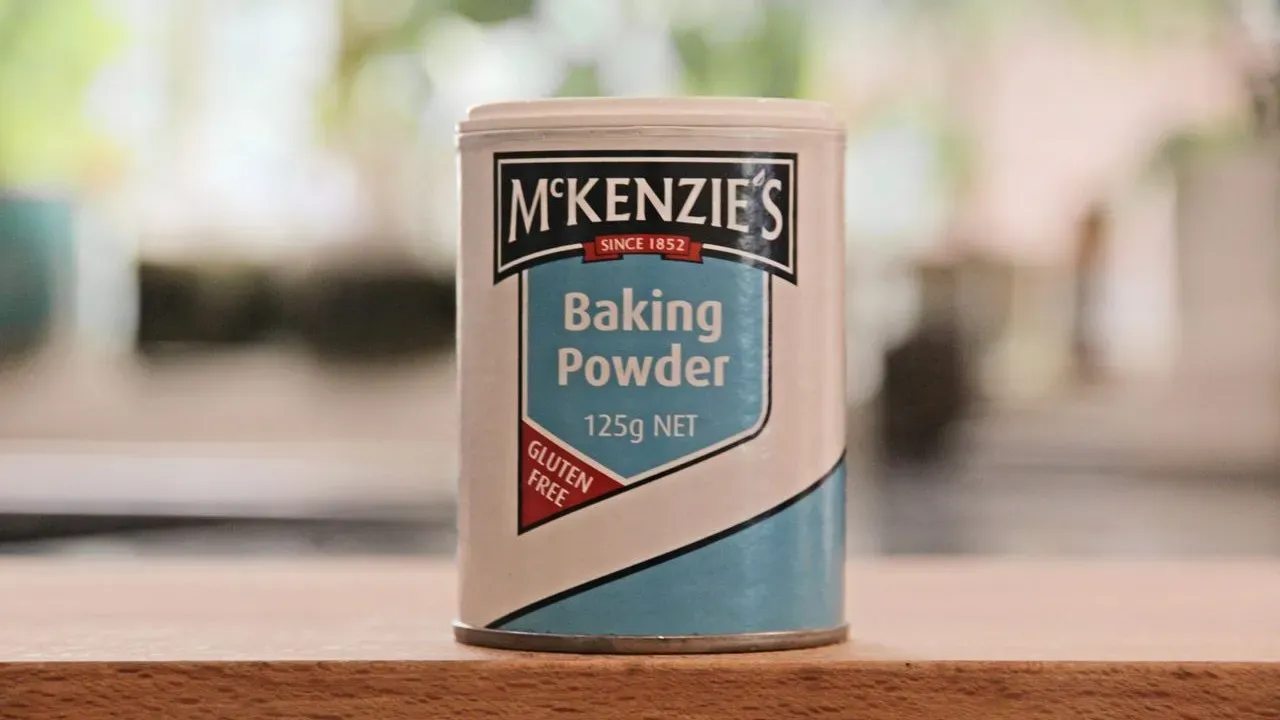

Flat muffins, dense biscuits and cakes that refuse to rise can point to a tired leavener rather than a flawed recipe. Before holiday baking gets busy, a quick check can show whether the leavener is the problem. ([1])Baking powder, baking soda and yeast each react differently, so each has its own simple test.
Check the leavener before changing the recipe
When a usual favorite comes out dense, the natural instinct is to blame the flour, the liquid or the mixing time. A leavener check is a faster first step. It takes seconds, and it rules out one common cause before any other ingredient gets adjusted.
Knowing which leavener a recipe calls for matters, because the tests are not interchangeable. A baking powder check will not tell you anything about yeast, and a vinegar test says nothing about baking powder. Running the right test for each ingredient keeps the diagnosis clear.
The 10-second baking powder test
Stir 1 teaspoon of baking powder into 1/3 cup of water that is warm to hot. A clear glass makes the reaction easier to see. The university extension services that publish these tests do not agree on the water temperature, with Iowa State University Extension calling for hot water and Michigan State University Extension specifying warm, so a water temperature somewhere in that range works for either guide.
A healthy batch of baking powder produces obvious bubbling almost immediately. Little or no reaction means the powder has lost its rising power, and replacing it is the sensible move. Michigan State University Extension says the bubbling is the sign of good quality and strong leavening power.
Baking soda and yeast checks
Baking soda relies on acid rather than water. Combine 1 1/2 teaspoons with 1 tablespoon of vinegar in a small bowl and watch for fizzing. Iowa State University Extension uses a different ratio, 1 teaspoon of baking soda with 3 tablespoons of vinegar, but it also looks for bubbling, so the sign of a working batch stays the same.
Yeast needs sugar and gentle warmth to show its strength. Dissolve 1 teaspoon of sugar in 1/4 cup of warm water, about 100 degrees F, then stir in one envelope of dried yeast, which holds 2 1/4 teaspoons. After 10 minutes, active yeast should foam up to the 1/2 cup mark, according to the University of Arkansas Extension, which cites Utah State Extension.
| Leavener | The test | Sign of a working batch |
|---|---|---|
| Baking powder | 1 teaspoon in 1/3 cup warm to hot water | Obvious bubbling |
| Baking soda | 1 1/2 teaspoons with 1 tablespoon vinegar | Fizzing |
| Dried yeast | 1 envelope with 1 teaspoon sugar in 1/4 cup warm water, 10 minutes | Foam reaching the 1/2 cup mark |
Reading failed results and making the most of storage
A failed result looks like little or no reaction from baking powder or baking soda, or thin foam from yeast after 10 minutes. The most reliable way to judge is to run the test on a fresh container and an older one at the same time, using identical glasses and amounts. Any difference in bubbling becomes much easier to spot that way.
Shelf life depends on the product and how it is kept. Michigan State University Extension says containers often carry a best-by date of 18 to 24 months, while Iowa State University Extension suggests using baking powder within about 6 months after opening for the best quality. Storage matters as well. Both powders should stay in their original containers in a dry spot away from the stove, since moisture breaks them down. For yeast, the University of Arkansas Extension notes that shelf life varies by manufacturer and that refrigerating or freezing can extend it.
If a leavener fails, replacing it is the simplest fix, particularly if the recipe is already in the oven. Running a quick test before the next big bake saves time, ingredients and a tray of disappointing muffins. Ten seconds at the sink can tell you whether the batter has a fair chance of rising.
AI Disclaimer: This article was created with the assistance of AI tools and reviewed by a human editor.